
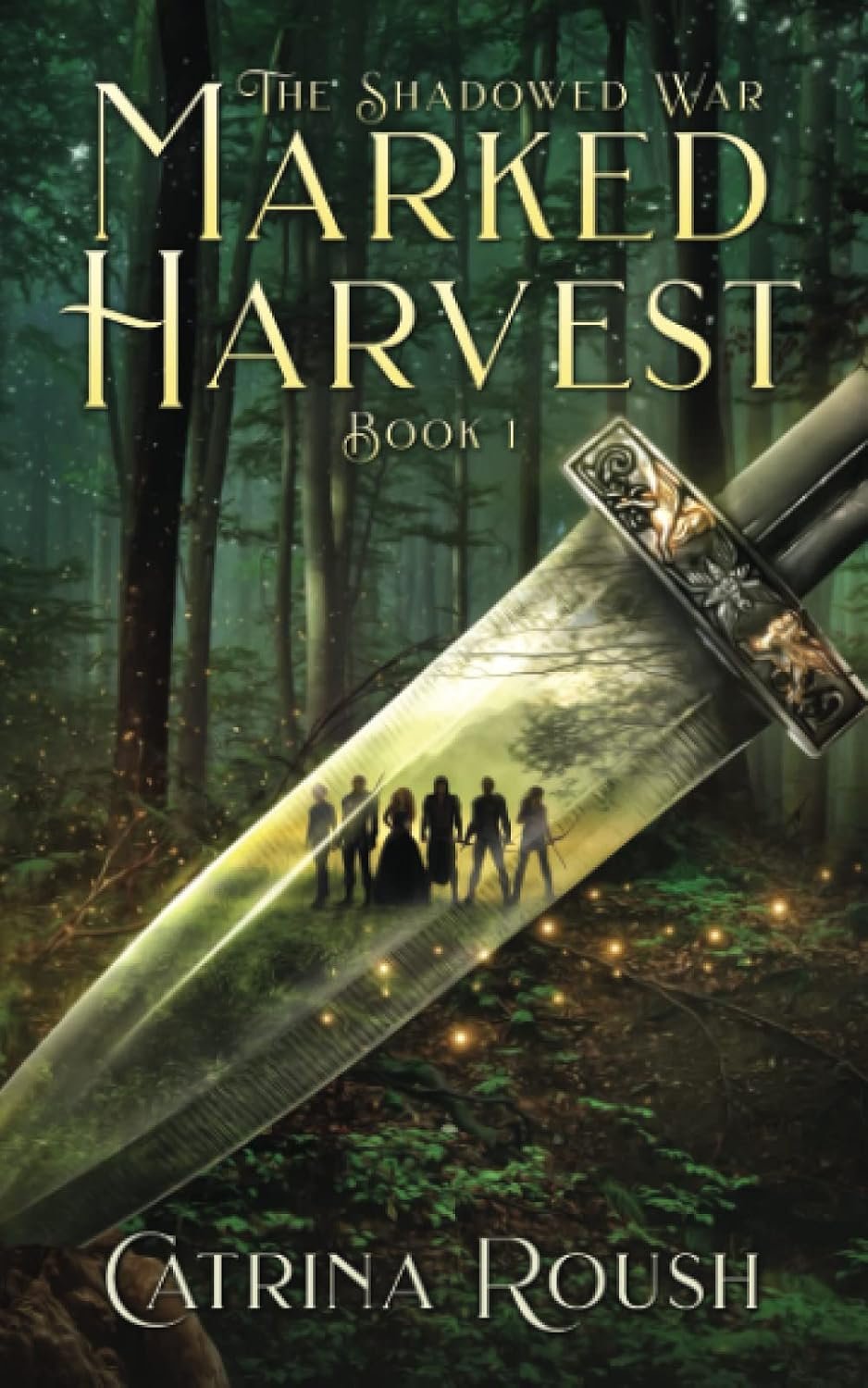
Marked Harvest: Book 1 of The Shadowed War Series
In Marked Harvest, magic is not the reward of being special. It is the reason someone is being hunted. Catrina Roush’s first Shadowed War volume introduces Nikko Sorren, a thief able to use an unusual gift to…
Books worth discovering. Authors worth knowing.
In Marked Harvest, magic is not the reward of being special. It is the reason someone is being hunted. Catrina Roush’s first Shadowed War volume introduces Nikko Sorren, a thief able to use an unusual gift to his advantage until a young mage seeks to take it. His flight brings him among others attempting to escape a country that has become dangerous…
Book-specific criticism, grounded in what the available sources support.
In Marked Harvest, magic is not the reward of being special. It is the reason someone is being hunted. Catrina Roush’s first Shadowed War volume introduces Nikko Sorren, a thief able to use an unusual gift to his advantage until a young mage seeks to take it. His flight brings him among others attempting to escape a country that has become dangerous for people like them. Public descriptions emphasise survival, uneasy cooperation and the possibility that staying alive can demand choices that injure one’s moral sense.
An inheritance that endangers its owner
Fantasy frequently begins by unveiling a gift that lifts a protagonist above ordinary life. Roush’s synopsis turns that expectation around: the gift makes Nikko traceable and vulnerable. This change carries political weight. If a person must hide an innate capacity to remain free, the story’s magical system becomes a way of discussing how societies treat difference. The literal rules of the power remain unverified in the listings, so it would be premature to describe its mechanisms. The more important established fact is the unequal relationship between those who possess magic and those who are prepared to seize it.
The ethics of getting out
Escape plots are often described as a matter of geography: reach the border, avoid capture, survive the chase. The phrase “keeping their souls,” used in an available synopsis, suggests a less measurable destination. What can a fugitive do to remain alive without becoming an agent of the same cruelty that displaced them? Nikko’s trade as a thief complicates a simple innocence narrative; he is introduced as someone accustomed to crossing rules before the rules are used against him. That gives the premise a potentially productive ambiguity. We would need the novel itself to assess whether his ethical changes are dramatized rather than merely announced.
An alliance of the threatened
The synopsis specifically says that Nikko encounters others who cannot escape alone. The ensemble structure creates a challenge of proportion: every new companion should alter what the group can imagine, not simply increase its combined magical force. Shared persecution does not erase differences of temperament, past responsibility or desired future. A persuasive fantasy of solidarity acknowledges the price of trusting strangers while refusing to make fear the final arbiter. The threat of a young mage seeking another’s gift also raises an uncomfortable question about whether victims of power can become its imitators when circumstances change.
Series beginnings and obligations
As Book 1 of The Shadowed War Series, Marked Harvest must establish the conditions of a broader conflict without treating its characters as temporary tour guides through a world-building handbook. The most compelling promise in its description is immediate and local: a person who once used his gift to get by suddenly confronts its cost, and survival becomes collective rather than individual. Future volumes may enlarge the history, but this first one will need to offer a coherent emotional decision of its own. The excerpt available to us does not establish how fully that balance is achieved.
The social uses of magic
Nikko’s condition suggests an economy in which innate ability is something another person can appropriate. This is a sharper premise than a simple division between spellcasters and ordinary people. If power can be taken, every talented person becomes both an asset and a target. Fear may transform ordinary transactions: strangers cannot be trusted, communities may hoard knowledge, and the law may become an instrument for identifying people whose gifts have value to somebody else. The synopsis confirms a pursuit and a threat to Nikko’s magic, but not the structure of the wider political order. The point is to recognise the dramatic pressure built into that fact. A convincing account would show how a system affects daily choices, not rely only on a chase to announce that the system is cruel.
The thief as a moral witness
It is worth lingering over Nikko’s occupation. A thief is already skilled at assessing what people guard, where their attention fails and which rules are enforced selectively. That skill could make him an unusually perceptive witness to a world organised around the theft of power. But there is no easy symmetry between his ordinary crimes and someone attempting to strip him of a defining capacity. The distinction calls for attention to consent, scale and the difference between property and personhood. A story that explores the uncomfortable resemblance without erasing the moral difference may offer more than a familiar redemption arc. The public synopsis provides precisely enough information to make this question meaningful while leaving the protagonist’s eventual conduct unresolved.
The danger of a simple boundary
Escape to another country may offer the group a destination, but political fantasy becomes more searching when a border is not treated as a magical dividing line between oppression and safety. Refugees carry fears, debts, injuries and divided loyalties even after leaving the place that endangered them. An effective continuation of this premise would resist turning a dangerous journey into a final moral cleansing. The characters might have to make a community under conditions they did not choose, without the guarantee of rescue by a benevolent power. We cannot assert that Roush pursues this argument across the novel. The title and published setup nevertheless direct the critic toward the same core issue: what does survival preserve, and what might it demand that a person give up?
Who will find value here
Readers who favour fugitive fantasy, fraught alliances and magical systems with social consequences should find a substantial premise here. Those expecting a straightforward tale of chosen-one empowerment may appreciate its reversal of that pattern. This is a source-grounded critical introduction, not an endorsement of the unread action sequences or resolution.
What this review can establish
This is an independent, research-based editorial assessment of the identified book, informed by the listed publisher, author and bibliographic materials. The analysis identifies documented premises, meaningful genre expectations and open critical questions. It is not a firsthand claim to have read every chapter or inspected the entire illustrated edition; judgments about the quality of prose, plot resolution and any unverified interior material are reserved for a full-text review.
About the book.
A limited-source, independent editorial evaluation of dark adventure fantasy. Facts are drawn from the listed book record and separately identified public descriptions; speculative editorial questions are not presented as plot facts. An identical title, author and original Column C URL recur at MAB-1423; retain MAB-1082 and flag MAB-1423 as a same-work duplicate.
This book is marked sponsored in the MarketAnyBook source queue. Sponsorship is disclosed; the analysis is research-based and does not claim a full firsthand reading.
Found a book worth opening?
Books worth discovering. Authors worth knowing.
Return to the Journal →