
Rainbow Smash
The difficulty of persuading a child to taste a vegetable can feel enormous at the dinner table and very small everywhere else. Fiona Laundy Taylor’s Rainbow Smash works within that mismatch. Its public…
Books worth discovering. Authors worth knowing.
The difficulty of persuading a child to taste a vegetable can feel enormous at the dinner table and very small everywhere else. Fiona Laundy Taylor’s Rainbow Smash works within that mismatch. Its public synopsis introduces Beth, a selective eater disinclined to try foods that are green or naturally grown, and a grandmother whose brightly coloured dish…
Book-specific criticism, grounded in what the available sources support.
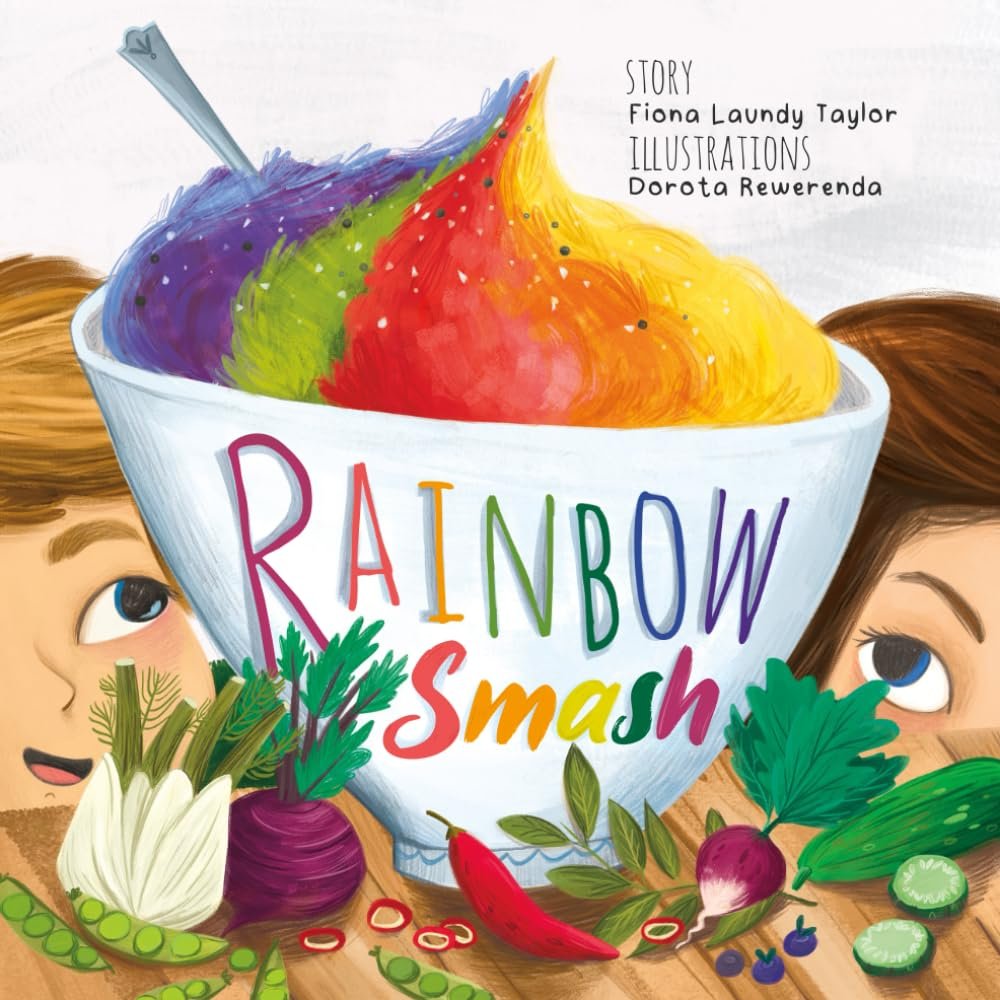
The difficulty of persuading a child to taste a vegetable can feel enormous at the dinner table and very small everywhere else. Fiona Laundy Taylor’s Rainbow Smash works within that mismatch. Its public synopsis introduces Beth, a selective eater disinclined to try foods that are green or naturally grown, and a grandmother whose brightly coloured dish offers a chance to approach novelty without a battle of wills. Dorota Rewerenda provides the illustrations for this rhyming picture book.
The smallest risk in the room
There is a reason children’s books about food return to the same situation. Eating is intensely personal: taste, texture, colour and control converge in a ritual that adults often want to manage quickly. A story that turns one spoonful into a discovery risks sounding like a lesson in compliance. Rainbow Smash’s more interesting opportunity lies in making the choice Beth’s own, with curiosity replacing pressure. The verified synopsis suggests surprise and pleasure as its tools. A careful review of the full book would ask whether that distinction is apparent in the child’s perspective or supplied chiefly by an enthusiastic adult voice.
Grandmother as collaborator
The presence of Gran gives the story a potential emotional anchor beyond the culinary experiment. Intergenerational affection works particularly well in picture books when adult knowledge is offered as play rather than instruction. The title’s “smash” is energetic and tactile, while “rainbow” promises a visible invitation to variety. Together they frame food as something to discover rather than a test to pass. Still, a tale of fussy eating should avoid making children with genuine sensory distress feel that pleasure is available only if they obey. A warm read-aloud can model patience without claiming every child will change after a single tasting.
Rhyme, image and timing
The publisher identifies the text as rhyming and credits Rewerenda’s illustration. Those are essential formal facts, but they do not establish the quality of the meter or the visual storytelling. Rhyme can make an unfamiliar food less forbidding through anticipation and sound; it can also rush feeling into an overly tidy couplet. Illustrations have an equally important job: showing the body language of refusal, curiosity or hesitation in ways a short sentence may not. The most persuasive version of Rainbow Smash would let Beth’s reaction unfold at a child’s pace rather than treat colour as magic that instantly cures resistance.
A restrained recommendation
The book is reportedly inspired by a family childhood experience, which offers a plausible explanation for its domestic scale. That origin matters less than what the completed work makes of it. Parents and caregivers can use the story as a light invitation to conversation—What made Beth curious? What helps us try something new?—rather than a bargaining tool at mealtime. Its generosity will be tested by the amount of room it leaves for children to say no.
Who will find value here
For families seeking a colourful, playful read-aloud around trying new foods, the premise is sound and specific. Children who enjoy repetitive rhyme and bold imagery may be especially receptive; the artwork and rhythm themselves need inspection before a definitive artistic judgment. The fairest recommendation is to share it without turning its message into another demand at the table.
What this review can establish
This is an independent, research-based editorial assessment of the identified book, informed by the listed publisher, author and bibliographic materials. The analysis identifies documented premises, meaningful genre expectations and open critical questions. It is not a firsthand claim to have read every chapter or inspected the entire illustrated edition; judgments about the quality of prose, plot resolution and any unverified interior material are reserved for a full-text review.
About the book.
A limited-source, independent editorial evaluation of rhyming children’s picture book. Facts are drawn from the listed book record and separately identified public descriptions; speculative editorial questions are not presented as plot facts.
This is an unsponsored editorial review based on verified public descriptions and bibliographic materials, not a claim to firsthand reading of the complete book.
Found a book worth opening?
Books worth discovering. Authors worth knowing.
Return to the Journal →