
R.A.T.S: Revolutionary Army of Teens
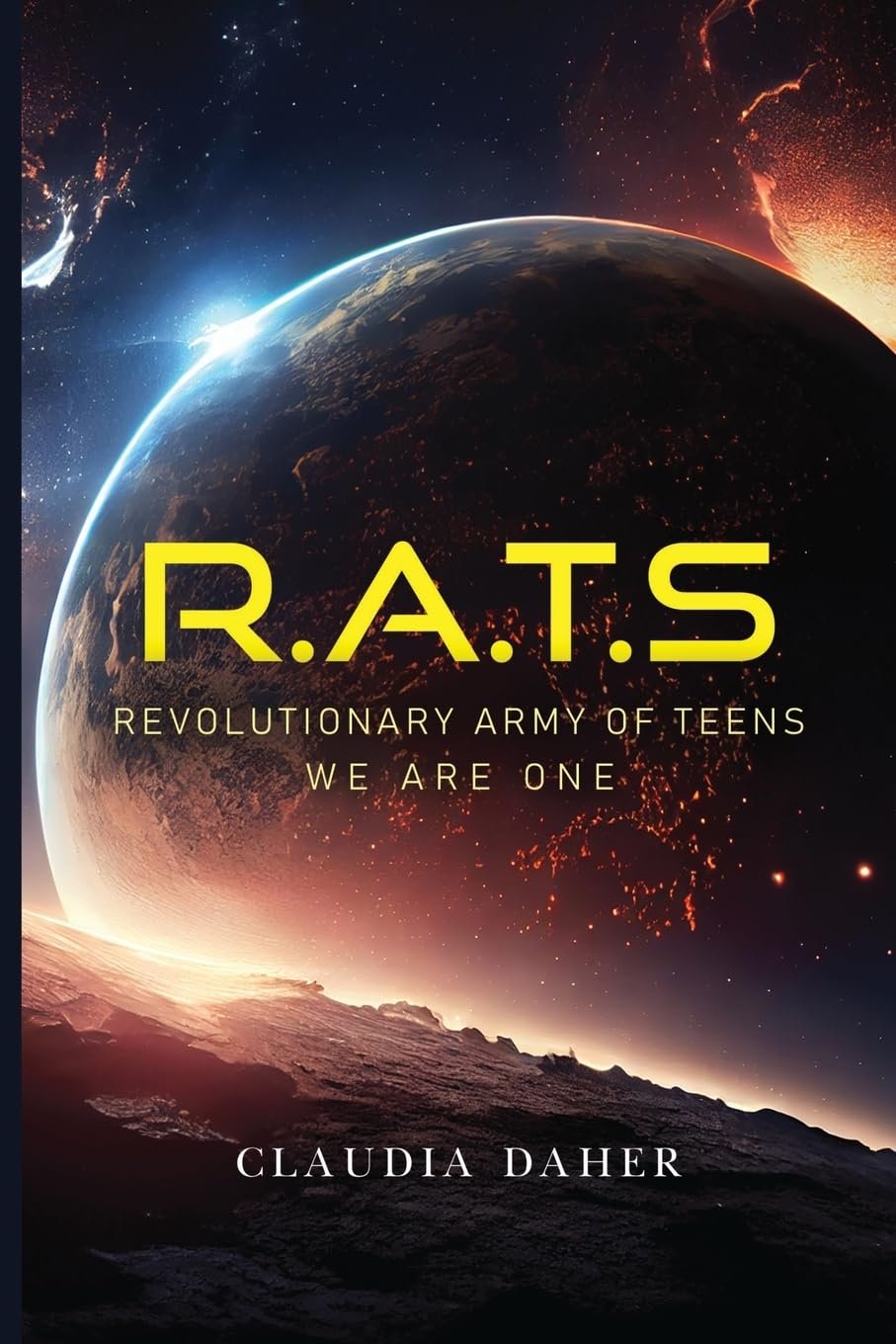
In Claudia Daher’s R.A.T.S: Revolutionary Army of Teens, a video game turns out to be preparation for a crisis that almost no adult understands. In 2040, fifteen-year-old David and friends discover a global…
Books worth discovering. Authors worth knowing.
In Claudia Daher’s R.A.T.S: Revolutionary Army of Teens, a video game turns out to be preparation for a crisis that almost no adult understands. In 2040, fifteen-year-old David and friends discover a global threat from aliens seeking Earth’s water. The game was developed by his grandfather, and its apparently imaginative challenges take on new urgency…
Book-specific criticism, grounded in what the available sources support.
In Claudia Daher’s R.A.T.S: Revolutionary Army of Teens, a video game turns out to be preparation for a crisis that almost no adult understands. In 2040, fifteen-year-old David and friends discover a global threat from aliens seeking Earth’s water. The game was developed by his grandfather, and its apparently imaginative challenges take on new urgency as teenagers from different countries gather. The novel’s declared concerns include climate change, technological responsibility and cooperation across cultures.
A game that rehearses collective action
Alternate-reality games offer a natural narrative bridge between adolescent competence and adult incredulity. A teenager may learn patterns, solve puzzles and organise a team in a domain that grown-ups dismiss as a distraction. By revealing the game as preparation, Daher makes these skills consequential. The device can be exhilarating, but it also raises a question about consent: do the young participants understand what they have been trained for? A compelling version of this premise would allow them to challenge their grandfather’s plan rather than merely inherit its authority. The official description verifies the broad mechanism, not the precise conditions of its discovery.
Water as a planetary stake
Choosing water, rather than a generic source of energy, gives the extraterrestrial threat immediate ecological meaning. Access to water is an everyday fact and a political question; scarcity exposes differences in power, geography and wealth. Science fiction is well suited to turning that familiar dependency into an urgent spectacle. Yet the premise works best when the environmental stakes are not reduced to a single alien enemy. The novel’s public messaging emphasises climate action and cooperation, suggesting that the human response to crisis may be just as important as the threat itself.
The phrase “We Are One”
Daher has spoken publicly about wanting young readers to connect across national and cultural divides. Such a commitment supplies an optimistic counterweight to apocalyptic adventure. It is also a demanding literary assignment. Unity should not require every character to think alike; genuine solidarity comes into view when people disagree about method but recognise a shared vulnerability. A diverse international team can dramatise that difference through language, history and competing interests. Whether this happens with persuasive specificity is a question for a reading of the novel, rather than something to infer from its stated theme alone.
Responsibility beyond victory
Teen science fiction often gives its young protagonists access to knowledge or courage unavailable to institutions that have failed them. R.A.T.S follows this pattern in outline, but the durable question is what kind of adulthood its characters are preparing to enter. Their mission may save a planet, yet a story concerned with respect and belonging should also show the costs of caring for it. An impressive science-fiction conflict can end with an enemy defeated; an ethical conflict remains in the practices people choose afterward. The book’s real ambition appears to reside in that longer horizon.
The grandfather’s hidden curriculum
HB’s role as creator of the game gives the novel an intergenerational structure. The young people may be the visible agents of Earth’s defence, but their preparation began in an older person’s knowledge and forethought. That raises a productive tension between guidance and manipulation. Adults may prepare children for challenges without being able to foresee the values they will bring to them. When a training environment turns real, the students must eventually own decisions that no designer can script. A story that acknowledges this point becomes less about discovering a prearranged destiny and more about the limits of inherited plans. The author’s description gives enough to identify the tension while leaving the precise relationship between David and his grandfather unexplored.
The pleasure and peril of a clear enemy
Aliens intent on stealing water provide a vivid antagonist, but the ecological premise risks making the causes of environmental stress too comfortably external. A society endangered by outsiders can feel absolved of responsibility for its own conduct. Daher’s broader public statements about climate change and global cooperation suggest that the book is interested in more than invasion. A substantive reading should ask whether the teenagers recognise human practices that have made Earth vulnerable, or whether the threat is solved principally through defeating a hostile species. The point is not to demand scientific realism from every young-adult novel. It is to distinguish a powerful ecological metaphor from a scenario that treats the planet as a stage with no history of its own.
Young readers and the language of values
The author’s declared preference for a purposefully positive story is worth assessing with care. A constructive book for adolescents need not avoid conflict, grief, fear or moral uncertainty; indeed, such experiences often give its ethical commitments credibility. Teenagers are less likely to be persuaded by a lesson that arrives before the story makes them feel why a choice is hard. The global group at the centre of R.A.T.S offers a way to dramatise patience and respect through disagreement under pressure. The strongest form of encouragement might come not from declaring that humanity is one, but from showing how much work that unity requires. Such a test treats the author’s stated ideals seriously enough to hold them to a demanding literary standard.
Who will find value here
Teen readers who enjoy global-team adventures, speculative technology and environmental stakes may find this a hospitable entry point. Parents and educators may appreciate the openly constructive values, though the story must still stand on its own dramatic merits. This editorial assessment is grounded in the author’s and publisher’s descriptions rather than personal reading of every scene.
What this review can establish
This is an independent, research-based editorial assessment of the identified book, informed by the listed publisher, author and bibliographic materials. The analysis identifies documented premises, meaningful genre expectations and open critical questions. It is not a firsthand claim to have read every chapter or inspected the entire illustrated edition; judgments about the quality of prose, plot resolution and any unverified interior material are reserved for a full-text review.
About the book.
A limited-source, independent editorial evaluation of teen science fiction with environmental themes. Facts are drawn from the listed book record and separately identified public descriptions; speculative editorial questions are not presented as plot facts.
This is an unsponsored editorial review based on verified public descriptions and bibliographic materials, not a claim to firsthand reading of the complete book.
Found a book worth opening?
Books worth discovering. Authors worth knowing.
Return to the Journal →