
Buried, Not Broken
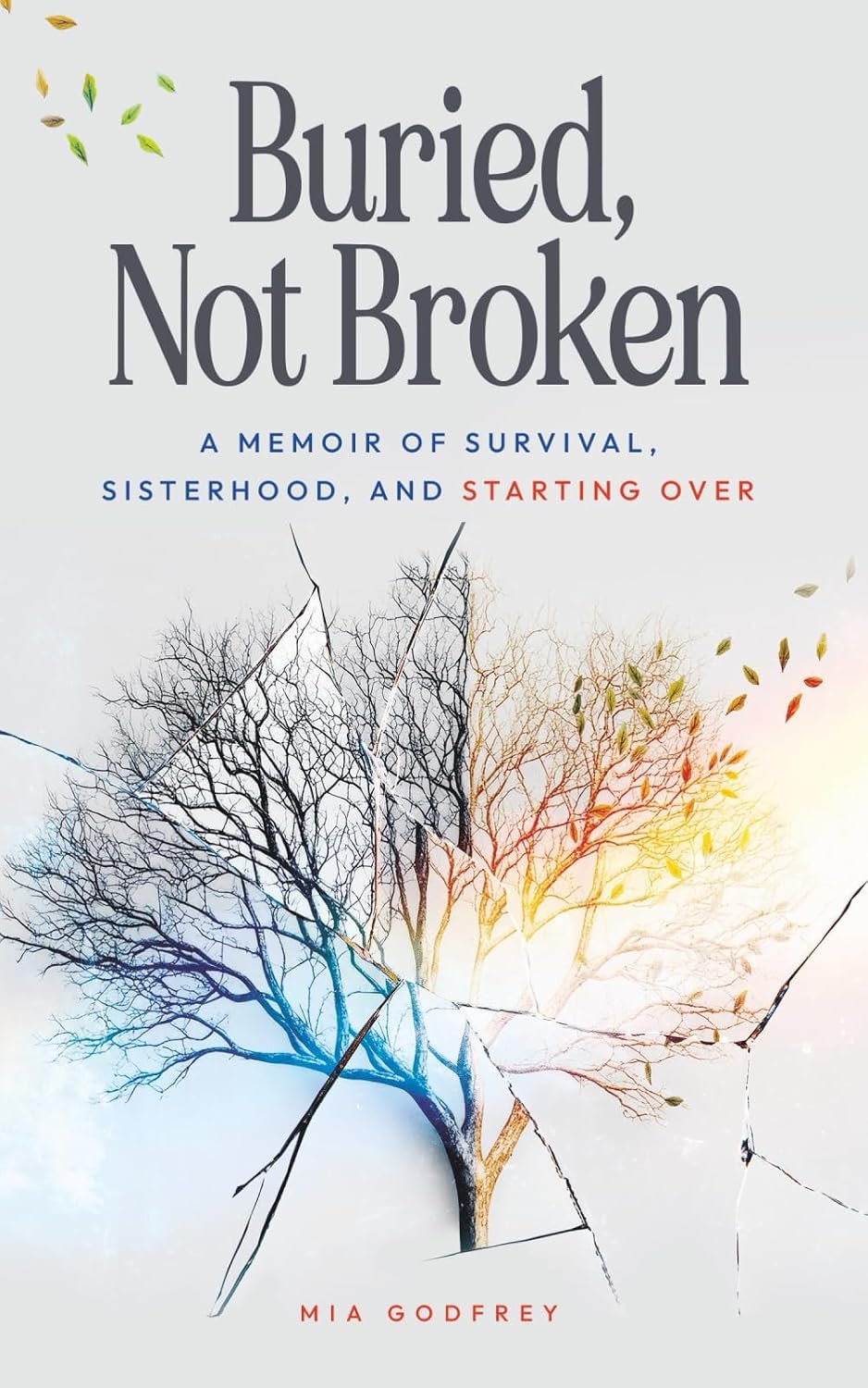
The title Buried, Not Broken refuses a neat distinction between damage and survival. Mia Godfrey’s memoir, described by its publisher as an account of trauma, widowhood, sisterhood and a renewed life, uses a…
Books worth discovering. Authors worth knowing.
The title Buried, Not Broken refuses a neat distinction between damage and survival. Mia Godfrey’s memoir, described by its publisher as an account of trauma, widowhood, sisterhood and a renewed life, uses a language of growth without pretending that loss never occurred. The book belongs to a strand of personal writing in which faith is not offered as…
Book-specific criticism, grounded in what the available sources support.
The title Buried, Not Broken refuses a neat distinction between damage and survival. Mia Godfrey’s memoir, described by its publisher as an account of trauma, widowhood, sisterhood and a renewed life, uses a language of growth without pretending that loss never occurred. The book belongs to a strand of personal writing in which faith is not offered as evidence that suffering is deserved, but as a vocabulary for finding continuity when ordinary explanations have failed.
Survival without a triumphal script
The market for inspirational memoir often wants a transformation as clear as a before-and-after photograph. Godfrey’s stated subjects resist such compression. Bereavement does not oblige the survivor to become an emblem of strength on someone else’s timetable. The strongest possibility in her account lies in the tension between the need to speak honestly about devastation and the desire to give a reader hope. Public interviews indicate that writing about family memories reopened painful experiences. That observation matters more than promotional claims about resilience; it points to the work of recollection as a cost in itself. It would still take a reading of the pages to evaluate how carefully that cost is represented.
A sisterhood within the story
“Sisterhood” in the subtitle promises more than a private account of grief. Relationships between women can offer care, strain, obligation and a history of moments that appear ordinary until loss changes their meaning. Godfrey has spoken publicly about family generosity in childhood and about the emotional effort of revisiting memories. The risk for any memoir of survival is to make supporting figures into mere stepping stones on the narrator’s path. A generous account would let others retain their own needs and contradictions. That is a question this book’s subtitle makes unavoidable, not a conclusion a description permits us to settle.
Faith as an interpretive frame
The publisher presents spiritual renewal as central to the book. Religious language can give a memoir a coherent shape, but it also changes the reader’s expectations. A reader who shares the tradition may hear testimony; another may be more interested in how belief helps the author interpret what could not be prevented. Neither position requires the critic to endorse every spiritual claim as a verified external fact. The relevant literary question is whether faith is expressed through concrete experience and admitted uncertainty, or whether it forecloses the difficult feelings it has been summoned to address. This distinction is especially important for readers arriving with unresolved grief.
The responsibility of encouragement
A memoir that seeks to comfort may unintentionally imply that people who remain overwhelmed have not tried hard enough. Godfrey’s emphasis on grace can be read more generously: survival need not be an achievement performed for an audience, and purpose need not cancel sorrow. This reading is an editorial inference, not a quotation from her chapters. The published description confirms a movement from loss toward renewed hope, but cannot establish the work’s precision of detail or rhetorical restraint. Its promise deserves both sympathy and scrutiny.
A title that transforms a metaphor
“Buried” is an ambiguous word: it can describe destruction, concealment or the planting from which something grows. Godfrey’s subtitle frames the memoir as a movement toward beginning again, while the title refuses to describe the person who endured loss as permanently damaged. Metaphors of cultivation are common in spiritual writing, yet their ethical force depends on what they permit readers to feel. A seed does not choose the conditions of its planting; a mourner does not choose every sorrow. If the image is used with restraint, it can express vulnerability and the possibility of renewal without assigning moral responsibility for the original injury. This is one reason the book’s central language deserves a more thoughtful reading than the usual summary of its inspirational intent.
Private memory and public witness
Publishing a memoir changes the status of recollection. What once belonged to family, grief or a closed conversation becomes part of a public account. That transition creates obligations toward people still living, as well as toward the narrator’s own younger self. Godfrey’s interviews indicate that some memories were difficult to recover and write. A reader should therefore attend not only to what is disclosed but to how the account signals uncertainty, care and the limits of memory. Confessional directness can be powerful, but so can choosing not to reveal every painful detail. Without reading the full text, it is not possible to assess those ethical choices; nevertheless, they form the appropriate critical frame for a memoir that promises both vulnerability and guidance.
Starting over is not returning
The phrase “starting over” can sound as though a lost life can be replaced with a clean new one. The more humane understanding is that a new life must include the knowledge of what preceded it. Godfrey’s public subject—widowhood and later renewal—makes that tension especially relevant. Readers who have lost a partner may resist a story that treats renewed happiness as proof that mourning is complete. They may respond more readily to an account in which affection for the past remains active alongside a changed future. The strength of this memoir, if its pages support the advertised compassion, would lie in allowing those loyalties to coexist. A critic should be attentive to that possibility without claiming the author achieved it in passages not examined.
Who will find value here
Buried, Not Broken will likely speak most directly to readers looking for a faith-oriented memoir about widowhood, emotional recovery and family connection. Those seeking a secular clinical guide to trauma should understand that it is a personal testimony, not treatment advice. It appears to offer companionship rather than formulas; the extent to which its prose delivers that promise requires direct examination.
What this review can establish
This is an independent, research-based editorial assessment of the identified book, informed by the listed publisher, author and bibliographic materials. The analysis identifies documented premises, meaningful genre expectations and open critical questions. It is not a firsthand claim to have read every chapter or inspected the entire illustrated edition; judgments about the quality of prose, plot resolution and any unverified interior material are reserved for a full-text review.
About the book.
A limited-source, independent editorial evaluation of memoir of grief, faith and renewal. Facts are drawn from the listed book record and separately identified public descriptions; speculative editorial questions are not presented as plot facts.
This book is marked sponsored in the MarketAnyBook source queue. Sponsorship is disclosed; the analysis is research-based and does not claim a full firsthand reading.
Found a book worth opening?
Books worth discovering. Authors worth knowing.
Return to the Journal →