
BE YOUR OWN MIRACLE
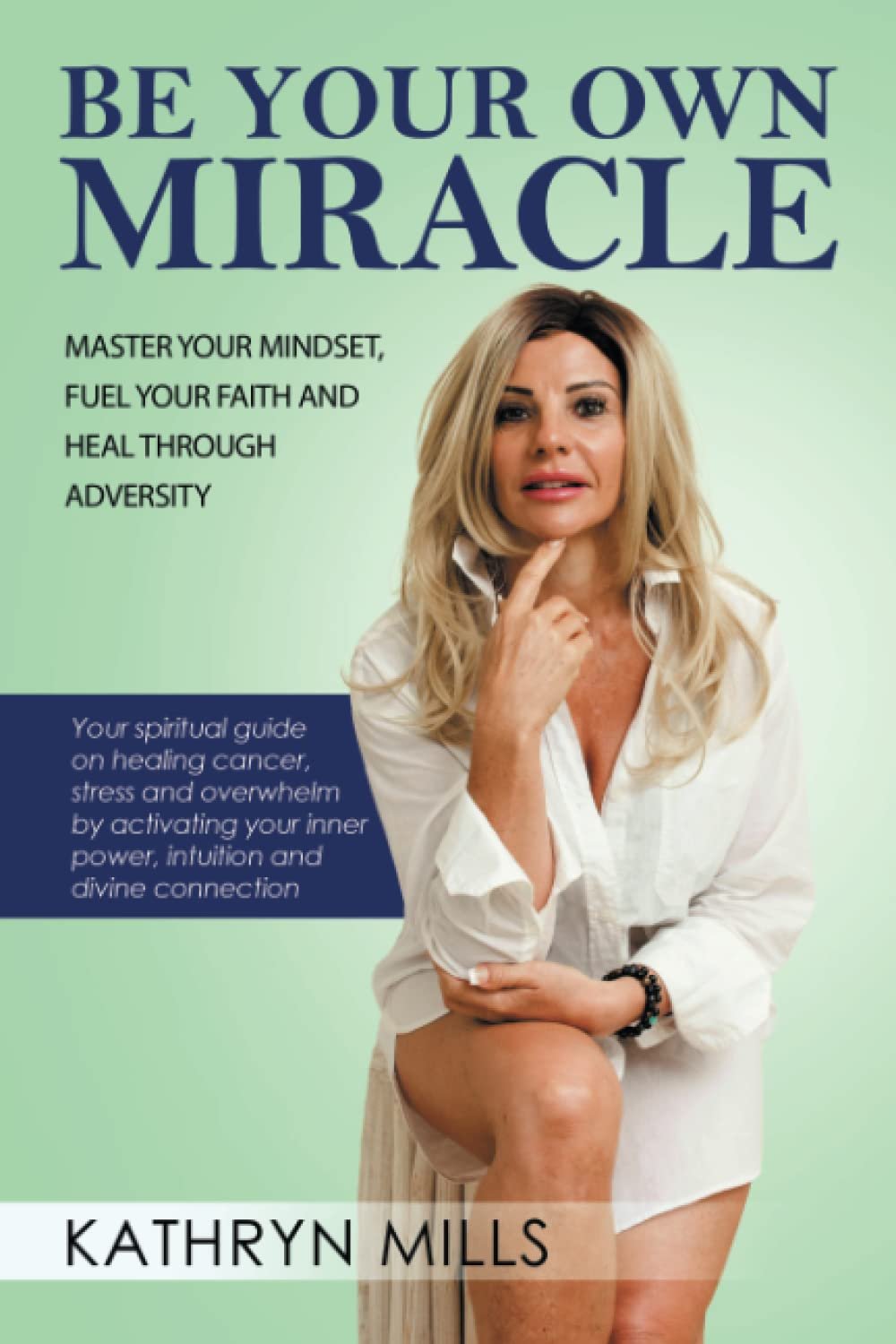
Kathryn Mills’s Be Your Own Miracle combines an inspirational promise with a sharply defined personal history. A publisher description identifies Mills’s experience of an advanced metastatic cancer diagnosis…
Books worth discovering. Authors worth knowing.
Kathryn Mills’s Be Your Own Miracle combines an inspirational promise with a sharply defined personal history. A publisher description identifies Mills’s experience of an advanced metastatic cancer diagnosis in her late forties as the starting point for a narrative about adversity, perspective, faith and the interpretation of survival. This is not a…
Book-specific criticism, grounded in what the available sources support.
Kathryn Mills’s Be Your Own Miracle combines an inspirational promise with a sharply defined personal history. A publisher description identifies Mills’s experience of an advanced metastatic cancer diagnosis in her late forties as the starting point for a narrative about adversity, perspective, faith and the interpretation of survival. This is not a medical evidence report. It is a personal-development book built around one woman’s account and her attempt to turn an intensely private crisis into language that might help another reader face uncertainty.
The problem with miraculous language
The title’s assertion can be read as an invitation to agency, but it is also easy to misunderstand. No patient can produce a guaranteed medical outcome through an act of will, optimism or faith. A responsible reading of Mills’s argument therefore distinguishes emotional self-determination from control over disease. The publisher’s description stresses determination, intuition and spiritual connection rather than reproducible clinical advice. That distinction must remain explicit whenever such a story is recommended. Readers living with illness can benefit from testimony without accepting the damaging implication that setbacks reflect insufficient courage.
A story of perspective
Mills’s account seems to organise its meaning around a change in how adversity is experienced. That is an old structure, but its success depends on details, not simply on the declaration that a crisis became an opportunity. A diagnosis rearranges time: the ordinary future is suddenly less reliable, and choices that once appeared trivial may acquire unusual force. The memoir has the potential to place a reader inside that reordering of priorities. What the public summary does not establish is the quality of its narrative scenes, the balance between private feeling and instruction, or how generously it acknowledges the limits of its lessons.
The audience for faith
The description openly invokes divine guidance and reconnection to the Creator. That clarity helps the reader understand the book’s worldview. For an audience sympathetic to such language, the story may offer a recognisable account of making meaning while vulnerable. For another reader, its interest may lie in the psychological and cultural uses of belief without agreement on its supernatural premises. A fair review should neither market personal testimony as independent proof nor dismiss the author’s internal understanding of her experience. The book asks to be assessed as a narrative and argument shaped by faith.
Inspiration and ethical care
“Rise like the phoenix” is a familiar metaphor of rebirth. The critic’s task is to ask what it leaves out: exhaustion, uncertainty, dependency and the slow work of ordinary care. The most humane inspiration does not require uninterrupted bravery. It allows readers who feel frightened or unable to act to remain fully worthy of concern. Mills’s book may succeed when it shows how a particular person found language for her own recovery; it would be less persuasive if those choices were offered as universal instructions. The available materials do not allow that distinction to be settled finally.
Narrating a diagnosis responsibly
A personal account of illness can illuminate what a clinical record cannot: the dislocation of a life lived under uncertainty. Yet readers deserve clarity about the difference between a patient’s experience and generalisable medical knowledge. The publisher identifies a particular diagnosis and Mills’s reflections on how she responded to it. A careful review can honour the reality of her fear and faith without suggesting that her chosen mindset explains a medical result. This is particularly important when the book’s title is so forceful. The metaphor of becoming one’s own miracle may empower some readers; for others, including people whose treatment is not successful, it can sound like an unfair burden. A truly humane reading keeps that tension visible rather than resolving it through automatic praise.
The role of intuition
Mills’s promotional description also emphasises intuition. In personal-growth writing, the term can mean attentiveness to one’s values and bodily experience, or it can be stretched into a claim of knowledge that outranks professional expertise. Those uses should not be treated as interchangeable. An author may describe an intuition that helped her ask better questions or make space for support; that is different from making a rule others should follow in serious medical situations. A full editorial assessment would need to see how the book draws this boundary. The available information invites a cautious recommendation to readers who understand its spiritual orientation, while avoiding endorsement of any unverified claim about diagnosis, treatment or prognosis.
Against a tidy inspirational ending
The most affecting memoirs of adversity often refuse to close on a simple declaration that the bad experience was necessary. Illness has real costs; it interrupts relationships, finances and plans in ways that a positive interpretation cannot erase. Mills’s argument about faith and resilience would be strengthened by an acknowledgment of those persistent difficulties. Such an acknowledgment would also make the author’s resolve more convincing, because it would have survived the admission of pain rather than merely replaced it. The synopsis foregrounds transformation, but a critic should reserve judgment about whether the full book allows room for ambivalence. This caution protects both the writer’s individuality and the reader’s right to a different response to suffering.
Reading for a singular voice
The central question for a memoir framed as instruction is whether a reader can hear an individual voice beneath the imperatives. Mills’s specific age, diagnosis and religious orientation give her story an identity that generic advice cannot supply. Those experiences need not yield a universal lesson to deserve serious attention. Indeed, the more precisely a writer understands the limits of her own example, the more useful her witness may become. This distinction would be central to evaluating the full book, not an excuse to disregard its inspirational aims.
Who will find value here
Be Your Own Miracle is most appropriately considered by readers seeking explicitly spiritual encouragement through a personal adversity narrative. It should not substitute for oncology advice, counselling or evidence-based treatment. Its potential contribution is the author’s perspective on meaning and resolve, not a general promise of healing outcomes. A definitive assessment would need to engage the full text and its use of medical language.
What this review can establish
This is an independent, research-based editorial assessment of the identified book, informed by the listed publisher, author and bibliographic materials. The analysis identifies documented premises, meaningful genre expectations and open critical questions. It is not a firsthand claim to have read every chapter or inspected the entire illustrated edition; judgments about the quality of prose, plot resolution and any unverified interior material are reserved for a full-text review.
About the book.
A limited-source, independent editorial evaluation of faith-oriented personal-development memoir. Facts are drawn from the listed book record and separately identified public descriptions; speculative editorial questions are not presented as plot facts.
This is an unsponsored editorial review based on verified public descriptions and bibliographic materials, not a claim to firsthand reading of the complete book.
Found a book worth opening?
Books worth discovering. Authors worth knowing.
Return to the Journal →