
DISCOVER THE WORLD: Most famous landmarks
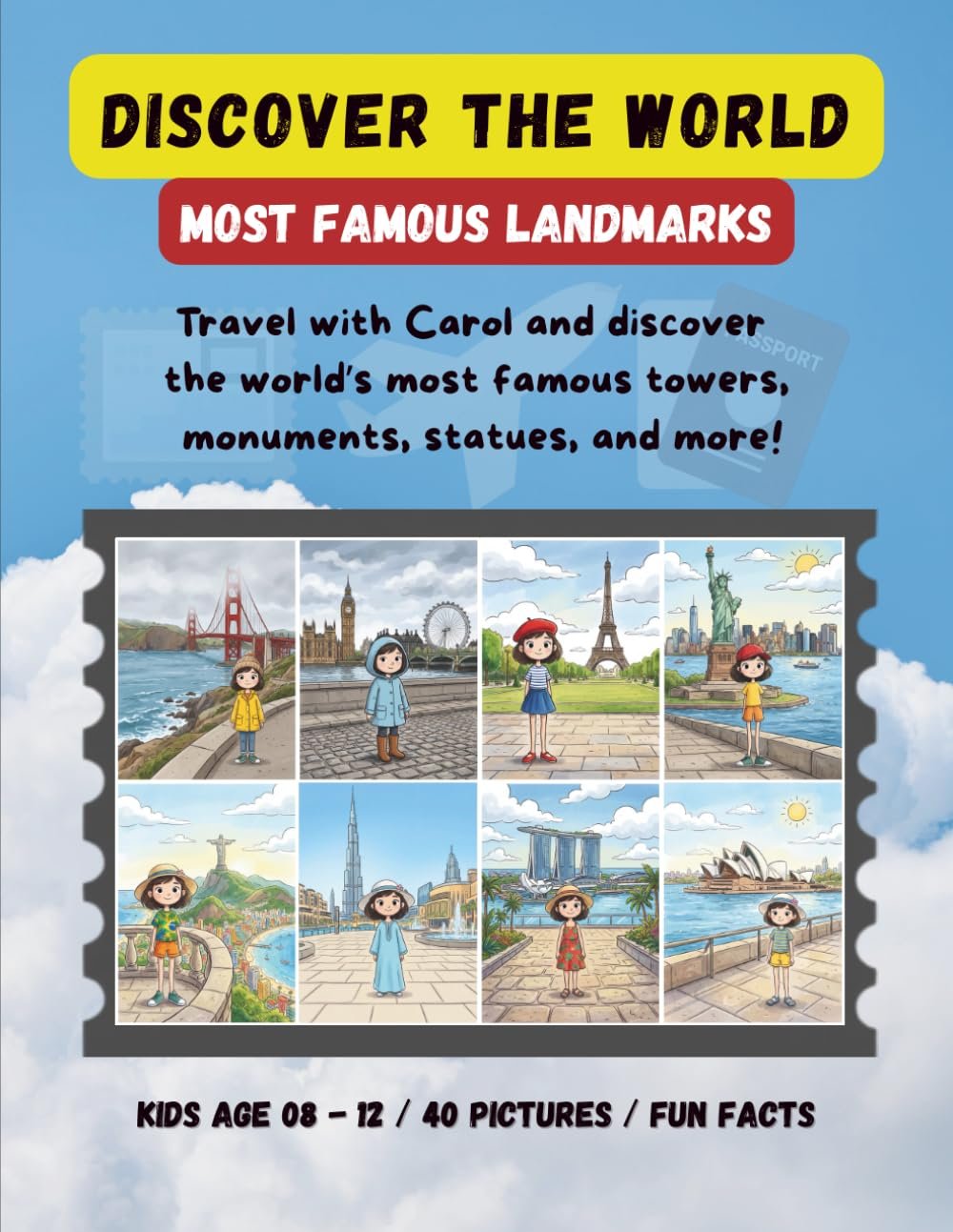
DISCOVER THE WORLD: Most famous landmarks sets out a recognisable educational promise in its title: to offer a child or general-interest reader an introduction to celebrated places. The MarketAnyBook queue…
Books worth discovering. Authors worth knowing.
DISCOVER THE WORLD: Most famous landmarks sets out a recognisable educational promise in its title: to offer a child or general-interest reader an introduction to celebrated places. The MarketAnyBook queue identifies the creators as Carol & Victor and provides a specific product listing and cover file. Independently verifiable interior pages, the…
Book-specific criticism, grounded in what the available sources support.
DISCOVER THE WORLD: Most famous landmarks sets out a recognisable educational promise in its title: to offer a child or general-interest reader an introduction to celebrated places. The MarketAnyBook queue identifies the creators as Carol & Victor and provides a specific product listing and cover file. Independently verifiable interior pages, the book’s declared age group and its selection of actual landmarks were not available in this research. It would therefore be misleading to name individual monuments as though they had been confirmed in the book.
What makes a landmark famous?
A landmark is often presented as a structure that speaks for an entire place. This is convenient in an introductory book, but it can make a city or country seem reducible to one postcard. A thoughtful guide has the opportunity to ask why a building, monument or natural site has become symbolic, for whom it matters and whose stories are omitted by that fame. The word “most” in the subtitle also turns selection into an act of judgment. An educational book can be useful without claiming to offer a definitive ranking; the first test is whether its range makes that editorial choice visible to the reader.
Pictures should do more than decorate
A landmark book is unusually dependent on visual accuracy and proportion. Maps, silhouettes, captions and comparative scales can transform attractive images into knowledge. It matters whether a child can locate a place geographically and grasp the relation between its appearance and purpose. Because no interior sample was independently inspected, the review cannot attest to factual precision, photography, illustration style or design consistency. These are central elements of the assessment, not peripheral details. Without them, the only responsible response is to state what the premise makes possible and where judgment must stop.
Travel and cultural curiosity
The best first encounters with unfamiliar places encourage questions rather than merely memorisation: What was this made for? Who visits it now? Why do people disagree about its significance? A list of famous sites can help begin those questions, although it can also flatten living cultures into a catalogue of wonders. A book designed for exploration should leave its readers wanting to look beyond the iconic image. The available title offers an invitation to such curiosity, but not proof that these contextual questions are addressed inside its pages.
The limits of a title-led spotlight
It is tempting to complete a sparse description with an imagined itinerary through towers, temples and bridges. That would replace the actual book with a generic introduction to world architecture. The Journal’s responsibility is the opposite: to keep this work’s limited confirmed identity distinct from the many books it resembles. The book is credited to Carol & Victor, and its title establishes a landmark theme. Until cover text and inside spreads can be checked, more granular claims about activities, difficulty, countries represented or learning outcomes must remain withheld.
Who will find value here
Families, primary-level educators and curious young readers may find the concept useful, but purchase decisions should depend on a preview of the art, selection and explanatory captions. The present piece is deliberately a limited-source editorial spotlight, not a full critical verdict. The strongest recommendation is to examine a genuine sample rather than infer contents from the cover and title.
What this review can establish
This is an independent, research-based editorial assessment of the identified book, informed by the listed publisher, author and bibliographic materials. The analysis identifies documented premises, meaningful genre expectations and open critical questions. It is not a firsthand claim to have read every chapter or inspected the entire illustrated edition; judgments about the quality of prose, plot resolution and any unverified interior material are reserved for a full-text review.
About the book.
A limited-source, independent editorial evaluation of illustrated world-landmark introduction. Facts are drawn from the listed book record and separately identified public descriptions; speculative editorial questions are not presented as plot facts. Only queue-level title, creator credit, URL and matching Drive cover filename/file ID verified. Interior, age range and content unverified; editorial approval required.
This is an unsponsored editorial review based on verified public descriptions and bibliographic materials, not a claim to firsthand reading of the complete book.
Found a book worth opening?
Books worth discovering. Authors worth knowing.
Return to the Journal →