
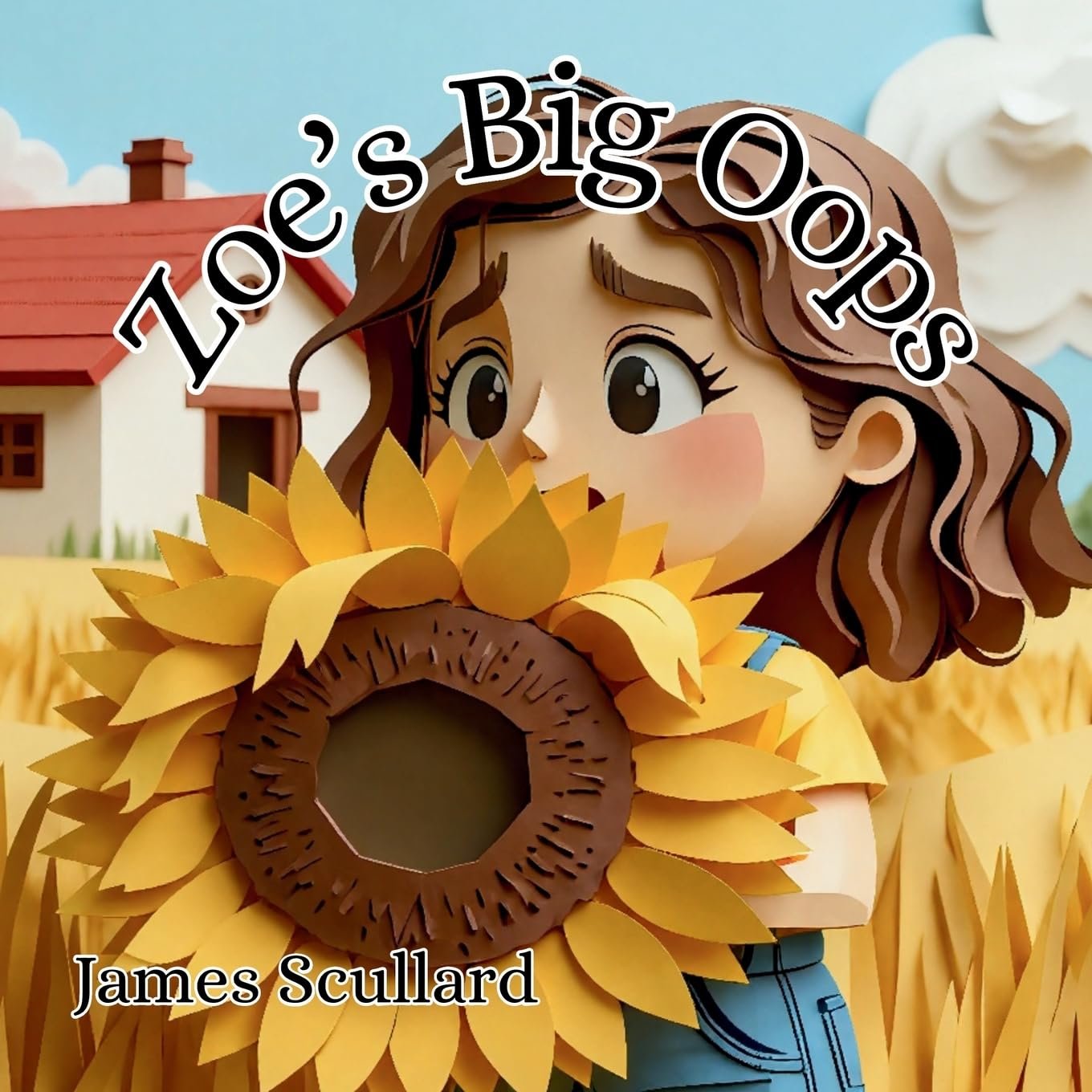
Zoe's Big Oops
“Oops” is a small word that carries a surprisingly complicated childhood experience: the instant something goes wrong, followed by a fear of how others will react. James Scullard’s Zoe’s Big Oops…
Books worth discovering. Authors worth knowing.
“Oops” is a small word that carries a surprisingly complicated childhood experience: the instant something goes wrong, followed by a fear of how others will react. James Scullard’s Zoe’s Big Oops uses that word as its hook. Bookseller records verify a 32-page paperback attributed to Scullard, with children’s adventure, animal-story and…
Considered reviews, grounded in the book’s documented promise.
“Oops” is a small word that carries a surprisingly complicated childhood experience: the instant something goes wrong, followed by a fear of how others will react. James Scullard’s Zoe’s Big Oops uses that word as its hook. Bookseller records verify a 32-page paperback attributed to Scullard, with children’s adventure, animal-story and personal-development catalogue classifications. They do not provide a dependable scene-by-scene synopsis, the nature of Zoe’s mistake or the work’s actual resolution. The title therefore offers a promising emotional situation, not a license to invent a moral adventure. This is an intentionally limited-source assessment.
Mistake as the centre of a picture book
For younger readers, a mistake may feel enormous even when an adult considers it small. The phrase “big oops” captures the difference between scale and feeling without a long explanation. An effective story could respond with comedy, suspense, repair or reassurance, and those possibilities demand distinct literary choices. A joke that makes the child feel small has a different effect from one that makes an accident survivable. The power of a children’s book on this subject is the chance to show what responsibility looks like without making error a permanent identity. None of these potential developments should be mistaken for verified events in Zoe’s story. They are criteria for assessing the book once its pages are available.
How visual pacing changes the experience
Picture books depend on a distribution of knowledge between words and images. A drawing can disclose the extent of a mishap while the narrator remains blissfully unaware; a page turn can delay a reaction; a facial expression can tell readers whether someone feels embarrassed, mischievous or afraid. The public catalog data confirms a picture-book-length format but does not describe illustrations or typography. That absence prevents a confident evaluation of the work’s craft, particularly because the comic or compassionate meaning of “oops” could reside almost entirely in the images. For a review intended to be fair to the author and any illustrator, that is a material limit rather than a detail to be smoothed away.
The difference between a lesson and a story
Adults often choose books about mistakes because they want children to learn that accidents happen and apologies matter. Children may choose the same book because they want the suspense of discovering what went wrong. Good storytelling can respect both desires without letting a message overrun the experience. The title suggests a focus on mishap, and cataloguing indicates young readers, but no reliable description establishes whether the work is comic, reflective or adventurous. A stronger final review would need to know how Zoe responds and whether other figures support or challenge her. Until then, labeling the book “a tale of forgiveness” or “a lesson in kindness” would exceed the evidence.
Who will value this book
Zoe’s Big Oops may be worth a closer look for parents, librarians and teachers assembling stories about mistakes, but the precise subject and age appropriateness require a sample of the edition. The 32-page format suggests a short shared reading experience; it does not demonstrate the book’s tone or artistic quality. This spotlight deliberately refrains from a definitive recommendation, star rating or plot summary. The next editorial step is to inspect its cover and interior spreads and verify exactly what kind of problem Zoe faces and how the book imagines a response.
Scope of this assessment
This is a research-based editorial review drawn from identified bibliographic, author and publisher sources. It considers the work’s documented premise and the critical questions it invites, without claiming a complete firsthand reading. No unverified scene, character action or ending is asserted.
About the book.
An evidence-bounded critical introduction to short illustrated children’s fiction with content unverified. Published descriptions support the stated premise; interpretations are identified as editorial analysis, not confirmed plot details.
This is an unsponsored, research-based editorial review, not a claim to firsthand reading of the complete book. Only bibliographic metadata is independently established; title does not prove any specific event or moral conclusion.
Found a book worth opening?
Books worth discovering. Authors worth knowing.
Return to the Journal →