
Stinky Feet Pete and the Mighty Hitters
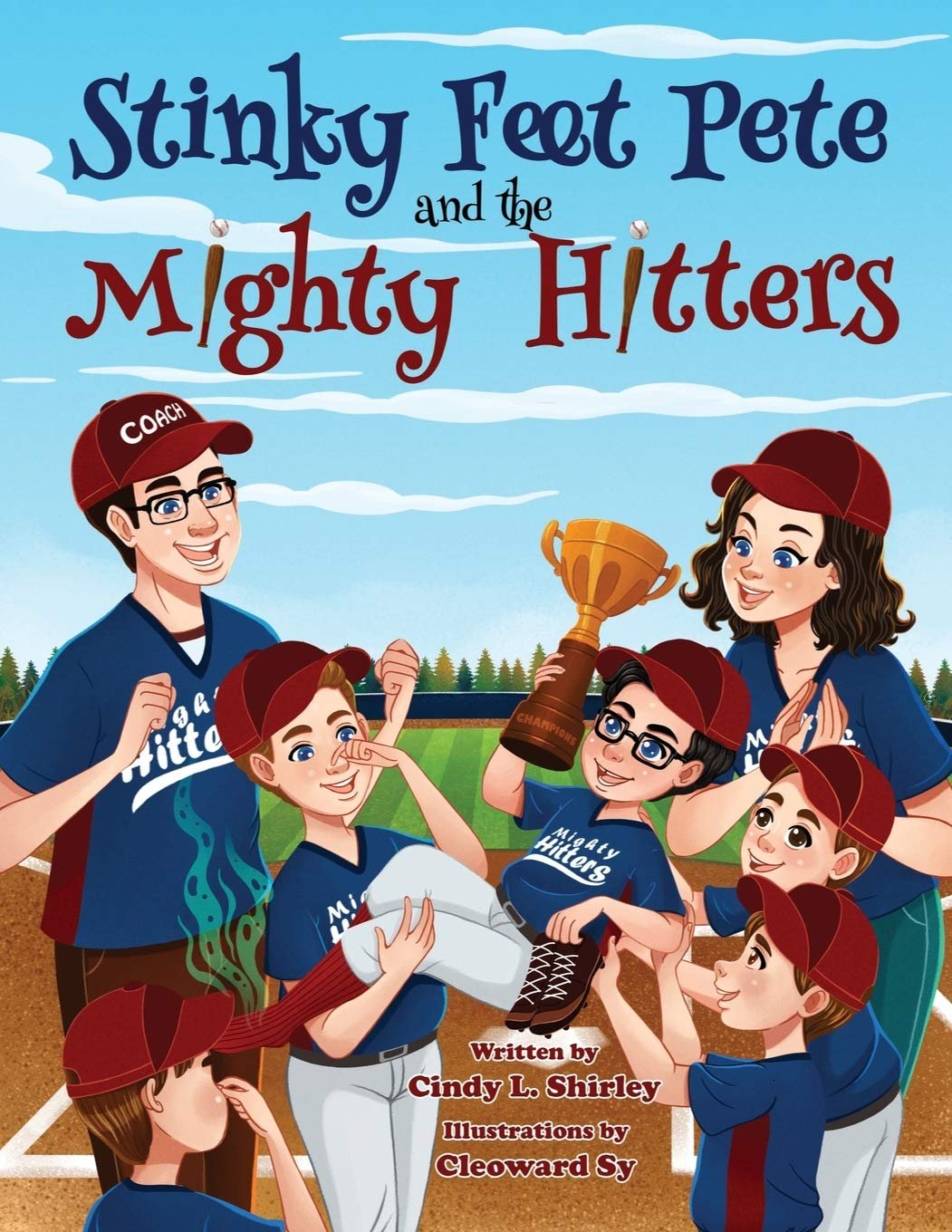
Pete McGee’s baseball team has a secret weapon that would be disastrous in almost any other sport: his spectacularly smelly feet. In Stinky Feet Pete and the Mighty Hitters, Cindy L. Shirley builds…
Books worth discovering. Authors worth knowing.
Pete McGee’s baseball team has a secret weapon that would be disastrous in almost any other sport: his spectacularly smelly feet. In Stinky Feet Pete and the Mighty Hitters, Cindy L. Shirley builds a Little League playoff comedy around Pete’s lucky socks, his teammates’ trust in him and the prospect of reaching the championship game. Bibliographic…
Considered reviews, grounded in the book’s documented promise.
Pete McGee’s baseball team has a secret weapon that would be disastrous in almost any other sport: his spectacularly smelly feet. In Stinky Feet Pete and the Mighty Hitters, Cindy L. Shirley builds a Little League playoff comedy around Pete’s lucky socks, his teammates’ trust in him and the prospect of reaching the championship game. Bibliographic records confirm Cailey Shirley as editor and Cleoward Sy as illustrator in the identified edition. The premise is playful, but the pressure of a game shared by a team gives its joke a genuine narrative direction. The oddest player is not necessarily an outsider when everyone wants his particular strangeness on their side.
A joke that can carry a team story
Children’s sports stories often emphasize practice, talent or a decisive moment of athletic bravery. Shirley’s device rearranges those expectations: Pete’s contribution is comic and slightly embarrassing. That reversal can be liberating for young readers who feel their own peculiarities are more visible than their abilities. Yet it also invites a delicate question about the boundaries of laughter. A reader should be laughing with Pete rather than at a child reduced to an unpleasant bodily joke. The summary suggests teammates who count on him, a useful counterweight to humiliation. How the book handles that relationship in dialogue and illustration will determine whether the humor lands as affectionate or crude. The mere fact of gross-out comedy is not a weakness; its emotional direction matters.
Luck, preparation and responsibility
Pete’s lucky socks are an ideal children’s-book object. They are concrete, easy to recognize across pages and capable of generating anticipation before a game. In sports, superstition can be a private ritual that gives a child courage; it can also become a way of avoiding the uncertainty of teamwork. A playful narrative may not need to resolve this tension explicitly, but it becomes richer when the whole team retains some agency rather than relying on the odor of one player’s footwear as magical destiny. The description promises a playoff situation with stakes the children can understand. The strongest version of that story would let Pete’s confidence work alongside his teammates’ participation rather than replace it.
The illustration’s share of the joke
Cleoward Sy’s illustrator credit is more than metadata. A picture book can make smell visible through posture, expressions, exaggeration and the distance characters put between themselves. It can also show the speed of a baseball game while allowing a listener to linger over the players’ reactions. Those two visual tasks compete: one needs a cartoon pause, the other a sense of movement. The illustrations may turn a simple line of verse into several layers of action, but that cannot be judged without examining the original spreads. Similarly, the book’s 38-page catalog entry establishes a modest physical scope, not whether the pages are paced effectively for read-aloud performance. This is a title for which visual inspection is especially important before a final review.
Competition and belonging
The premise culminates in a possible championship opportunity, which gives Pete’s comic trait a social meaning. In a group, children frequently learn to value whichever skill appears to win attention. A more lasting story can explore what it means to belong when the scoreboard changes or the strange attribute no longer seems useful. Even if the book stays buoyant and uncomplicated, a parent could ask whether Pete’s teammates enjoy him as a friend as well as a lucky charm. That question grows directly from the documented team dynamic. It is not a claim that the author actually supplies a moral lesson on acceptance. The value of the story may lie in making such discussion easy, lighthearted and accessible after the laughter.
The limits of the sporting cliché
The final game is a common narrative framework because it supplies an obvious clock and a visible objective. The creative challenge is to avoid reducing the book to an outcome whose result matters more than the experience. Children’s readers may not care whether the team ultimately takes a trophy, provided they have enjoyed the tension, surprises and bond among its players. The published blurb withholds the result. That is appropriate; the suspense should remain intact. A review can say the story sets up a comic playoff adventure, but cannot truthfully celebrate a victory, a particular play or a lesson delivered by the closing scene without seeing it.
Why gross-out humour matters
Children often receive conflicting messages about bodies: adults tell them that bodies are natural while demanding politeness about every smell and sound. Pete’s exaggerated feet offer a comic release from that contradiction. A book that lets a child be ridiculous without becoming ashamed can offer a small space of freedom, particularly in the competitive environment of organized sports. Yet bodily humor acquires its meaning from the surrounding reactions. A teammate’s disgust may be affectionate, cruel or both; illustrations and timing determine which. What makes Shirley’s premise promising is the possibility that the very trait Pete might hide becomes something his friends acknowledge openly. The exact emotional effect cannot be assessed without the illustrated text, so this remains an editorial reading of the premise rather than praise for unseen scenes.
Who will value this book
This looks especially suitable for children who like baseball, physical comedy and lively group read-alouds, as well as adults who welcome slightly mischievous humor. Families seeking a restrained sports biography or detailed rules instruction will not find those goals in the public description; the book is marketed as a funny Little League story. The actual rhymes, pictures and ending need direct inspection for a complete critical judgment. What can be responsibly recommended now is the clearly articulated comic premise and its inviting team setting—not an unverified claim about the finished artistry of every spread.
Scope of this assessment
This is a research-based editorial review drawn from identified bibliographic, author and publisher sources. It considers the work’s documented premise and the critical questions it invites, without claiming a complete firsthand reading. No unverified scene, character action or ending is asserted.
About the book.
An evidence-bounded critical introduction to humorous sports picture book for children. Published descriptions support the stated premise; interpretations are identified as editorial analysis, not confirmed plot details.
This review concerns a book marked sponsored in the current MarketAnyBook queue. Sponsorship is disclosed, and all observations remain research-based.
Found a book worth opening?
Books worth discovering. Authors worth knowing.
Return to the Journal →