
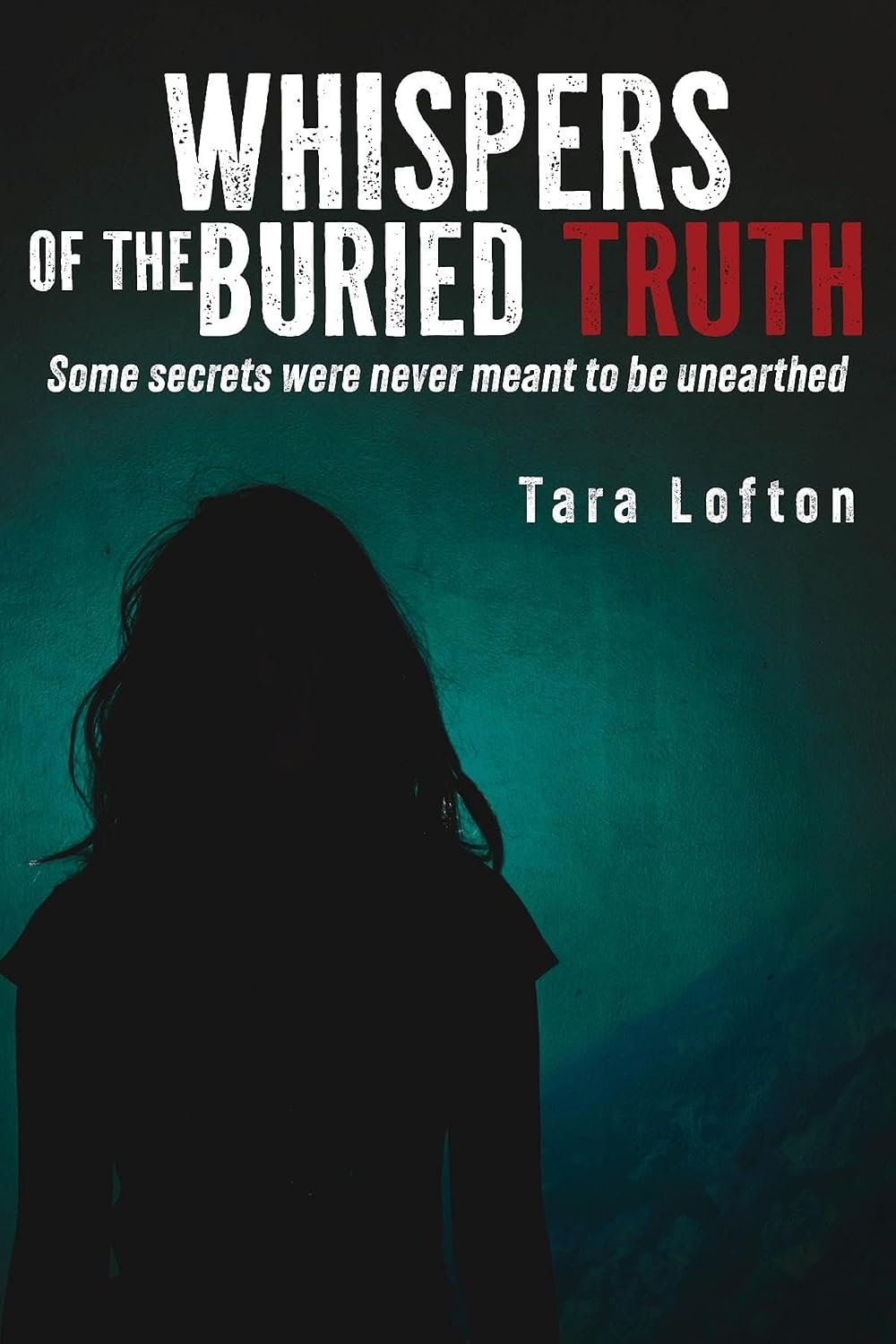
Whispers of the Buried Truth
A forensic artist returns to a fog-shrouded coastal town where a body, an old crime and a guarded bookseller seem to belong to the same unfinished history. Tara Lofton’s Whispers of the Buried Truth…
Books worth discovering. Authors worth knowing.
A forensic artist returns to a fog-shrouded coastal town where a body, an old crime and a guarded bookseller seem to belong to the same unfinished history. Tara Lofton’s Whispers of the Buried Truth introduces Eden Vale in Ashmoor and draws her toward Cassian Rourke, whose sister Iris was murdered. Retailer and publisher summaries connect new violence…
Considered reviews, grounded in the book’s documented promise.
A forensic artist returns to a fog-shrouded coastal town where a body, an old crime and a guarded bookseller seem to belong to the same unfinished history. Tara Lofton’s Whispers of the Buried Truth introduces Eden Vale in Ashmoor and draws her toward Cassian Rourke, whose sister Iris was murdered. Retailer and publisher summaries connect new violence to a powerful group with roots in the town’s past. The premise joins professional investigation to intimate memory: Eden has tools for reconstructing a stranger’s face but may have to confront what her own recollections refuse to organize.
An artist tasked with rendering truth
The choice of a forensic artist as protagonist is more than an occupational flourish. Reconstructing or representing faces involves translating fragmentary evidence into a recognizable image, a process both technical and interpretive. This gives Eden a distinctive way of approaching mysteries: she must attend to what is visible and to the limits of her own assumptions. A crime novel could use that profession to question the confidence with which people identify others and narrate the past. The book’s public synopsis confirms Eden’s profession but does not disclose specific procedures or sketches, so it would be inappropriate to praise its forensic accuracy without checking the text. Still, the role offers a potentially rich metaphor for a story about incomplete memories and truths that resist easy recognition.
Ashmoor and the ethics of atmosphere
The coast, fog and cliffs are familiar thriller materials, but their mere presence does not create psychological depth. A town becomes convincing when its geography shapes how people interact and what they are willing to say. Ashmoor is presented as a place where forgotten names and older events have enduring force. The most interesting possibility is not that fog hides a killer; it is that social habits hide responsibility in plain sight. Small communities can preserve records of injury alongside rituals of silence, and a returning investigator may find that her knowledge of the place is both an advantage and a distortion. The description gives enough information to see why the setting matters, but not enough to grade the actual prose’s sensory precision.
The bookseller and the usefulness of secrecy
Cassian Rourke’s profession is an evocative counterpart to Eden’s. A forensic artist reconstructs from physical evidence; a bookseller works among preserved accounts, versions and omissions. The story links him to the unsolved murder of his sister Iris and presents him as someone guarding dangerous knowledge. Such a pairing could produce a rewarding contest between memory, documentary traces and personal loyalty. It could also fall into the familiar trap of making an enigmatic man compelling simply by withholding basic truths from the protagonist. A serious reader may ask whether Cassian’s secrecy has understandable stakes and whether Eden retains independent judgment. The public description establishes their connection and grief but reserves their eventual relationship and revelations.
Old power, new violence
The synopsis identifies ritualistic murders and a group that formerly ruled the town. This suggests a thriller about the survival of influence after its official legitimacy has ended. Power can live on through property, reputation, family ties or the fear of speaking aloud. Ritual imagery may amplify suspense, yet it needs causal meaning beyond decoration; otherwise symbolic violence becomes a substitute for investigating how people are controlled. The story’s most compelling social question may be why earlier crimes remained unsolved and whose interests were protected by the delay. The available publicity is specific enough to locate that question, not to answer it. A full-text review should test whether the eventual explanation connects the killings to the town’s established history rather than relying on arbitrary revelation.
The cost of remembering
Eden’s buried memories introduce a personal dimension to her professional task. Thrillers frequently treat recovered memory as a flawless key to a puzzle, a narrative convenience that can oversimplify the psychology of trauma. A more responsible treatment would portray recollection as incomplete, contested and emotionally consequential without suggesting that every memory necessarily offers judicial proof. The premise positions Eden between external evidence and private experience, so the reader may be invited to compare how confidently each can be interpreted. This is a critical possibility rather than evidence of clinical sophistication. The summary makes the link between memory and investigation clear but does not permit a judgment about how realistically that link is handled.
An archive of complicity
The town’s secrets are particularly interesting because the plot appears to connect old authority with current violence. A cold case can become a record of what institutions were unwilling or unable to notice. The role of a bookseller alongside a forensic artist intensifies that possibility: both deal with fragments of another person’s past, yet neither can guarantee that the fragment tells the whole story. If Ashmoor’s powerful families shaped the public account of earlier deaths, uncovering truth becomes a political act as well as a detective achievement. The synopsis points toward this form of social suspense. What the novel actually proves, and whether the ending distributes responsibility fairly, must remain outside a review that has not examined the complete text.
A mystery of moral inheritance
When a place preserves wrongdoing, later generations inherit more than clues. They inherit silences, loyalties and stories told in order to make the past manageable. Ashmoor’s alleged network of old power offers a way for the novel to explore that inheritance without reducing every resident to a conspirator. The strongest suspense would distinguish people who acted, people who knew and people who never had a reasonable chance to speak. Such distinctions make a town morally legible. The premise points toward collective memory, though only the completed novel can show whether that theme earns its place among the revelations.
Who will value this book
Whispers of the Buried Truth should interest readers who like atmospheric cold cases, small-town power networks and psychological mysteries in which a professional investigator has a personal stake. It is likely less suited to those who dislike violence, ritual-crime imagery or plotlines involving old trauma. Publisher information identifies enough of the mystery’s architecture to make the book distinguishable from a generic coastal thriller, but neither the culprit nor the emotional resolution can be inferred. The final evaluation must still depend on the fairness of the clues, the handling of memory and the quality of Eden’s decisions on the page.
Scope of this assessment
This is a research-based editorial review drawn from identified bibliographic, author and publisher sources. It considers the work’s documented premise and the critical questions it invites, without claiming a complete firsthand reading. No unverified scene, character action or ending is asserted.
About the book.
An evidence-bounded critical introduction to atmospheric cold-case psychological thriller. Published descriptions support the stated premise; interpretations are identified as editorial analysis, not confirmed plot details.
This is an unsponsored, research-based editorial review, not a claim to firsthand reading of the complete book.
Found a book worth opening?
Books worth discovering. Authors worth knowing.
Return to the Journal →