
Battle Below the Storm: A Tale of Rhoda the Bear: 1
Violet clouds gather over a swamp, and a bear recalls her grandmother’s warning that such clouds may signal a hex. In Austin Marshall Calloway’s Battle Below the Storm, Rhoda leaves Garnet Swamp to…
Books worth discovering. Authors worth knowing.
Violet clouds gather over a swamp, and a bear recalls her grandmother’s warning that such clouds may signal a hex. In Austin Marshall Calloway’s Battle Below the Storm, Rhoda leaves Garnet Swamp to investigate, eventually joining Professor Eunice Mingerheim and the monk Miro Del. A bookseller description sends their quest toward the Baraj Kingdom, a…
Considered reviews, grounded in the book’s documented promise.
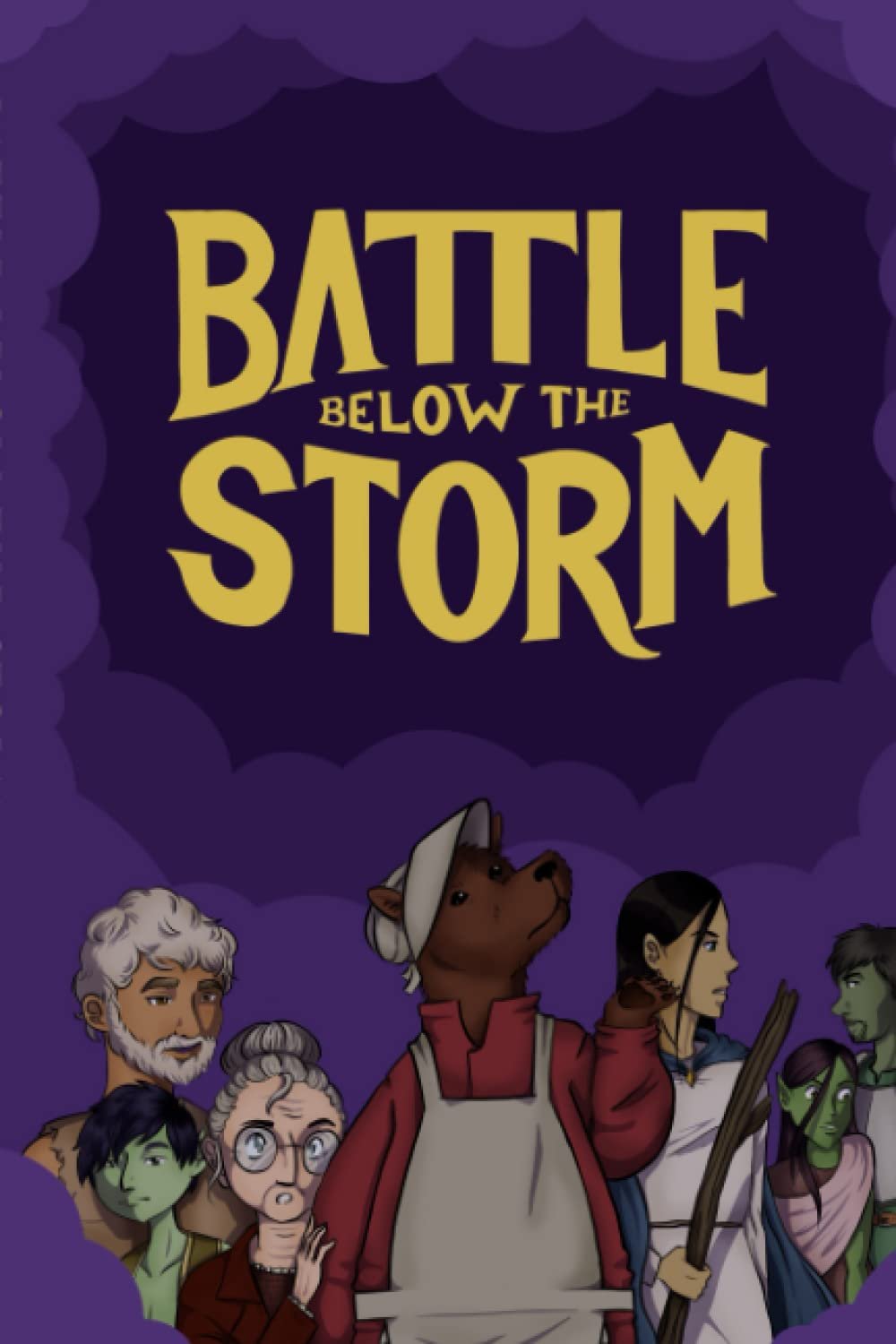
Violet clouds gather over a swamp, and a bear recalls her grandmother’s warning that such clouds may signal a hex. In Austin Marshall Calloway’s Battle Below the Storm, Rhoda leaves Garnet Swamp to investigate, eventually joining Professor Eunice Mingerheim and the monk Miro Del. A bookseller description sends their quest toward the Baraj Kingdom, a desert land associated with goblins and a dark plot. That combination is already distinctive: a folkloric warning sets the adventure in motion, while a scientist and a monk join a talking bear in considering what the strange sky might mean. The fantasy’s most interesting promise is a confrontation among different ways of understanding danger.
The sky as the first witness
The violet clouds are an effective initiating image because they belong to everyone’s world but receive a particular meaning from family memory. Rhoda does not encounter a written summons or a convenient messenger; she recognizes a sign through something her grandmother told her. That can give the quest an intergenerational dimension. Folklore preserves warnings long after their originating circumstances become obscure, and an adventure can test when such stories deserve attention. The book’s synopsis describes the warning as a clue, not proof that every traditional belief is correct. An imaginative reviewer should resist confusing the omen with a fully explained magic system. The real promise is the tension between inherited knowledge and the fresh evidence Rhoda must gather.
A scientist, a monk and a bear
The travelling party has a pleasing structural imbalance. Eunice is identified as a scientist, Miro Del as a stoic monk, and Rhoda is defined at first through action and memory. These three perspectives could offer distinct responses to a magical disturbance: measurement, discipline and the obligations of home. Whether the novel actually stages philosophical disagreement among them is unknown. But the combination can prevent an otherwise linear journey from becoming a succession of obstacles. A fantasy party feels alive when its members differ not only in special abilities but in what they believe counts as evidence and when they are willing to take a risk. The public material identifies the companions; it does not establish their dialogue, interior motives or eventual relationships.
Landscape as an ethical progression
The route from swamp to desert suggests a story of increasing displacement. Rhoda starts in a familiar ecology, then travels toward the Baraj Kingdom, an unfamiliar territory with its own population and politics. Such a movement can challenge the assumption that the world beyond home is only hostile terrain. Goblins in fantasy are sometimes used as faceless threats, but a named kingdom also allows the possibility of a society with its own interests and history. The accessible blurb establishes the location, not whether its inhabitants are given complexity. A critic will want to see whether the novel treats travel as discovery or merely as an escalating obstacle course on the way to an enemy. The difference is central to the richness of secondary-world adventure.
A series built on consequences
Battle Below the Storm is identified as Book 1 of the Rhoda the Bear series, with Voyage to Horizon Lighthouse following as Book 2. This relationship matters for duplicate prevention and critical interpretation. The books share a protagonist and universe but have different titles and advertised events; they are not different formats of one work. A series opening must establish enough about its world and central company that later dangers feel like the result of earlier choices rather than an arbitrary reset. The available material documents Rhoda’s first investigative journey but does not disclose the ending. Readers who want to start a larger adventure should begin here, while recognizing that the broader arc develops beyond the first volume.
A supernatural omen and the problem of proof
Rhoda’s grandmother’s warning illustrates a form of knowledge that adventure fiction often neglects: wisdom carried by narrative rather than written evidence. A purple sky is not only a visual marvel but a remembered sign with possible consequences. The professor’s presence invites a tension between empirical investigation and inherited explanation, while the monk suggests an additional discipline of interpretation. If these perspectives enter into genuine conversation, the quest can ask how people know when to act under uncertainty. If one perspective simply defeats the others, the party may become less interesting. The available synopsis identifies all three companions but not whether their methods clash. What makes the premise distinctive is that a bear’s memory initiates inquiry into a phenomenon large enough to alter many lives.
The responsibilities of series opening
The first Rhoda novel also has to make its unusual world hospitable to a reader who has never heard of Garnet Swamp or the Baraj Kingdom. A convincing fantasy does not need to explain every name immediately; it does need to give the reader a dependable sense of what matters. The journey across different terrains may serve that work gradually, allowing the cast to encounter practices and dangers beyond home. The narrative should distinguish wonder from bewilderment, and preserve the protagonists’ reasons for continuing when the original omen becomes only one part of a wider plot. A full reading would test whether the lore supports the adventure or competes with it. The public book description provides a compelling departure but no evidence about the eventual balance.
Who will value this book
Battle Below the Storm may appeal to readers of quest fantasy, animal protagonists and stories in which folklore meets skeptical investigation. The published description offers a substantial journey from Garnet Swamp to a desert kingdom, though the book should not automatically be classified as an early-childhood picture book simply because it features a bear. Its listed paperback length is closer to a full fantasy novel, and an excerpt is needed to judge reading level. The original queue lists three contributors and “one more”; bibliographic records identify illustrator Sierra Kellermeyer, but the exact credit should be checked against the original cover. These limits are important, not reasons to merge this book with its sequel.
Scope of this assessment
This is a research-based editorial review drawn from identified bibliographic, author and publisher sources. It considers the work’s documented premise and the critical questions it invites, without claiming a complete firsthand reading. No unverified scene, character action or ending is asserted.
About the book.
An evidence-bounded critical introduction to animal-character fantasy adventure. Published descriptions support the stated premise; interpretations are identified as editorial analysis, not confirmed plot details.
This is an unsponsored, research-based editorial review, not a claim to firsthand reading of the complete book. The original Sheet credit is truncated at “& 1 more”; other bibliographic sources identify Sierra Kellermeyer as illustrator, pending final cover verification.
Found a book worth opening?
Books worth discovering. Authors worth knowing.
Return to the Journal →