
The Silent Game
The most frightening visitor in a domestic thriller may be the one invited inside for an entirely reasonable reason. In Davante Wilson’s The Silent Game, a mother rebuilding life after loss hires a…
Books worth discovering. Authors worth knowing.
The most frightening visitor in a domestic thriller may be the one invited inside for an entirely reasonable reason. In Davante Wilson’s The Silent Game, a mother rebuilding life after loss hires a babysitter for a quiet evening. The visitor introduces herself as Rachel and appears composed, warm and trustworthy. Wilson’s official author site and…
Considered reviews, grounded in the book’s documented promise.
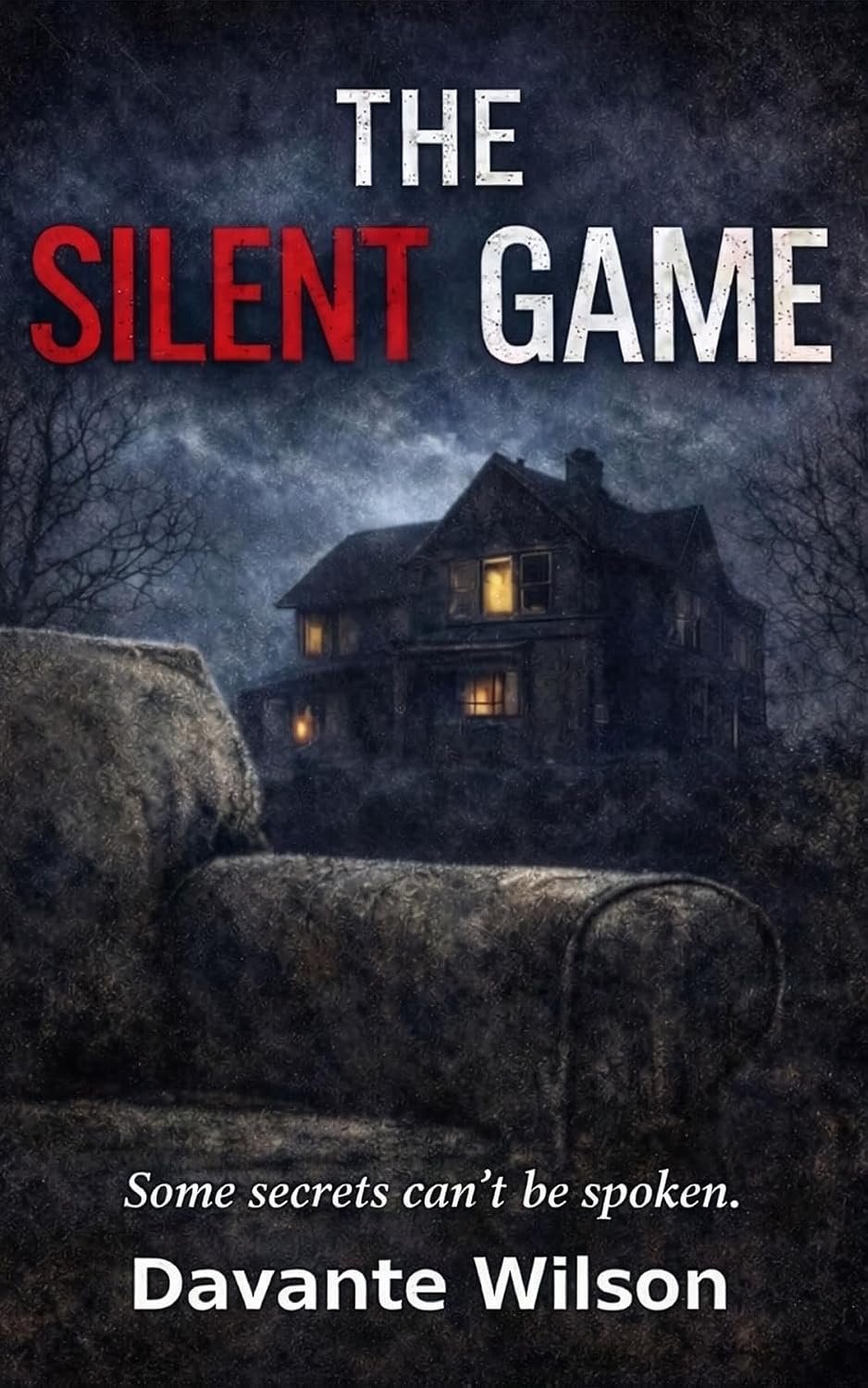
The most frightening visitor in a domestic thriller may be the one invited inside for an entirely reasonable reason. In Davante Wilson’s The Silent Game, a mother rebuilding life after loss hires a babysitter for a quiet evening. The visitor introduces herself as Rachel and appears composed, warm and trustworthy. Wilson’s official author site and publishing house both make clear that this identity is deceptive. The babysitter studies the household’s routines and children because she believes that the family’s life should have been hers. The premise turns trust into a vulnerability and the home into a space whose intimate details can be observed and appropriated.
The door opens because trust is necessary
Stories of intrusion sometimes make their protagonists foolish for failing to spot danger. The more disturbing idea in The Silent Game is that ordinary life requires trust. Parents must rely on others, especially when recovering from loss or trying to maintain work and social relationships. A babysitter can be vetted, greeted and welcomed without every assumption becoming a moral mistake. The novel’s central threat therefore need not depend on an implausible lapse of judgment. It can arise from a social necessity: to live with others, we must accept that appearances and references never reveal an entire interior life. Wilson’s description locates the danger inside this ordinary exchange. A full review would examine whether the book respects the mother’s circumstances or retroactively punishes her for making a reasonable choice.
An identity assumed for an evening
The publisher reveals that “Rachel” is a false name and identifies the visitor as Juliet, whose history includes abandonment and neglect. That information gives the thriller a distinctive psychology of imitation. Juliet is not described merely as someone seeking objects or information; she wants an entire domestic position that belongs to another person. Studying routines becomes the first stage of possession. The detail is chilling because it turns ordinary family gestures into evidence for someone else’s private fantasy. Yet psychological motivation is not moral exoneration. A nuanced book might distinguish the injury Juliet has suffered from the danger she poses, allowing readers to comprehend obsession without being asked to excuse it. The publisher copy establishes her history at a high level, but not her full interior development.
A mother carrying more than one kind of loss
The householder, named Melissa Sommers in the publisher’s synopsis, is rebuilding her life after bereavement. This matters for the structure of suspense. A home that has already been changed by loss becomes the target of someone who wants to replace or inhabit its existing relationships. Melissa’s vulnerability is therefore not a generalized weakness; it emerges from an effort to continue living despite upheaval. The strongest version of the thriller would let her remain an active decision-maker rather than turn grief into an excuse to deny her competence. A surviving parent may need help without surrendering ownership of her family’s story. The description leaves open how Melissa detects danger or acts during the night; those scenes and their credibility cannot be evaluated here.
Suspense built from observation
The title suggests a contest in which one participant knows far more than the other. Rather than announcing an elaborate chase, the synopsis emphasizes the babysitter’s attention to routines, children and the emotional fabric of the house. Such emphasis points toward slow-burn suspense, where a slight change in behavior can carry greater weight than overt violence. This approach is demanding for a writer: if the threat is hidden too completely, the reader feels no tension; if it is explained too early, the unease must be sustained by character decisions rather than surprise alone. The available publisher materials intentionally reveal the false identity. A review should therefore ask how the narrative uses what the reader knows against what the family knows, not pretend that the identity revelation remains a secret from the audience.
What the title means by a game
Games have rules, but the person targeted by this babysitter has not agreed to play. That imbalance is central to the horror of covert obsession. Juliet appears to construct her own imagined terms: the family has a life she wants, and she has decided that close observation authorizes replacement. The title’s silence may refer less to an absence of sound than to an absence of openly acknowledged intention. An ethical reading resists romanticizing such planning as cleverness merely because it is meticulous. At the same time, a thriller needs psychologically believable behavior and dramatic escalation, not a villain described only through a diagnosis. The premise offers a specific, disquieting design; its execution requires examination of tone, pacing and consequence in the full book.
A thriller of appropriated domestic detail
Juliet’s method is chilling because it treats a home as a script that can be learned. The time of breakfast, the objects children favor and the ways family members speak may seem trivial to an outsider, yet together they define belonging. The publisher’s account makes observation, rather than instant violence, a major component of her intrusion. This creates a suspenseful conflict between information and intimacy: knowing a household’s routines does not make one part of it. A successful psychological thriller can make readers feel that difference in every apparently benign gesture. The false babysitter may know where things belong, but she cannot inherit the relationships that gave those details meaning. That is the emotionally precise terror suggested by Wilson’s premise.
Who will value this book
The Silent Game is well suited to readers of intimate psychological thrillers who prefer concealed motives and the gradual corrosion of trust to large-scale action. It may be especially unsettling for readers sensitive to threats against children, stalking or parental grief. The author and publisher provide consistent core information about a false-identity babysitter, though one summary initially uses the alias Rachel while another identifies the character as Juliet; these are not separate people. The recommendation rests on that documented setup, not on a claim to know the plot’s escalation, final confrontation or literary success from a complete reading.
Scope of this assessment
This is a research-based editorial review drawn from identified bibliographic, author and publisher sources. It considers the work’s documented premise and the critical questions it invites, without claiming a complete firsthand reading. No unverified scene, character action or ending is asserted.
About the book.
An evidence-bounded critical introduction to domestic psychological thriller about identity and obsession. Published descriptions support the stated premise; interpretations are identified as editorial analysis, not confirmed plot details.
This is an unsponsored, research-based editorial review, not a claim to firsthand reading of the complete book. Author site calls the visitor Rachel; publisher discloses Rachel is an assumed identity and identifies Juliet. These descriptions are compatible.
Found a book worth opening?
Books worth discovering. Authors worth knowing.
Return to the Journal →