
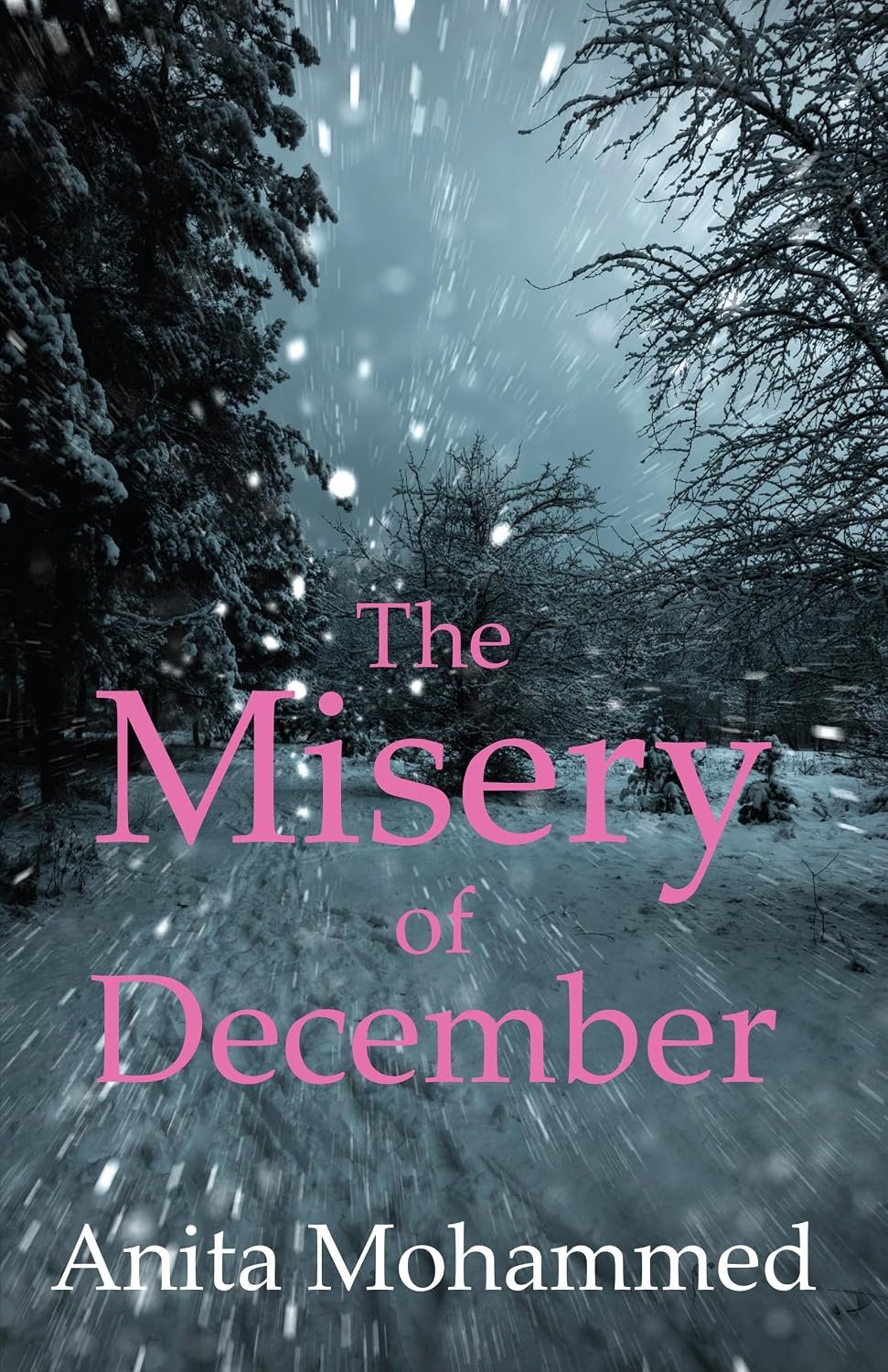
The Misery of December
A city can appear peaceful because its competing powers have learned to coexist, not because justice has prevailed. That distinction gives Anita Mohammed’s debut thriller The Misery of December its…
Books worth discovering. Authors worth knowing.
A city can appear peaceful because its competing powers have learned to coexist, not because justice has prevailed. That distinction gives Anita Mohammed’s debut thriller The Misery of December its forceful premise. In Burlington, Vermont, a decades-old accommodation among three criminal syndicates and the police begins to collapse when a new gang…
Considered reviews, grounded in the book’s documented promise.
A city can appear peaceful because its competing powers have learned to coexist, not because justice has prevailed. That distinction gives Anita Mohammed’s debut thriller The Misery of December its forceful premise. In Burlington, Vermont, a decades-old accommodation among three criminal syndicates and the police begins to collapse when a new gang moves in. Detective Anara Ali and her partner Jared Ublonski face mounting violence, while an outside criminal power threatens the city’s established order. The story’s potentially unsettling question is what happens when the law itself has depended upon a bargain with the people it is supposed to investigate.
When peace is a negotiated fiction
The basic arrangement is politically charged. A tacit pact between police and organized crime may spare a city bloodshed while eroding the distinction between public authority and private coercion. Mohammed’s description treats the collapse of that pact as the starting alarm, which invites the reader to examine both the threat of new violence and the compromised stability that preceded it. This is a more complicated idea than a simple invasion by outsiders. If the detectives restore the status quo, what exactly have they saved? The novel has the opportunity to make that problem personal, because investigators must operate inside institutions whose earlier choices helped define the danger. That possibility is an interpretive reading of the documented setup, not a claim about the story’s final moral verdict.
Anara Ali as more than a badge
A published BookLife review identifies Anara and Jared as the central investigators and notes that Anara’s family background and past relationships matter to the novel’s emotional stakes. The personal story is important because high-volume crime fiction can treat detectives as machines for distributing clues. Anara’s private loyalties could turn procedural decisions into ethical dilemmas rather than merely professional ones. The difficult standard is integration: do the human attachments alter how she weighs evidence, danger and justice, or do they simply interrupt the investigation? Available commentary suggests an attempt to complicate the officer’s position, but it would be unfair to certify every characterization choice without reading the full novel.
Cartel ambition and the problem of scale
Public review material identifies Oscar Solando, a violent cartel leader, and Martel as figures associated with the escalation. Their arrival widens the frame from a local balance of power to an organized bid for dominance. That structure promises momentum but also carries a familiar thriller risk: when violence grows at every turn, the reader can lose sight of the specific civic consequences. The strongest scenes in such a story are not necessarily the loudest. They might be the moments when ordinary residents withdraw from public life, when a detective realizes that a source has been compromised, or when authority can no longer be trusted. Those are measures of the novel’s ambitions, not descriptions of scenes known to appear.
The distance between urgency and suspense
BookLife’s assessment offers a useful caution about the execution, pointing to dialogue and suspense that do not always match the strength of the premise. That distinction should matter to prospective readers. A narrative can have high external stakes and still feel emotionally underpowered if dialogue announces what characters should be discovering, or if danger is explained rather than allowed to unfold through choices. At the same time, the review notes a later twist and recognizes the story’s structural potential. A balanced assessment therefore neither mistakes an arresting concept for flawless craftsmanship nor dismisses the concept because a critic questioned the prose. The right question is whether the eventual revelations illuminate the initial power arrangement.
A city and its invisible agreements
The choice of Burlington is interesting because readers may associate the Vermont setting with a smaller, calmer urban environment than the metropolis of a conventional gang thriller. The contrast can sharpen the sense of civic disorientation. Yet location only earns its place if neighborhoods, public institutions and social ties affect action rather than supplying a recognizable place-name. The synopsis gives the city central importance and places civilians under threat, but detailed geographical treatment is not independently confirmed. Mohammed’s book is most promising as a story about what people call peace when the price of peace has been hidden from them.
What the crime genre can reveal about civic consent
The crime-thriller machinery is particularly well suited to asking who benefits from a settled arrangement. In an apparently quiet city, residents may never be told why certain territories, businesses or individuals are tolerated. When a more ruthless player arrives, the public discovers that institutions already accepted compromised bargains. That reversal is as politically interesting as the pursuit of a culprit. It calls for more than an accelerating body count: someone must have made the original decisions, and those decisions should have a legible cost. Mohammed’s premise invites a reader to look for this buried civic history while following Anara’s immediate investigation. Without that layer, the familiar showdown between police and a cartel may reproduce the very distinction between clean and dirty power that the initial pact appears to complicate.
The character of a thriller’s ending
A satisfying crime novel cannot merely restore the protagonist’s confidence after a victory. The world at the end ought to contain knowledge unavailable at the start, and that knowledge should have consequences. In a story about a city whose peace depended on negotiation with criminals, victory might leave a difficult question about future governance. The public commentary on Mohammed’s book notes a late twist and some reservations about the dialogue; readers should therefore pay attention to whether revelation changes the moral problem as well as the tactical one. That is a more demanding standard than asking whether the final confrontation is surprising. It allows a debut novel’s ambition to be appreciated while maintaining the distinction between effective narrative architecture and accomplished prose.
Who will value this book
Readers drawn to energetic police thrillers with gang rivalry, a female lead and a potentially compromised civic order will find a clearly identifiable premise here. Those seeking unusually subtle procedural realism should weigh the publicly documented reservations about dialogue and suspense. This is a research-based critical assessment informed by the author’s description and an independent BookLife review, not an assertion of personal full-text reading or an independently observed ending.
Scope of this assessment
This is a research-based editorial review drawn from identified bibliographic, author and publisher sources. It considers the work’s documented premise and the critical questions it invites, without claiming a complete firsthand reading. No unverified scene, character action or ending is asserted.
About the book.
An evidence-bounded critical introduction to crime thriller and police procedural. Published descriptions support the stated premise; interpretations are identified as editorial analysis, not confirmed plot details.
This is an unsponsored, research-based editorial review, not a claim to firsthand reading of the complete book.
Found a book worth opening?
Books worth discovering. Authors worth knowing.
Return to the Journal →