
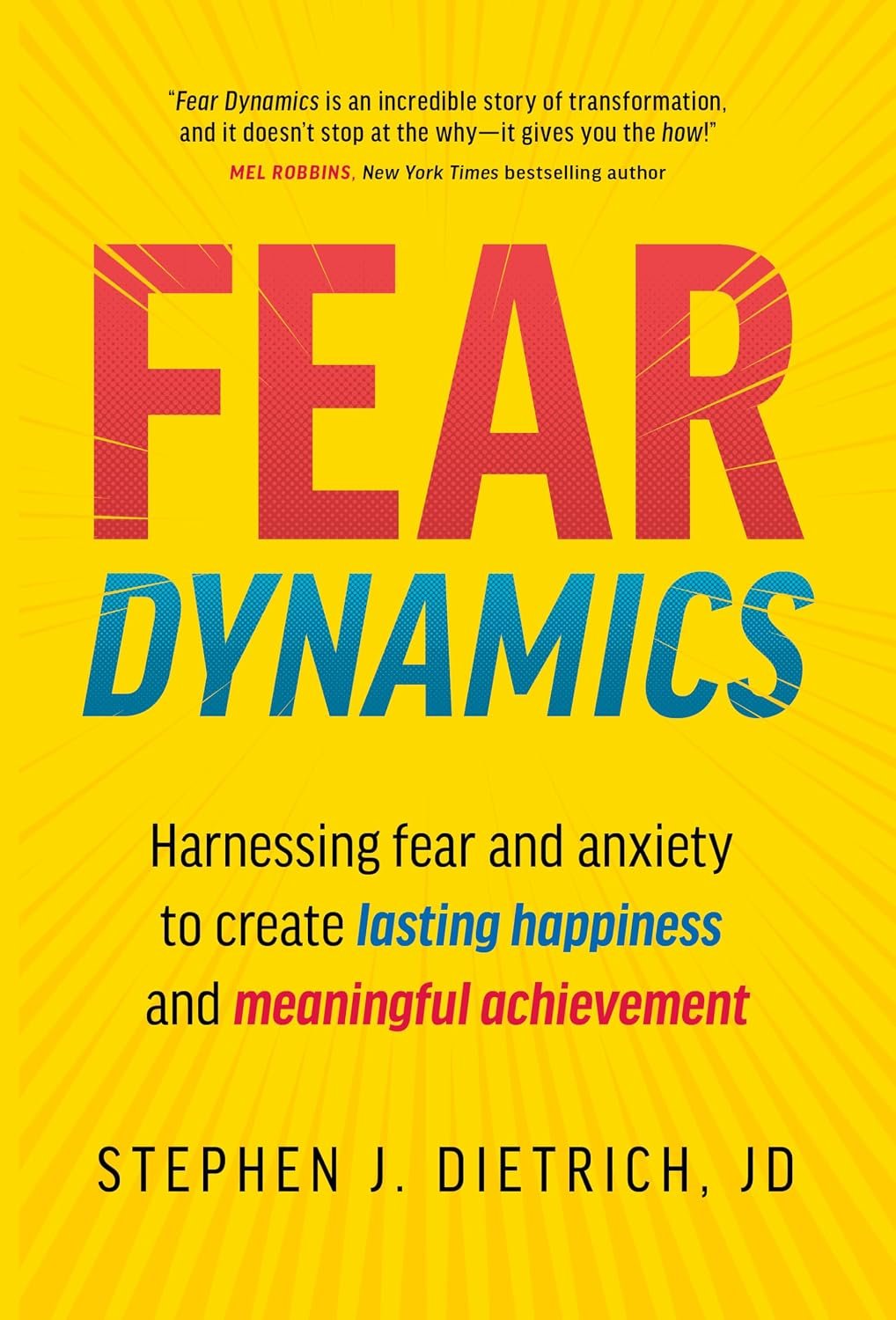
Fear Dynamics
Stephen J. Dietrich’s Fear Dynamics begins from a difficult proposition: fear may preserve the habits that once helped a person survive long after those habits cease to be useful. Dietrich, a…
Books worth discovering. Authors worth knowing.
Stephen J. Dietrich’s Fear Dynamics begins from a difficult proposition: fear may preserve the habits that once helped a person survive long after those habits cease to be useful. Dietrich, a corporate attorney, connects that problem to his own experience of childhood neglect and abuse and to techniques he developed through years of reflection. He…
Considered reviews, grounded in the book’s documented promise.
Stephen J. Dietrich’s Fear Dynamics begins from a difficult proposition: fear may preserve the habits that once helped a person survive long after those habits cease to be useful. Dietrich, a corporate attorney, connects that problem to his own experience of childhood neglect and abuse and to techniques he developed through years of reflection. He asks readers not simply to banish anxiety but to understand how threat-sensitive reactions shape relationships, decisions and professional life. The book is part personal history and part practical guide, and its strongest promise is to replace the shame of being afraid with the possibility of noticing what fear is trying to accomplish.
Fear as a pattern between people
On the author’s website, fear dynamics are described as reactions to real or perceived threats that affect communication and behavior during interpersonal encounters. That definition broadens the topic beyond private worry. A person may interpret feedback as danger, anticipate rejection during an ordinary negotiation or mistake a familiar defensive response for a fixed personality trait. Such patterns can shape workplaces and families before anyone names them. The author’s language is accessible, but a critical reader should ask how he distinguishes healthy caution from avoidable distress and how he addresses circumstances where fear is an accurate response to ongoing harm. The distinction matters because not every protective impulse should be trained away.
Biography gives the method its urgency
Dietrich’s account of early neglect and abuse appears to be the source of his investment in the topic. This autobiographical grounding can give self-help a needed specificity: the reader meets a person who had reasons to develop defensive habits, rather than a lecturer offering universal abstractions. Yet the move from one person’s experience to a general method requires care. The fact that a technique helped its inventor does not demonstrate that it will work for all people or against every kind of trauma. A strong book will present personal testimony honestly while providing readers with room to adapt, reject or seek additional help. The publisher’s description supports the memoir-and-method blend, not the independently tested effectiveness of its interventions.
From the private past to public performance
The book explicitly connects fear management to professional settings. This is an interesting move because organizations often reward the appearance of certainty, even when work is full of ambiguity. A leader may respond to threatened status with control, while an employee may read correction as humiliation. Dietrich’s experience as an attorney gives him a context in which verbal precision, hierarchy and pressure can matter greatly. But workplace success should not be defined as the elimination of discomfort. Ethical work sometimes demands acting despite justified fear; an anxiety technique that merely makes people tolerate exploitative conditions would be incomplete. The question is whether the framework sharpens judgment alongside confidence.
Self-acceptance without false absolution
The author argues for acknowledging and integrating the past rather than suppressing it. That is an emotionally persuasive orientation, but reflection must avoid implying that people are responsible for the abuse they experienced or for the speed with which they recover. Fear can have physiological, social and clinical dimensions; a book’s techniques may be useful tools without replacing individualized treatment. Readers should pay attention to the author’s claims about results and distinguish inspiration from evidence. The strongest parts of a project like this are usually concrete instances where a familiar reaction is named and a different response becomes possible. The public description promises such practical application; evaluation of individual exercises awaits full reading.
Changing the relationship rather than erasing the feeling
The title is carefully chosen: a dynamic is a relation or process, not a fixed flaw. Treating fear that way creates a more humane framework than telling readers simply to be brave. It invites them to examine when, with whom and under what conditions a response appears. The subtitle reaches toward happiness and meaningful achievement, but the essential gain may be quieter: the ability to pause before turning an old alarm into a new decision. That is a credible question for readers to bring to the work, while retaining independent judgment about any clinical claims.
The uncertainty inside an apparently certain profession
Dietrich’s legal career is not a casual credential in this context. Professional life often demands judgment under incomplete information, and confidence can be rewarded even when it conceals unexamined fear. His personal framework may therefore resonate with readers who have learned to perform composure without understanding their own defensive reflexes. A useful workplace example would separate the fear of making a mistake from the evidence that a decision is actually dangerous. That exercise requires both self-observation and attention to context. The author’s concept of fear dynamics encourages such distinctions, though the effect of his techniques cannot be evaluated from promotional material alone.
A cautious definition of transformation
A compelling self-help book should describe change without turning healing into a competitive achievement. There is no single timetable for people who have endured neglect or abuse, and a period of improvement does not make future distress evidence of failure. Dietrich’s narrative about incorporating painful experience into a more deliberate life offers a humane alternative to simply erasing memory. Its value is strongest when readers are encouraged to notice and choose, rather than instructed to suppress the feeling of alarm. Treating anxiety with curiosity is not the same as denying its seriousness. That final distinction matters especially for readers seeking guidance while also deciding whether professional support would be appropriate.
Who will value this book
This title should interest readers seeking first-person accounts of adversity combined with practical reflection on anxiety and work. It is not a replacement for psychotherapy or medical advice, and no therapeutic efficacy claim is independently verified here. The review is based on the author’s and publisher’s public descriptions.
Scope of this assessment
This is a research-based editorial review drawn from identified bibliographic, author and publisher sources. It considers the work’s documented premise and the critical questions it invites, without claiming a complete firsthand reading. No unverified scene, character action or ending is asserted.
About the book.
An evidence-bounded critical introduction to trauma memoir and self-development framework. Published descriptions support the stated premise; interpretations are identified as editorial analysis, not confirmed plot details.
This review concerns a book marked sponsored in the current MarketAnyBook queue. Sponsorship is disclosed, and all observations remain research-based.
Found a book worth opening?
Books worth discovering. Authors worth knowing.
Return to the Journal →