
Who is the Best?
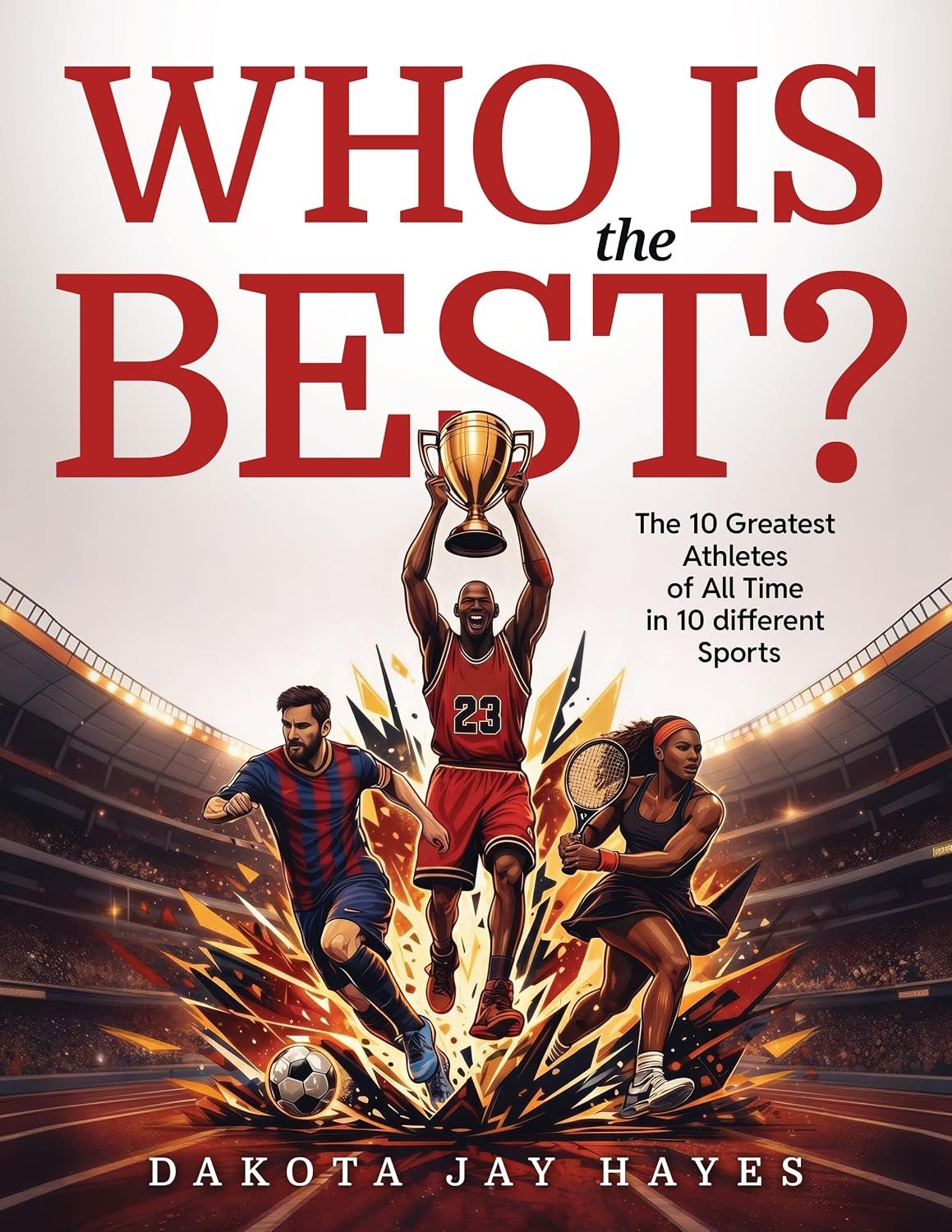
Who is the Best? begins with one of sport's most pleasurable impossibilities: the desire to identify a greatest athlete when the candidates did not share the same field, equipment, rules or…
Books worth discovering. Authors worth knowing.
Who is the Best? begins with one of sport's most pleasurable impossibilities: the desire to identify a greatest athlete when the candidates did not share the same field, equipment, rules or historical conditions. Dakota Jay Hayes offers rankings across ten sports and invites readers to compare exceptional careers. The promise is not that arguments…
Considered reviews, grounded in the book’s documented promise.
Who is the Best? begins with one of sport's most pleasurable impossibilities: the desire to identify a greatest athlete when the candidates did not share the same field, equipment, rules or historical conditions. Dakota Jay Hayes offers rankings across ten sports and invites readers to compare exceptional careers. The promise is not that arguments will cease but that they will become more interesting. A list of champions is the easy part. The genuinely critical work is deciding what excellence means when longevity, dominance, versatility, cultural influence and the level of competition pull in different directions.
A ranking is an argument about values
A hundred-athlete framework makes the book more than a conventional top-ten exercise, but scale also raises the stakes of method. Is the best athlete the person who won most, changed a game most, competed against the strongest opponents, or performed furthest beyond what the sport seemed to permit? Baseball's season, a boxer’s career and an Olympic sprinter's few decisive seconds are radically different laboratories. A ranking cannot make those differences disappear. Its value lies in exposing the assumptions behind the table rather than pretending that an apparently precise place number constitutes objective proof.
The difficulty of comparing eras
Across decades, equipment improves, professional structures change, opportunities expand and the social composition of sport shifts. It is not enough to transport a record from one generation into another without describing the conditions that gave it meaning. Historical exclusion matters, too: access to coaching, competition and recognition was not distributed equally. When readers contest a name or placement, they may really be arguing about what history owes people denied an equal stage. A credible all-time discussion acknowledges that statistical comparisons have political and social edges, even when the tone remains lively.
Why controversy is not a flaw
The author’s framing courts disagreement; that may be the book’s principal appeal. In this genre the best argument is not a closed verdict but a structure through which a reader can make a countercase. The challenge is to treat the unfamiliar sport seriously rather than making its athletes supporting characters in a familiar debate about global celebrities. One hopes to find sufficient context for each discipline to understand why its champions matter. The accessible listing confirms the ranking premise, not the exact reasoning or balance of the chapters; those need checking against the text.
A book designed for conversation
The ranking format lends itself to arguments between generations, families and teammates. It can also encourage readers to encounter athletes outside their usual allegiance. But enthusiasm becomes shallow if the prose repeats statistics without explaining style, innovation, vulnerability or the pressures peculiar to each event. Readers looking for a rigorous cross-sport formula should expect a clearly defended methodology; readers seeking a spirited conversation may welcome subjectivity. The book’s success should be judged on how honestly it draws that distinction.
The difference between greatness and fame
Sports culture often confuses being widely remembered with having done the most extraordinary athletic work. A globally televised event leaves a larger documentary footprint than a championship that received little historical coverage. Hayes's project can usefully disrupt that imbalance if the breadth of his ten-sport comparison leads readers toward overlooked disciplines. The difficult editorial standard is explanatory depth. When a reader encounters an unfamiliar contender, does the ranking make a persuasive case through achievements and contemporaneous conditions, or does it rely on the reader accepting a compressed résumé? Popularity may explain why a name appears in arguments about greatness, but it cannot by itself establish the conclusion.
Measurement and the mystery of exceptional bodies
In timed or measured competition, a record seems to offer direct comparison. In team sports, achievements depend more visibly on structures around the individual: coaches, teammates, opponents and the changing role of a position. Even in individual competition, circumstances alter what a mark means. Ranking all these achievements together is an act of interpretation masquerading, at times, as measurement. A strong sports writer admits the translation problem rather than trying to hide it behind a deceptively neat points system. The pleasure of the enterprise lies in making readers consider excellence from angles their own fandom may have neglected.
A verdict worth revisiting
The list will date as new athletes emerge and sporting rules evolve. That need not count against it. Histories of greatness tell us something about the period that produced them, including which records and qualities were most admired. Hayes may be read as a snapshot of debate rather than its final settlement. The ideal afterlife of the book is disagreement sharpened by knowledge: a reader who knows why the author placed someone high should be able to argue for a different candidate without caricaturing the original reasoning. That openness is the intellectual courtesy every enthusiastic ranking ought to provide.
Greatness beyond the winner’s podium
One further issue is what a sports ranking should do with people who altered who was allowed to participate. A record is not the only kind of achievement. Athletic courage has sometimes involved resisting exclusion, changing public assumptions or carrying a national burden that no statistic captures. Hayes's comparative project may or may not make room for those dimensions; the available description cannot establish it. Nevertheless, the question is inseparable from any serious account of greatness across a century of unequal access. Readers will gain most from debating the criteria, not simply defending the athlete whose name appears beside a preferred number. The book's enduring usefulness depends on making that debate better informed.
Who will value this book
This is a potentially engaging choice for sports fans who enjoy historical comparison and thoughtful disagreement. Treat any hierarchy as a starting position to examine rather than a settled law of greatness. The published description establishes the book's ten-sport and hundred-athlete scope, but not enough of its argumentation to certify the fairness of particular rankings.
Scope of this assessment
This is a research-based editorial review drawn from identified bibliographic, author and publisher sources. It considers the work’s documented premise and the critical questions it invites, without claiming a complete firsthand reading. No unverified scene, character action or ending is asserted.
About the book.
An evidence-bounded critical introduction to comparative sports history and rankings. Published descriptions support the stated premise; interpretations are identified as editorial analysis, not confirmed plot details.
This is an unsponsored, research-based editorial review, not a claim to firsthand reading of the complete book. Specific ranked names or placements were not independently verified; do not invent a top ten.
Found a book worth opening?
Books worth discovering. Authors worth knowing.
Return to the Journal →