
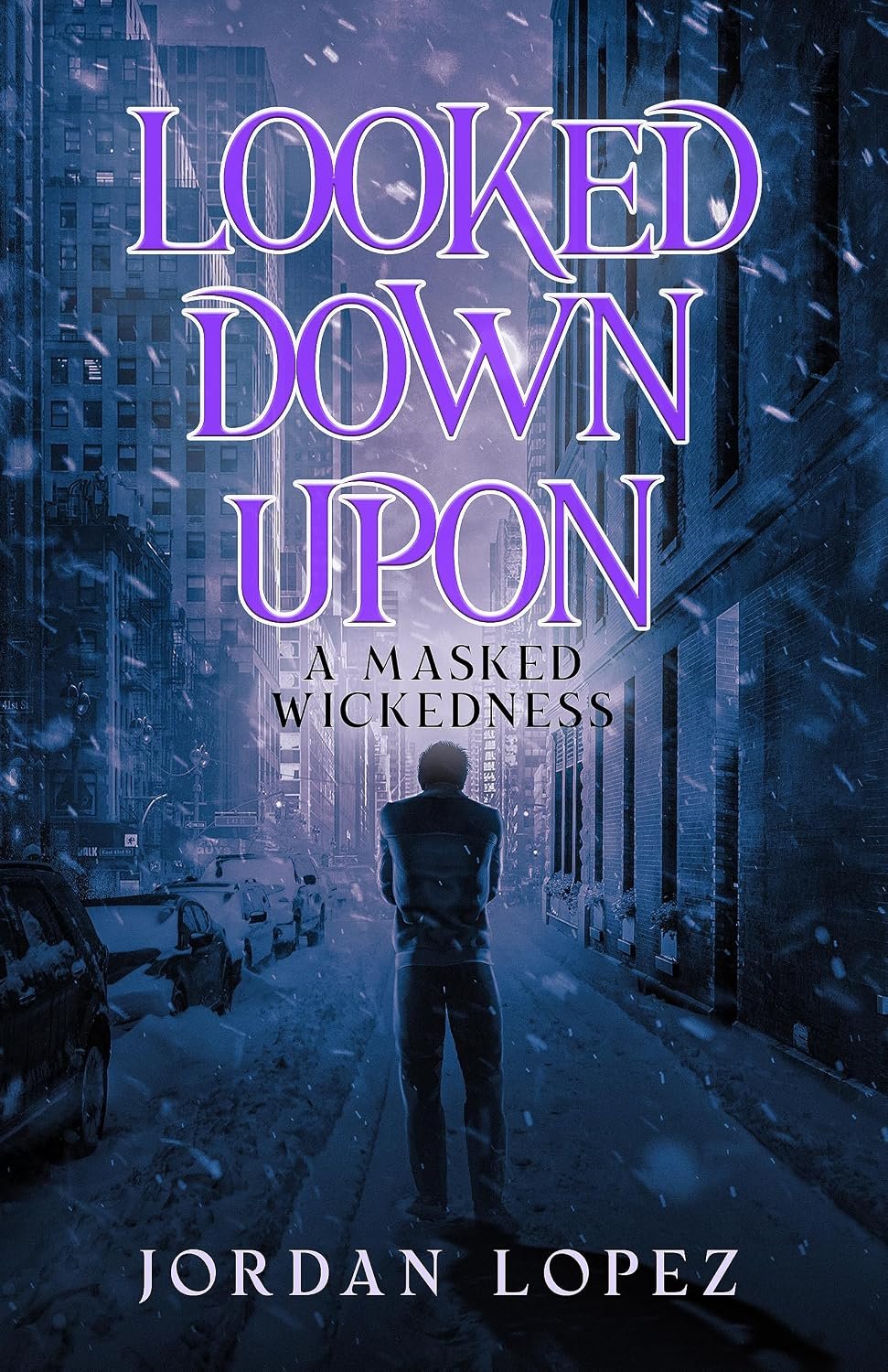
Looked Down Upon: A Masked Wickedness
Looked Down Upon: A Masked Wickedness belongs to Jordan Lopez's ongoing series begun with The Exiled Kin. Independent listings verify it as the second book, and Special Olympics Connecticut…
Books worth discovering. Authors worth knowing.
Looked Down Upon: A Masked Wickedness belongs to Jordan Lopez's ongoing series begun with The Exiled Kin. Independent listings verify it as the second book, and Special Olympics Connecticut identifies Lopez as an autistic advocate whose fiction foregrounds an autistic teenage protagonist. Those facts establish a meaningful context but do not supply…
Considered reviews, grounded in the book’s documented promise.
Looked Down Upon: A Masked Wickedness belongs to Jordan Lopez's ongoing series begun with The Exiled Kin. Independent listings verify it as the second book, and Special Olympics Connecticut identifies Lopez as an autistic advocate whose fiction foregrounds an autistic teenage protagonist. Those facts establish a meaningful context but do not supply the plot of this installment. A responsible critical approach must resist filling the gap with invented villains or scene descriptions; the important questions concern agency, belonging and the imaginative possibilities of genre storytelling from a perspective too often stereotyped.
An autistic character at the center
Representation is strongest when a character can possess ambitions, weaknesses, contradictions and narrative agency beyond a diagnosis. A fantasy or speculative setting may allow identity to shape perception without making difference synonymous with either tragedy or supernatural power. That is the craft question a reviewer should bring to Lopez's series. The author's advocacy lends personal context, but it does not automatically answer whether every scene works on the page. Authentic perspective and literary achievement are related without being interchangeable.
The second-book challenge
A sequel inherits an emotional and fictional contract from the opening work. Readers need continuity, but not at the cost of all forward movement. The subtitle A Masked Wickedness hints at concealed motives or appearances but cannot be treated as a synopsis. The strongest sequel usually rearranges what readers think they know, introducing conflicts that make earlier victories less simple. Whether this installment takes that route is not independently established. It would be misleading to narrate a plot on the strength of the subtitle alone.
What speculative fiction can reveal
The genre makes social judgments visible through invented orders, unusual abilities or alternate rules of belonging. That potential is especially resonant for a protagonist whose experience of ordinary social environments differs from a presumed norm. A story need not become a lesson about acceptance to make those dynamics compelling. It can place the reader inside a person’s decision-making and let the wider world appear less neutral than it first seemed. Again, this is a framework for evaluation, not a claim that a particular scene in A Masked Wickedness demonstrates it.
The limits of biographical shortcuts
It would be patronizing to review Lopez's book solely because its author has spoken publicly about neurodivergence. The artist deserves to be judged on character, structure, imagery, tension and the moral complexity of the work. That requires the text. Until substantial samples are available, the fairest introduction identifies the writer, the sequence and the significance of its premise, then openly admits that close stylistic appraisal remains impossible.
Who will value this book
Readers seeking YA speculative fiction and autism-centered characters may find the series worth investigating, beginning with The Exiled Kin. Because the full synopsis and representative chapters of this sequel were not verified, the present entry is an editorial orientation, not a complete critical verdict on its plot or prose.
Scope of this assessment
This is a research-based editorial review drawn from identified bibliographic, author and publisher sources. It considers the work’s documented premise and the critical questions it invites, without claiming a complete firsthand reading. No unverified scene, character action or ending is asserted.
About the book.
An evidence-bounded critical introduction to autism-centered YA speculative fiction. Published descriptions support the stated premise; interpretations are identified as editorial analysis, not confirmed plot details.
This is an unsponsored, research-based editorial review, not a claim to firsthand reading of the complete book. Second-in-series identity verified, but no trustworthy detailed plot synopsis found for this exact installment. Consider obtaining review copy.
Found a book worth opening?
Books worth discovering. Authors worth knowing.
Return to the Journal →