
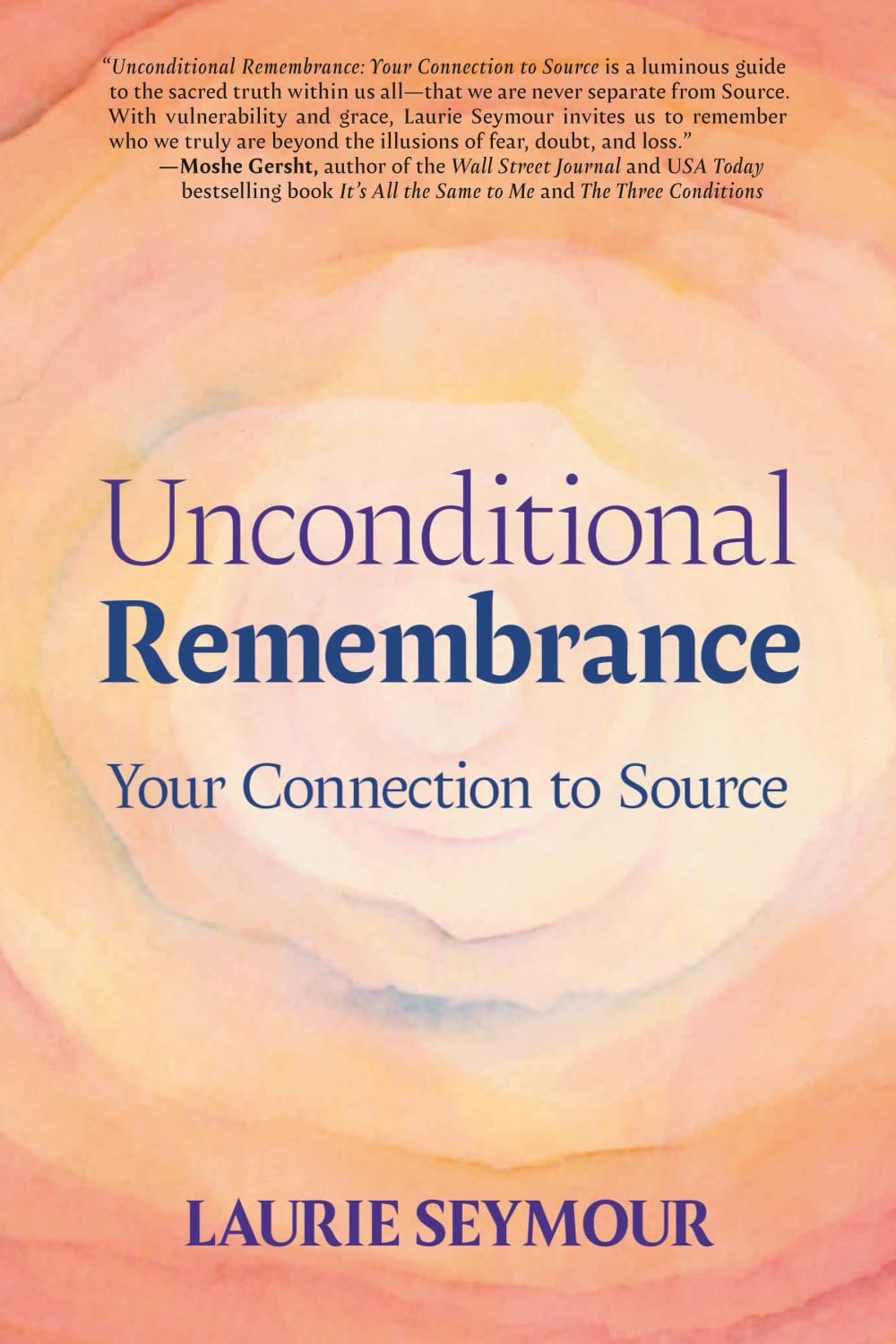
Unconditional Remembrance: Your Connection to Source
Unconditional Remembrance asks what would change if a person experienced love as a constant underlying condition rather than a prize earned through achievement or approval. Laurie Seymour's book…
Books worth discovering. Authors worth knowing.
Unconditional Remembrance asks what would change if a person experienced love as a constant underlying condition rather than a prize earned through achievement or approval. Laurie Seymour's book uses the language of Source, connection and spiritual awakening to propose a movement beyond self-doubt and wounded habitual thinking. The premise is not a…
Considered reviews, grounded in the book’s documented promise.
Unconditional Remembrance asks what would change if a person experienced love as a constant underlying condition rather than a prize earned through achievement or approval. Laurie Seymour's book uses the language of Source, connection and spiritual awakening to propose a movement beyond self-doubt and wounded habitual thinking. The premise is not a scientific account of consciousness; it is a devotional and experiential invitation. Read responsibly, it can offer reflective possibilities without requiring readers to mistake metaphysical conviction for demonstrated fact.
The moral weight of unconditional
Unconditional love is appealing partly because so much ordinary life operates through measurement and comparison. Success is counted; relationships are negotiated; worth can feel contingent upon usefulness. Seymour's framing challenges that economy by inviting the reader to imagine a form of belonging prior to accomplishment. Its strength, if handled well, is the relief it may offer from constant self-judgment. The danger is that generous spiritual language can become too broad to answer concrete difficulties. The full text must reveal whether the author brings abstractions back to lived decisions.
The vocabulary of Source
The term Source carries multiple associations across contemporary spiritual traditions. For a sympathetic reader it can name an origin of meaning and loving presence. For a skeptical reader it may need careful definition to avoid functioning as an answer to every question. A serious examination should ask how Seymour distinguishes inward awareness from claims about external reality, and whether her practices can be explored without demanding assent to a specific worldview. The publisher description highlights connection and transformation but provides limited evidence of argument or structure.
Remembering instead of acquiring
The title's most interesting choice is remembrance. The reader is not asked to manufacture a new self but to recover something presumed to be present already. That shifts the rhetoric of self-improvement. Instead of constant optimization, one might find attention, patience and self-recognition more important. At the same time, the metaphor risks suggesting that suffering results only from forgetting a spiritual truth. Serious obstacles such as illness, poverty and discrimination cannot be wished away by positive inner states. A nuanced reading should retain both possibilities.
An invitation, not an outcome guarantee
The language of energetic vibration appears in marketing descriptions of the book. Such ideas can have symbolic significance for practitioners, but they should not be presented as independently established medical mechanisms. Readers may find an exercise meaningful without treating it as laboratory proof. The book is most fairly assessed as spiritual counsel, whose merit lies in clarity, consistency, compassion and the freedom it gives a reader to disagree.
Audience and critical reserve
Seymour's public professional profile includes work in spiritual mentoring and conversation. Readers comfortable with contemplative and New Age idioms may appreciate the tone of reassurance. Those seeking empirical psychology, a formal theological argument or clinical advice should choose another sort of text. No complete chapter set was examined here, so assertions about the sequence of exercises, measured effects or particular examples would be premature.
Does reassurance permit sorrow?
A spiritual book centered on love should have room for grief, anger and ambiguity. Otherwise its consolation risks becoming a demand to feel grateful. Seymour's invitation to remember connection may prove most meaningful when the reader is not especially peaceful. The relevant critical standard is not whether the metaphysical account can be independently proven; it is whether the language allows pain to remain real while proposing a changed relationship to it. A simple injunction to return to love can be comforting or dismissive depending on context. Representative chapters would be needed to determine how carefully the author handles that distinction.
Practice versus promise
Contemplative writing becomes more concrete when it offers habits of attention rather than guaranteeing transformation. A short reflection, an inquiry about self-judgment or an invitation to notice a bodily response can be evaluated by a reader as an experience, even if the associated spiritual explanation remains personal. The public synopsis signals a guide but does not establish the exact exercises or progression. A responsible editorial appraisal therefore separates the book's claimed purpose from evidence of any measurable effect. That separation does not belittle spiritual exploration; it protects the reader's freedom to engage without surrendering critical judgment.
The relationship between intimacy and scale
Books about cosmic Source often move very quickly from the individual heart to universal truth. The transition can be uplifting, but it can also blur the situations that make individual lives different. A person struggling with estrangement may need a different kind of support from someone facing chronic physical danger. A persuasive spiritual voice can acknowledge those differences while still expressing a broadly shared human longing for belonging. Seymour's book is most intriguing where it connects immense metaphysical language to the small daily work of loosening self-criticism. How convincingly it makes that connection remains an open question for a fuller review.
The right to question a spiritual invitation
It is possible to engage a contemplative book generously without adopting its vocabulary. A secular reader might treat Source as a metaphor for belonging; a religious reader might understand it more literally. The text's value could lie in encouraging reflection across those differences, provided its language permits exploration instead of demanding belief. This is why an honest editorial verdict must distinguish invitation from evidence. A reader should emerge more attentive and more free to judge, not compelled to accept the authority of an untested claim. Seymour's compassionate emphasis is promising when approached within that clear boundary.
Who will value this book
A reflective title for spiritually curious readers seeking a compassionate framework for self-understanding. Approach its metaphysical premises as perspectives to consider rather than established findings about health or cognition. This is a research-based critical orientation to the book's documented invitation. The distinction between a generous spiritual perspective and a factual claim is essential.
Scope of this assessment
This is a research-based editorial review drawn from identified bibliographic, author and publisher sources. It considers the work’s documented premise and the critical questions it invites, without claiming a complete firsthand reading. No unverified scene, character action or ending is asserted.
About the book.
An evidence-bounded critical introduction to spiritual self-inquiry and contemplative nonfiction. Published descriptions support the stated premise; interpretations are identified as editorial analysis, not confirmed plot details.
This review concerns a book marked sponsored in the current MarketAnyBook queue. Sponsorship is disclosed, and all observations remain research-based. Spiritual/metaphysical vocabulary is the author’s framework; no health benefit is independently verified.
Found a book worth opening?
Books worth discovering. Authors worth knowing.
Return to the Journal →