
Old Man Marley
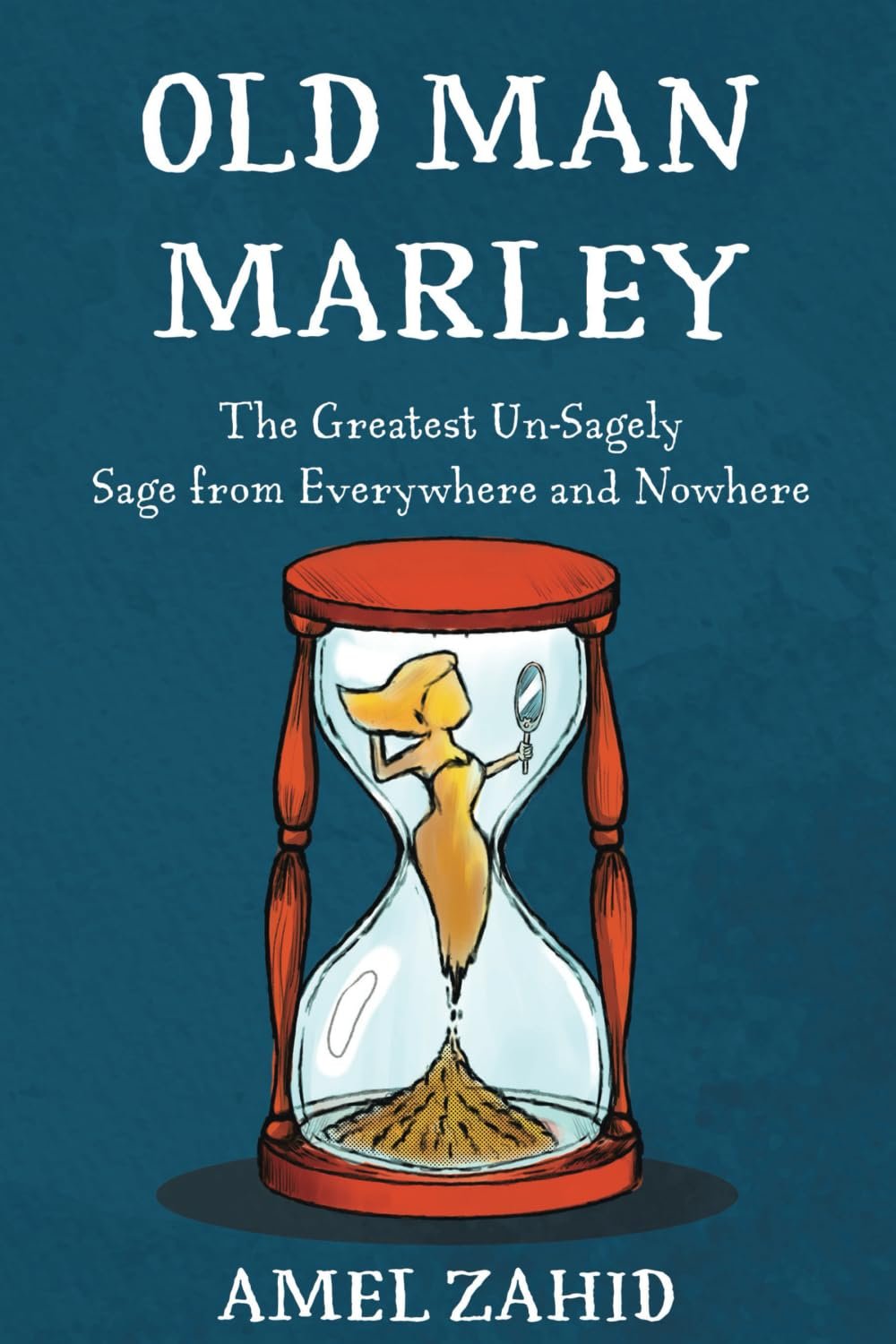
Old Man Marley: The Greatest Un-sagely Sage from Everywhere and Nowhere is a playful collection of wisdom-oriented stories by Amel Zahid, with Anum Zahid credited for illustrations. The deliberately…
Books worth discovering. Authors worth knowing.
Old Man Marley: The Greatest Un-sagely Sage from Everywhere and Nowhere is a playful collection of wisdom-oriented stories by Amel Zahid, with Anum Zahid credited for illustrations. The deliberately contradictory phrase un-sagely sage is the most revealing clue to its attitude: authority may arrive through someone who appears improbable, comic or…
Considered reviews, grounded in the book’s documented promise.
Old Man Marley: The Greatest Un-sagely Sage from Everywhere and Nowhere is a playful collection of wisdom-oriented stories by Amel Zahid, with Anum Zahid credited for illustrations. The deliberately contradictory phrase un-sagely sage is the most revealing clue to its attitude: authority may arrive through someone who appears improbable, comic or unwilling to sound profound. A good parable entertains first and then changes shape in memory. The book’s promise is that ordinary incidents can carry meaningful lessons without being weighed down by the self-importance of a conventional advice manual.
The sage who refuses the podium
A fictional sage can easily become a mouthpiece who delivers correct answers in neat packages. The paradox of Marley’s title offers a more humane alternative. Wisdom might emerge through mistake, detour or an apparently foolish encounter. That shift matters because a reader discovers meaning rather than receiving an instruction. The official description emphasizes imagination, kindness and courage. The unresolved artistic question is whether each tale creates an experience from which a reader may infer a lesson, or whether the narrative stops too often to make its moral unmistakable.
A collection needs changing rhythms
Short stories and illustrated reflections are deceptively difficult to sequence. Each requires enough individuality to be satisfying, yet the book as a whole should build an impression of a singular mind or fictional world. If Marley is the unifying figure, his personality must develop through differences of occasion, not only through repeated declarations of wisdom. The catalogue identifies the volume as a sixty-page illustrated work, but it does not reveal the progression, narrative voice or individual endings. Those would be central to a full literary review.
Illustration as interpretation
Anum Zahid’s contribution is not merely a decorative supplement. Pictures may establish how much of Marley is comic and how much is solemn; they can turn a moral into a joke or make a simple episode unexpectedly tender. A verbal narrator might insist that someone is ordinary while an image suggests otherwise. Such relationships are the craft of illustrated storytelling. Because a cover and a catalogue description cannot establish the sequencing or visual language, the artwork deserves inspection before publication-ready judgments are made.
An unusually elastic readership
The bibliographic record suggests both younger readers seeking imaginative stories and older readers seeking perspective. That range is ambitious: an allegory accessible to a child can acquire a second meaning for an adult, but some works spread themselves thin by attempting to appeal to everyone equally. The best cross-age stories trust the younger audience without flattening adult complexity. Old Man Marley’s mixed comic and philosophical positioning might allow such layers; it remains a promising hypothesis rather than a certified achievement.
The freedom of a deliberately improbable guide
A sage from everywhere and nowhere belongs to no clearly fixed institution. That quality can make advice less intimidating. Instead of being told that wisdom requires a particular status, reader and character may encounter understanding in the oddities of ordinary life. The title's teasing contradiction gives the author permission to approach moral ideas indirectly. Whether the stories use that permission fruitfully should be tested against their actual humor. A story that is merely whimsical will not automatically linger; a story that is only instructive may cease to be fun.
A book with different kinds of pauses
An illustrated collection can be read at multiple speeds. A child might dwell on a visual joke while an adult pauses over the implied lesson. One episode may be more affecting than another, and that variation can create texture. The book's unusual cross-age pitch makes selection and sequencing especially important. If the reader is asked to move immediately from a joke to a serious meditation, transitions must be earned. The publisher record offers no dependable table of contents or sample pages, so a full appraisal cannot confirm how those transitions work. The formal question is nonetheless central to the work's ambition.
When a moral becomes a conversation
A good parable does not necessarily end with one correct application. It may invite a family to disagree about what the character should have done or why an apparent failure was instructive. The stated themes of kindness and courage are familiar, but the imaginative handling can make them newly personal. A reader might admire bravery and still question whether the character acted wisely. Those complexities distinguish moral storytelling from a collection of slogans. They also suggest how the book could be used in shared reading without turning the adult into a lecturer who explains every page.
Who receives the story
The cover's tone and unusual title could tempt an editor to position this entirely as a children's entertainment. Yet illustrated parables also invite adults to consider their own assumptions, and the record suggests a broader readership. The right comparison may be with small books that offer repeated short encounters rather than a single large narrative arc. Marley can be read as a comic companion if each story remains lively on its own terms. To confirm that promise, an editor should read several episodes aloud and examine the complete illustrative sequence before issuing a firm judgment about voice or age suitability. The title alone does not establish those qualities.
Who will value this book
A potentially appealing book for families, reflective readers and anyone who prefers short stories to direct instruction. Its curious title is memorable. A full text-and-art review is still needed to assess whether the stories earn their insights and whether the illustrated pages sustain the book’s warm ambitions. It is especially important to examine how any concluding lesson interacts with its story. When the moral remains open enough for conversation, an apparently slight episode can endure; when it simply explains itself, the tale risks losing the curiosity that made it worth telling.
Scope of this assessment
This is a research-based editorial review drawn from identified bibliographic, author and publisher sources. It considers the work’s documented premise and the critical questions it invites, without claiming a complete firsthand reading. No unverified scene, character action or ending is asserted.
About the book.
An evidence-bounded critical introduction to illustrated parables and reflective storytelling. Published descriptions support the stated premise; interpretations are identified as editorial analysis, not confirmed plot details.
This review concerns a book marked sponsored in the current MarketAnyBook queue. Sponsorship is disclosed, and all observations remain research-based.
Found a book worth opening?
Books worth discovering. Authors worth knowing.
Return to the Journal →