
Tatwitt
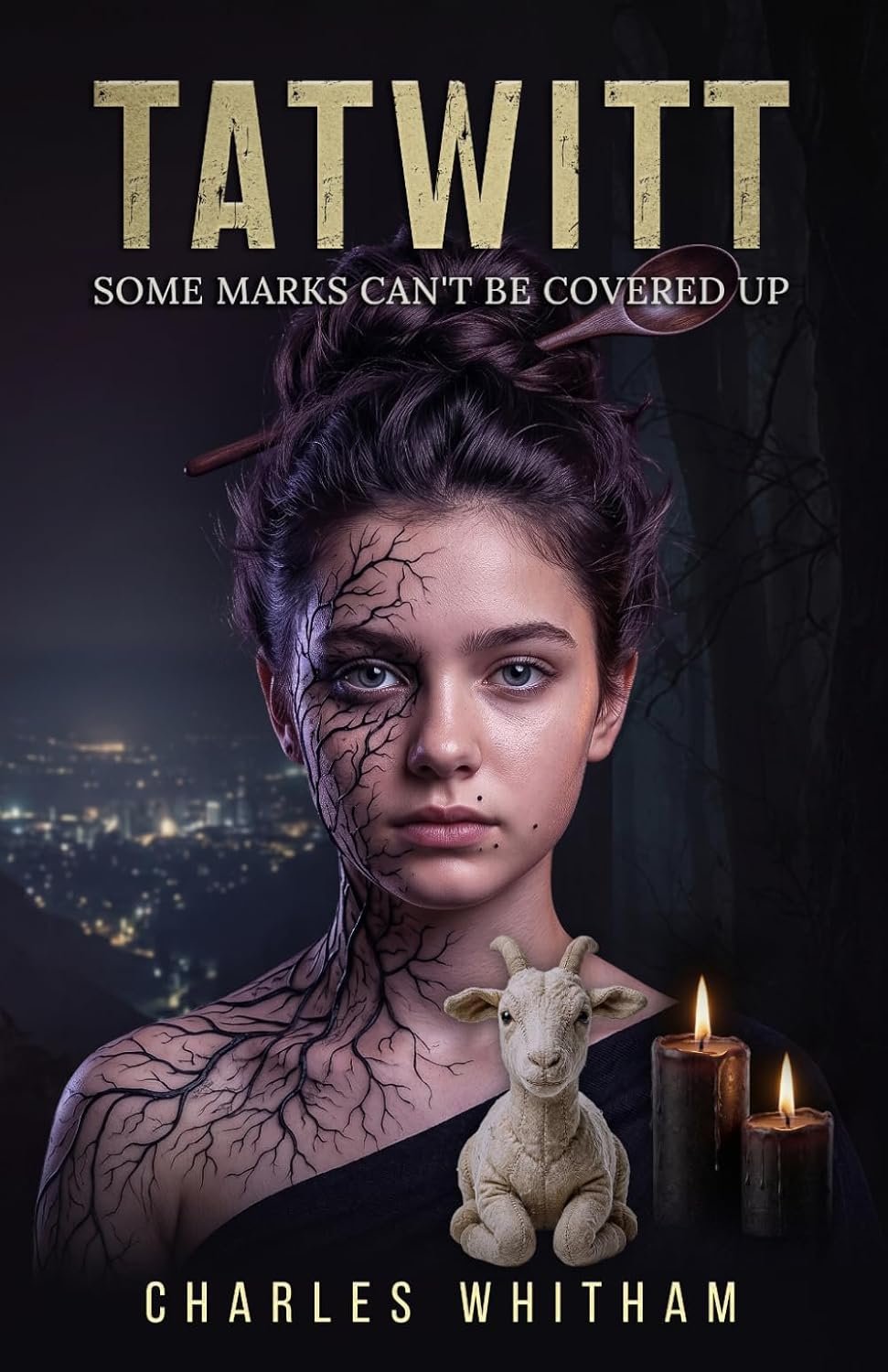
Tatwitt is Charles Whitham's dark-fantasy reimagining of the Norwegian folktale Tatterhood, presented by the author as a story in which a longing for a child yields something at once monstrous and…
Books worth discovering. Authors worth knowing.
Tatwitt is Charles Whitham's dark-fantasy reimagining of the Norwegian folktale Tatterhood, presented by the author as a story in which a longing for a child yields something at once monstrous and miraculous. The book's announced movement from Hollywood toward Las Vegas places a traditional fairy-tale logic into a conspicuously modern landscape. That…
Considered reviews, grounded in the book’s documented promise.
Tatwitt is Charles Whitham's dark-fantasy reimagining of the Norwegian folktale Tatterhood, presented by the author as a story in which a longing for a child yields something at once monstrous and miraculous. The book's announced movement from Hollywood toward Las Vegas places a traditional fairy-tale logic into a conspicuously modern landscape. That juxtaposition is potentially its defining achievement: old stories often ask whether a seemingly unnatural figure may carry the deepest humanity, while modern culture is adept at rewarding appearances and punishing difference.
The old story beneath the modern surface
Retelling a folktale creates a double readership. Some will know the source and search for meaningful transformation; others will encounter the work simply as a contemporary fantasy. A successful adaptation rewards both. It must make the new setting necessary, not merely amusing, while preserving a moral conflict strong enough to survive changed costumes. Whitham has publicly identified Tatterhood as the source. That provides a trustworthy interpretive context without authorizing us to invent every correspondence between the older story and its retelling.
A child described as monster and miracle
The author's central pitch unsettles easy categories. Calling someone monstrous may register fear of difference, while miracle may describe the same being from the standpoint of love. The shift between those judgments could support a story about parenthood, shame and recognition. It could also become sentimental if difference is valued only once it proves useful or extraordinary. The strongest possible reading would permit a character to remain strange, difficult and worthy of care without requiring a neat transformation into normality. That is a critical hope rather than a confirmed arc.
Why Hollywood and Las Vegas matter
Both places sell images, performance and the possibility of reinventing oneself. Placing folklore within that corridor could intensify questions about what is authentic and what has been staged for spectators. A fairy-tale outsider might find herself in a world that manufactures spectacle as efficiently as an old curse. Whether the novel exploits this particular social contrast must be checked in the text; the author confirms only the broad route and the dark folkloric classification. Still, it is a distinctive contemporary choice with thematic possibilities.
The difficulty of borrowed wonder
Retellings sometimes lean on the reader's memory of a beloved tale, allowing familiar symbols to do the emotional work. The opposite danger is explaining so much modern psychology that mystery disappears. The balance requires language capable of making an old impossible thing feel present and urgent. Whitham describes his work as speculative fiction with emotional realism, suggesting that inner stakes matter alongside plot machinery. Actual voice, pacing and imagery require direct reading; an author statement cannot certify them.
A story of otherness without a moral shortcut
Dark fantasy often permits empathy to arise where social convention withholds it. Tatwitt's premise may ask readers to examine who gets labeled beautiful, useful or dangerous, and who has the authority to make those decisions. A serious review should eventually test that ethical premise against the book's handling of its female characters and parent-child relationships. Until then, the fair recommendation is based on genre, source tale and thematic promise—not an assertion that the finished text achieves all of them.
The old folktale’s unruly inheritance
Tatterhood's appeal lies partly in its resistance to conventional ideals of feminine appearance and propriety. A modern adaptation has the opportunity to explore the social cost of being labeled strange before anyone has tried to understand you. Whitham's monstrous-and-miraculous premise appears fertile for such a reconsideration. Yet adaptation cannot be reduced to an uplifting slogan about difference; the unsettling parts of the source tradition help give it power. Readers should eventually ask whether Tatwitt retains genuine danger and ambiguity or domesticates every difficult symbol into an easy lesson.
Spectacle and the act of being seen
Hollywood and Las Vegas are places where the gaze is cultivated. A person may be intensely visible while not being understood at all. That makes them thematically apt for a story concerned with a figure described as monstrous by one measure and miraculous by another. The visual economy of these settings could complement the older folktale's investment in appearances. Such interpretation is plausible because the author confirms the route and the inspiration, but it remains speculative until the novel's actual treatment of those places is examined.
An emotional realism inside impossible events
The phrase emotional realism is not a contradiction when applied to fantasy. A creature may be impossible while the fear of rejection, desire for family or conflict over belonging is immediately recognizable. The strongest dark retellings hold both registers without explaining away the supernatural. They ask readers to accept the impossible image, then draw their emotional response from ordinary human uncertainty. Whitham identifies that conjunction as part of his literary interest. A complete review would need to assess whether his language maintains the balance through the novel, rather than rewarding the premise for a craft achievement not independently verified.
A retelling should alter its source
The reason to revisit Tatterhood now is not only to make an old tale available in modern dress. It is to discover what the original's defiance might reveal about current anxieties around beauty, motherhood and acceptable behavior. Tatwitt’s announced setting offers a potentially productive culture of spectacle against which those questions can be staged. The more compelling the new story becomes, the less it will need to explain every borrowing. A reader unfamiliar with the folklore should experience a complete emotional drama; a reader who knows it should encounter the pleasure of recognition and surprise. Both audiences deserve more than a simple summary of the old plot.
Who will value this book
For readers drawn to dark fairy-tale revisions, parenthood under uncanny pressure and modern settings that retain old mythic unease, Tatwitt is a distinctive candidate. Those wanting strict realist plausibility should look elsewhere. This draft is based on the author's identified inspiration and public summary, not a complete reading.
Scope of this assessment
This is a research-based editorial review drawn from identified bibliographic, author and publisher sources. It considers the work’s documented premise and the critical questions it invites, without claiming a complete firsthand reading. No unverified scene, character action or ending is asserted.
About the book.
An evidence-bounded critical introduction to dark folkloric fantasy. Published descriptions support the stated premise; interpretations are identified as editorial analysis, not confirmed plot details.
This is an unsponsored, research-based editorial review, not a claim to firsthand reading of the complete book.
Found a book worth opening?
Books worth discovering. Authors worth knowing.
Return to the Journal →