
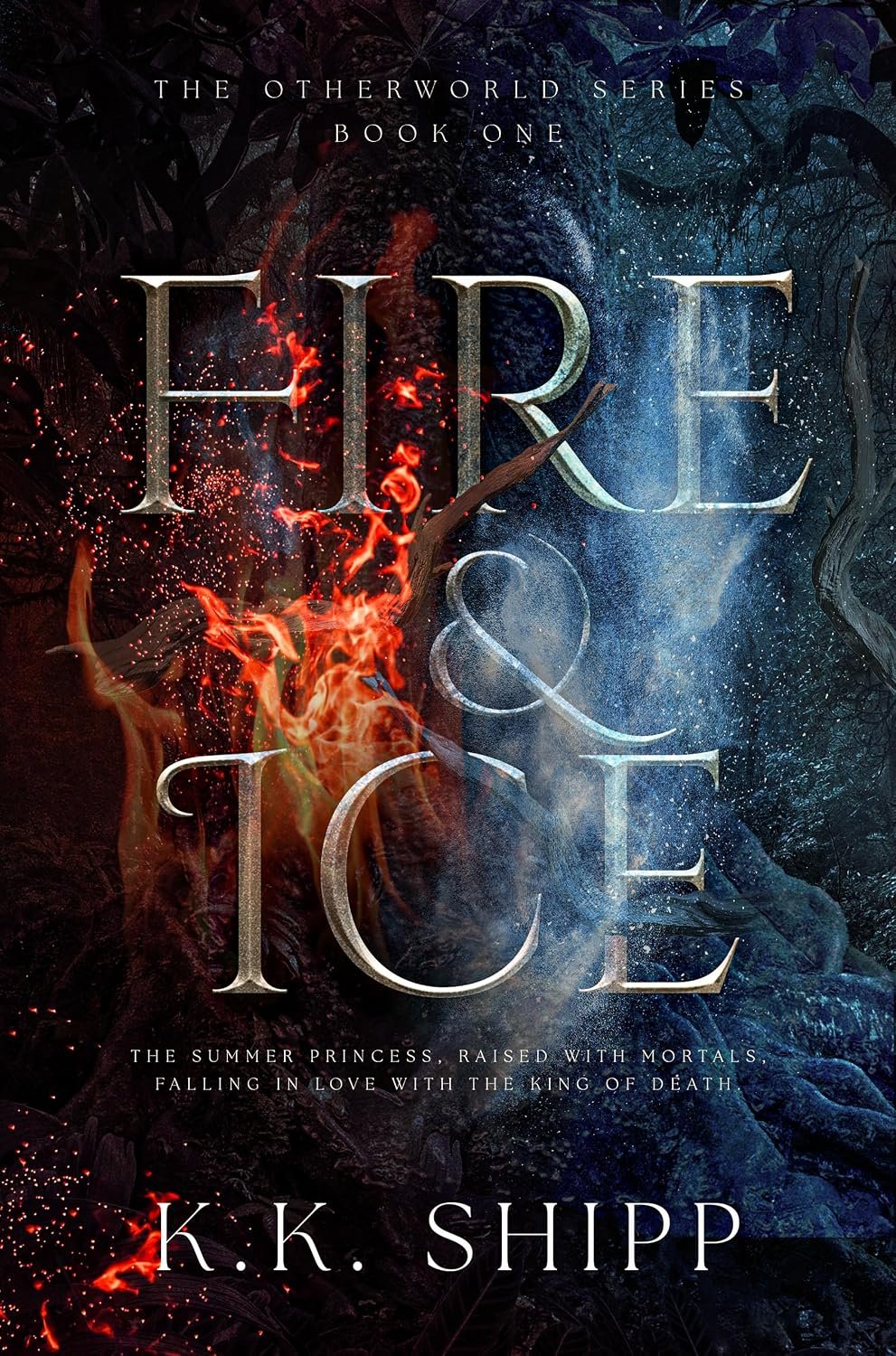
Fire & Ice (The Otherworld Series Book 1)
In Fire & Ice, peace between two faerie realms depends on a union that neither central figure has been prepared to choose. K.K. Shipp's published synopsis describes a King of Death discovering that…
Books worth discovering. Authors worth knowing.
In Fire & Ice, peace between two faerie realms depends on a union that neither central figure has been prepared to choose. K.K. Shipp's published synopsis describes a King of Death discovering that the lost Summer Princess, assumed dead, was actually taken as an infant and raised as human. He journeys to find her, but she has no knowledge of her…
Considered reviews, grounded in the book’s documented promise.
In Fire & Ice, peace between two faerie realms depends on a union that neither central figure has been prepared to choose. K.K. Shipp's published synopsis describes a King of Death discovering that the lost Summer Princess, assumed dead, was actually taken as an infant and raised as human. He journeys to find her, but she has no knowledge of her lineage or the magic others insist she must recover. That setup places enormous political need upon a person with no reason to recognize the authority making the demand. The book's most promising tension is the difference between destiny as a solution to war and destiny as a violation of an individual's life.
The princess who cannot remember
A lost royal heir is a familiar fantasy figure, but the change of upbringing creates a problem that no revelation can instantly resolve. Identity does not become simple because somebody explains a birthright. The woman raised as human has habits, attachments and a sense of self that precede her royal designation. If the story allows these to matter, her return could become a genuine conflict between belonging and autonomy. If she simply accepts the role, the premise's richest complication would be lost.
Marriage as diplomatic machinery
The proposed union is supposed to avert war, making the couple's relationship a public project before it is a private possibility. Romantasy often turns forced proximity into chemistry; here it can also expose the moral cost of using affection as state policy. A persuasive story will need to allow mistrust, unequal knowledge and fear to develop without assuming that political necessity proves personal compatibility. Peace bought by coercion risks repeating the violence it claims to prevent. That is the ethical problem built into the advertised plot.
Death and summer as imaginative poles
The King of Death and the Summer Princess create an instantly legible symbolic opposition. One suggests endings, severity and irrevocable consequence; the other growth, warmth and renewal. Such contrasts are attractive because their images do narrative work before the characters even speak. Their danger is flattening personality into seasonal allegory. The novel needs to establish how these two people exceed their roles. The most interesting romance would show each discovering a trait that the other's realm has taught them to fear.
Magic as contested inheritance
The lost princess must reportedly recover magic she does not remember possessing. That requirement can represent a welcome awakening or an unwanted transformation. The difference should matter. Family and friends press the protagonists together, according to the synopsis; allies may therefore become a form of social pressure. The fantasy's emotional credibility depends on acknowledging that concern for a kingdom does not erase the need for consent or self-discovery. A power recovered at the cost of identity would be a darker triumph than the story's peace treaty suggests.
Opening a series with credible stakes
As volume one, Fire & Ice must introduce cosmology, romance and threatened war without solving every question. The described quest gives it a clear engine, but descriptions alone cannot establish pacing or the balance between intimacy and diplomacy. The narrative has enough material for a thoughtful first installment if character decisions complicate the promised outcome. A critic should judge that development in the book itself rather than assume that a familiar fairy-tale structure is either derivative or automatically comforting.
What is owed to a lost child
The lost-princess premise has a hidden injury. Being taken from an original family alters a life regardless of whether the person later discovers royal blood. Readers may be drawn to the romantic fantasy of a sudden inheritance, but the heroine's displacement is also a question of memory, belonging and unequal information. The King of Death reportedly knows why she matters to the realm before she does. The resulting imbalance should not be treated as proof that his preferred future is the only acceptable one. A sensitive story would grant her time to decide what counts as home.
The union that must become a choice
Peace between realms is a powerful reason for other people to demand a marriage. It is not necessarily a reason for two strangers to trust one another. The novel's strongest potential lies in making its political solution emotionally difficult. If the protagonists become lovers, their attachment should complicate the alliance rather than simply confirm that destiny was correct. The presence of concerned family and friends adds pressure that can look benevolent from outside and coercive from within. Romantic credibility requires the right to hesitate, even when refusal carries political cost.
Summer, death and the unsolved season
The contrast between death and summer is an invitation to a mythic reading. Seasons are not merely decorations; they mark cycles in which apparent endings make later renewal possible. But the King of Death is still a character, and the lost princess more than a season made human. The story will become richer if their symbolic roles are unsettled by desire, fear and private memory. The public synopsis permits that interpretation without verifying any specific scene. An eventual close reading should ask whether imagery reinforces their emotional growth or substitutes for it.
Magic as the power to name oneself
The heroine's forgotten power sounds like a practical requirement for saving the realms. It can also symbolize the pressure to become an ideal version of one's assigned identity. Many fantasy narratives celebrate the discovery of hidden gifts, yet a gift can be burdensome when everybody else has already decided what it must accomplish. The essential question is whether she gets to define the use and limits of that magic. The political war will matter more when its solution emerges through choices that cost the characters something specific, not merely from the fulfillment of prophecy.
When fantasy offers an argument about freedom
The realm's survival is compelling only if the threatened people and the reluctant princess are granted equally serious claims. It is easy to cheer a lost heir's return from the vantage point of those who need her. It is harder to ask what she should owe a country she has never known. That difficulty is where the story could rise above the pleasures of a magical reunion. Consent and duty need not be enemies, but their reconciliation should cost time and trust. The public premise creates the problem with admirable clarity. Its solution, whether romantic or political, must ultimately be judged in the book rather than supplied by a sympathetic reviewer.
Who will value this book
A natural prospect for readers of fae romantasy, lost-heir stories, magical identity and politically arranged relationships. It may be less appealing to readers who dislike destiny-driven romance or long-series openings. This is an evidence-bounded appraisal of the supplied premise, not a claimed close reading of the entire novel.
Scope of this assessment
This is a research-based editorial review drawn from identified bibliographic, author and publisher sources. It considers the work’s documented premise and the critical questions it invites, without claiming a complete firsthand reading. No unverified scene, character action or ending is asserted.
About the book.
An evidence-bounded critical introduction to faerie romantasy and political fantasy. Published descriptions support the stated premise; interpretations are identified as editorial analysis, not confirmed plot details.
This is an unsponsored, research-based editorial review, not a claim to firsthand reading of the complete book.
Found a book worth opening?
Books worth discovering. Authors worth knowing.
Return to the Journal →