
The Kingdom Of Fiends : An Isthmus Of Broken Dreams
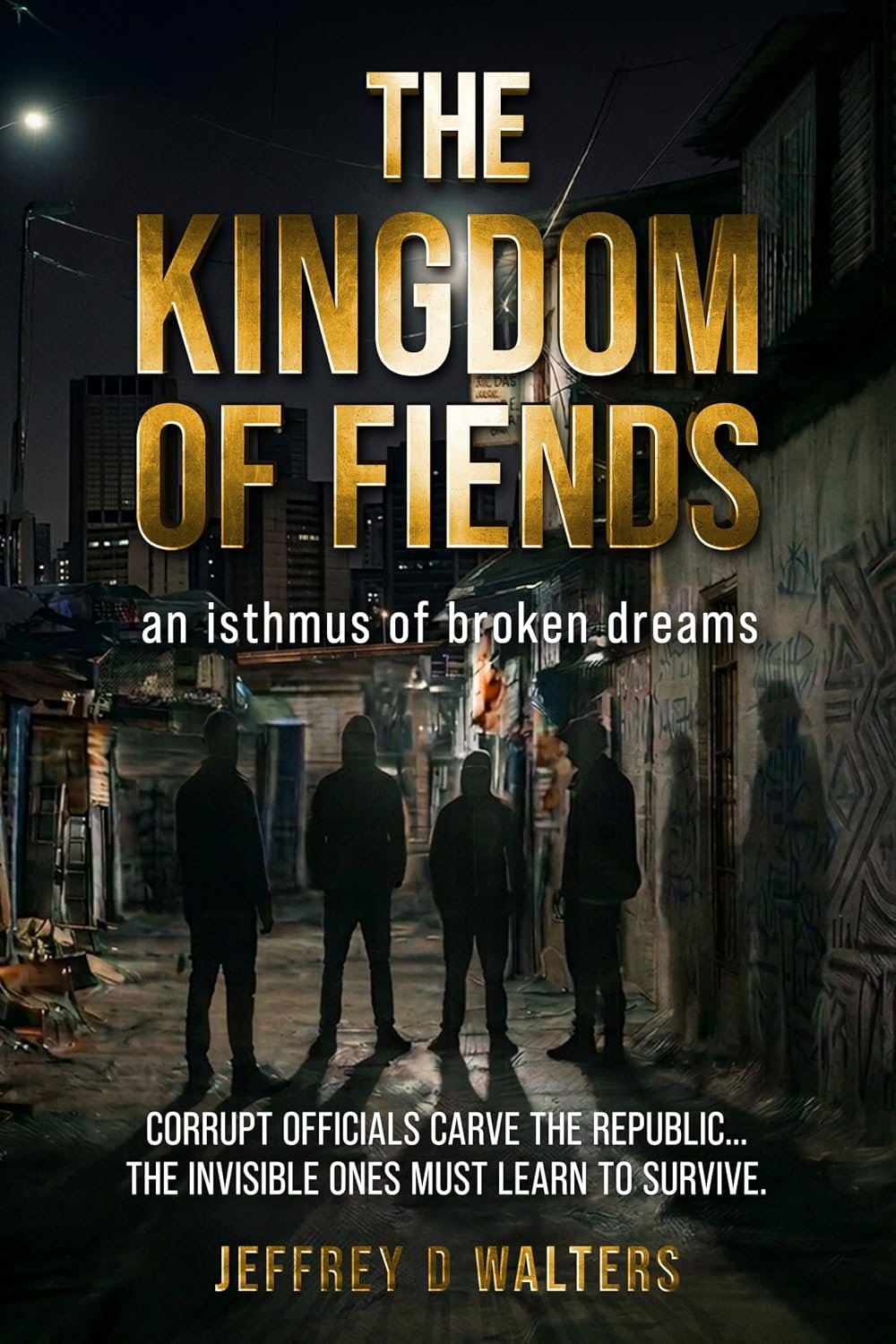
The Kingdom of Fiends: An Isthmus of Broken Dreams centers not on a charismatic criminal mastermind but on people abandoned inside a system of violence. A public synopsis follows young missionaries…
Books worth discovering. Authors worth knowing.
The Kingdom of Fiends: An Isthmus of Broken Dreams centers not on a charismatic criminal mastermind but on people abandoned inside a system of violence. A public synopsis follows young missionaries caught amid rival gangs, police corruption and the collapse of their church leader's authority in a Central American setting. The immediate danger is…
Considered reviews, grounded in the book’s documented promise.
The Kingdom of Fiends: An Isthmus of Broken Dreams centers not on a charismatic criminal mastermind but on people abandoned inside a system of violence. A public synopsis follows young missionaries caught amid rival gangs, police corruption and the collapse of their church leader's authority in a Central American setting. The immediate danger is physical; the more searching danger is moral. Institutions that claim to protect the vulnerable may protect themselves first. Walters's premise asks whether religious language can withstand that confrontation with cowardice, class difference and the machinery of local power.
When an institution leaves the room
The synopsis describes missionaries left in peril while figures with greater authority escape. That reversal gives the story an uncomfortable political charge. A church may teach sacrifice, but the test arrives when institutional reputation conflicts with a person's safety. Pastor Gregory Fermin's reported dilemma over concealing the abandonment can be read as a study in compromised responsibility. His choices matter precisely because he is not merely a villain outside the social order: he represents an organization that knows the moral vocabulary of care yet may fail to act on it.
The city and the invisible
Gang control, extortion and corrupt policing can easily become a theatrical background for foreign protagonists. The better direction is to investigate the people who must inhabit such conditions without the option of leaving. The book's own framing emphasizes overlooked communities and the social costs of violence. A responsible review should not treat a fictionalized Central American republic as a transparent guide to any real country's politics. Fictional detail can illuminate dynamics of power, but a single narrative does not establish sweeping social facts.
Faith that is answerable to action
Religious fiction sometimes divides its world between believers who act rightly and outsiders who act badly. Walters's described plot creates a stronger possibility: faith is morally meaningful only when its adherents accept risk. Missionaries may enter unfamiliar territory with admirable intentions yet unequal knowledge and resources. Their experience can expose the difference between conviction and understanding. If the novel allows its protagonists to recognize their own complicity or blindness, the ethical stakes will exceed the familiar structure of good people threatened by evil men.
A thriller resistant to easy catharsis
The gang conflicts and danger of capture give the novel a muscular suspense framework. But if brutality is deployed only to intensify pacing, the suffering of local characters can become disposable. The challenge is proportion and perspective. Who speaks for the people who live inside the violence? Who is granted an interior life? The public descriptions offer suggestive details but cannot by themselves verify that the full book handles these questions with care. That limit should accompany any strong praise of its atmosphere.
The problem of looking away
The title's kingdom suggests a world ruled by forces that are not necessarily supernatural. Human systems can become fiendish when they normalize abandonment and make ordinary safety dependent on powerful patrons. This metaphor is most potent when the reader sees specific mechanisms rather than merely hears denunciation. The novel's reported attention to a church, gangs and officials offers multiple layers of accountability. Its critical promise is to show how individual fear becomes political order, and how difficult it is to break that order without reproducing it.
The uncomfortable meaning of mission
Missionary work makes a claim about obligation to strangers, but it also unfolds across differences in money, language and access to protection. Walters's reported plot becomes unsettling when visiting volunteers find themselves vulnerable to the power relations that shape local life every day. They may learn that moral certainty is not the same thing as social understanding. The story's most ambitious possibility is to depict aid as a relationship rather than a performance of rescue. A critic should consider who receives the narrative's empathy and whether the community is allowed to exist independently of the visitors' danger.
What corruption looks like in practice
Corruption in a thriller often appears as an evil official or a bribe. Its deeper menace is the normalization of unequal protection. Those able to pay or belong to the right network can move; the rest must negotiate danger as a condition of daily life. The synopsis mentions police corruption and extortion, but does not make the fictional republic an exact portrait of a real government. A strong political novel should show mechanisms that readers can recognize without implying that a real country is uniformly criminal. Specificity, not exoticism, is the proper measure of its social imagination.
The pastor's crisis of authority
Pastor Fermin's dilemma touches a familiar temptation: to protect the story an institution tells about itself even when that story contradicts what happened. His authority depends on belief, and a public admission might threaten a livelihood or congregation. That does not excuse abandonment, but it makes concealment a comprehensible human failure. If the novel dramatizes this tension patiently, it could produce a more disturbing portrait than simply assigning him to the side of evil. The protagonist's faith becomes credible only if it can survive the truth about people who profess it.
The moral expense of suspense
Readers of thrillers expect escalation. Yet when a story invokes gang control and the killing of civilians, every escalation bears a moral cost. A scene that exists only to prove the villains brutal may diminish the people harmed. Walters's own public descriptions suggest concern for the invisible and socially excluded, giving the work an opportunity to resist that simplification. The challenge is to make terror reveal character and institution, rather than decorate an already obvious judgment. A full reading is required to determine how successfully the book meets that responsibility.
What the reader is asked to remember
Crime narratives often end with the exposure of a corrupt person and imply that the structure has been repaired. The Kingdom of Fiends invites a harsher question: what happens to the communities whose daily choices were shaped by corruption long before the protagonists arrived? A narrow rescue could leave their conditions unchanged. This is not an invented description of Walters's ending, which remains unverified. It is an ethical measure for the novel's ambition. If the people on the margins become visible as persons rather than scenery, the story's violence may serve a compelling moral purpose. If not, the rhetoric of invisibility will remain an unrealized promise.
Who will value this book
A potentially forceful read for adults who want morally serious crime fiction, political corruption and questions about religious responsibility. Descriptions include brutality and exploitation; readers sensitive to gang violence should take care. The public record identifies some edition-level inconsistencies in summaries, so precise events should be checked against the purchased edition before publishing definitive criticism.
Scope of this assessment
This is a research-based editorial review drawn from identified bibliographic, author and publisher sources. It considers the work’s documented premise and the critical questions it invites, without claiming a complete firsthand reading. No unverified scene, character action or ending is asserted.
About the book.
An evidence-bounded critical introduction to social-realist crime thriller with Christian-missionary themes. Published descriptions support the stated premise; interpretations are identified as editorial analysis, not confirmed plot details.
This review concerns a book marked sponsored in the current MarketAnyBook queue. Sponsorship is disclosed, and all observations remain research-based. Multiple online editions and potentially inconsistent synopsis details; exact edition and narrative events require manual confirmation.
Found a book worth opening?
Books worth discovering. Authors worth knowing.
Return to the Journal →