
A Social View of Socotra Island: People, Culture, Heritage
An edited research collection brings people, cultural practices and heritage into the study of Socotra.
Books worth discovering. Authors worth knowing.
A Social View of Socotra Island: People, Culture, Heritage, edited by Nataša Slak Valek and Ahmad Abdelmoniem Zedan, approaches the island through social-science research. This feature introduces the collection’s scope and questions for prospective readers.
An editorial introduction to the book, its premise and the story surrounding it.
A place can be visually familiar and socially little understood by an outside reader. A Social View of Socotra Island announces its priorities in the subtitle: people, culture and heritage.
Changing the starting question
Springer presents the collection as a social-science approach to Socotra, with contributions across subjects including tourism, language, communication and anthropology. Its contents include work on environmental practices, food in digital media, maritime activity, intangible heritage and palm cultivation.
For a prospective reader, that range signals a research collection rather than a visitor’s itinerary. The point of entry is how people live, communicate and understand their surroundings. A chapter may therefore ask different questions from those posed by a photographic survey or a guide to places to see.
Why the word “social” matters
The title’s framing encourages a shift in attention from an object of observation to relationships and activities. A landscape can be considered through its appearance, but also through the work, memories and meanings connected with it.
That distinction does not make one perspective sufficient on its own. It suggests a way for readers to notice what each kind of account includes. Who is speaking? What sort of evidence supports an interpretation? Which activities become visible when a researcher changes the question?
These are questions for engaging with the volume, rather than conclusions about the island or its residents. They help preserve the difference between introducing research and claiming to have established its findings independently.
Reading across an edited collection
An edited volume has a different structure from a single continuous argument. Readers encounter multiple contributors, each working within a particular scope. One useful approach is to follow a topic of interest while also noticing where another chapter offers a different scale or method.
A discussion of language, for example, may invite attention to representation. A discussion of cultural practice may lead towards questions of continuity and change. The relationship between such topics can be as interesting as their individual boundaries, but a full assessment requires reading the chapters themselves.
Heritage as a question, not just a label
The subtitle places heritage alongside people and culture. That arrangement invites readers to ask how an account connects what is inherited with what people continue to do. Heritage can be discussed through preservation, but the term also raises questions about who defines significance and how knowledge is shared.
A careful reading can keep those questions open. It need not treat a community as static or assume that an outside observer’s preferred image captures the whole of everyday life. These are general considerations for reading social research, not attributed findings from the collection.
A cover that foregrounds the research identity
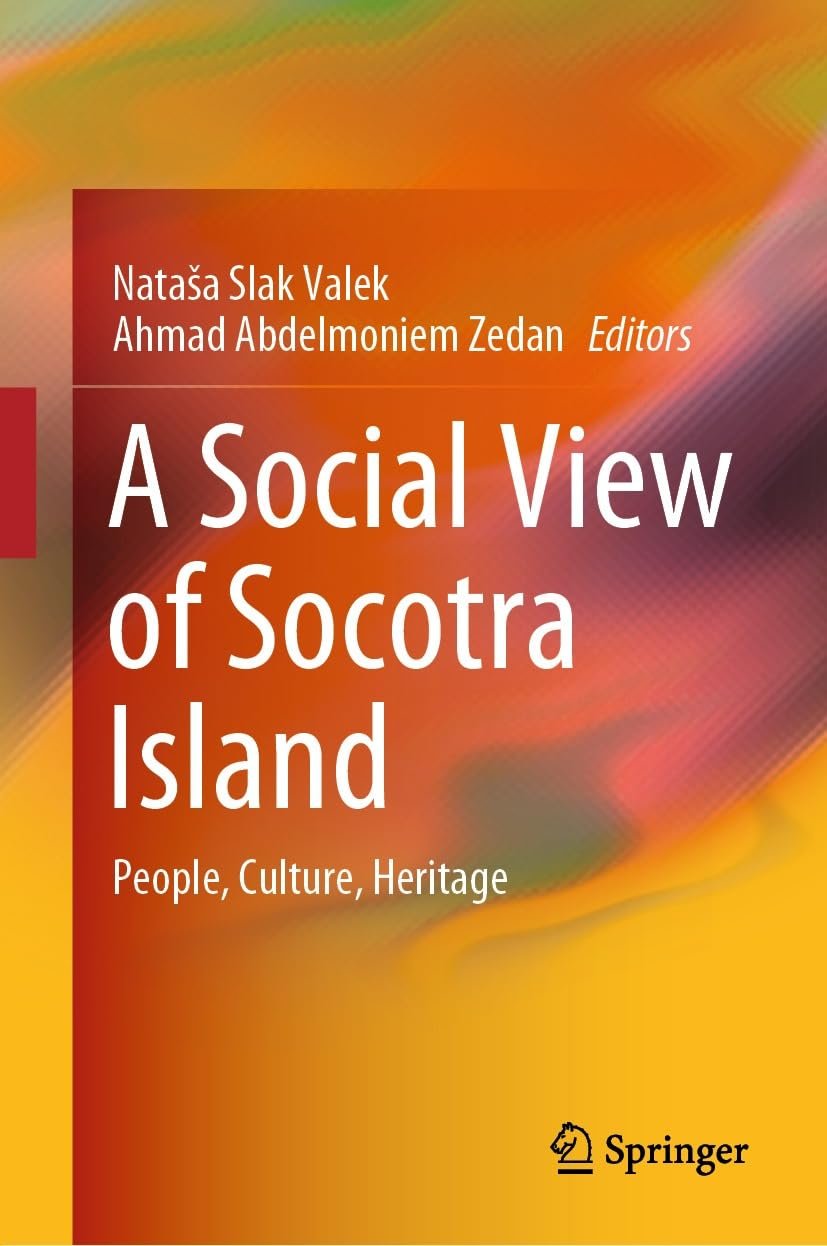
The supplied Springer cover uses an abstract field of orange, yellow, red and muted green. Large white lettering sets out the main title, with the subtitle directly below. Both editors are named at the top and explicitly identified as editors.
There is no landscape photograph or portrait to stand in for the island. The design instead makes the volume’s title and editorial responsibility its most prominent information. That is a useful visual distinction for readers seeking an academic collection.
Edition and reading scope
The Springer publication page provides the contents and bibliographic record. The English ebook dates to 31 August 2023. Its publication context should be kept in mind when reading observations about infrastructure or tourism; this feature offers no current travel guidance.
The collection may interest readers exploring social research, cultural heritage and the ways places are represented. This introduction does not judge the methods or conclusions of individual chapters. More nonfiction features can be found in the MarketAnyBook Journal.
About the book.
Published by Springer Singapore. The ebook was published on 31 August 2023, ISBN 9789819943586. This is an introduction to the volume’s published scope and contents, not a review of every chapter.
This article is presented as a MarketAnyBook Book Feature based on supplied materials and verified public information. It is not presented as a full-book review.
Found a book worth opening?
Books worth discovering. Authors worth knowing.
Return to the Journal →