
ALPHA MALE
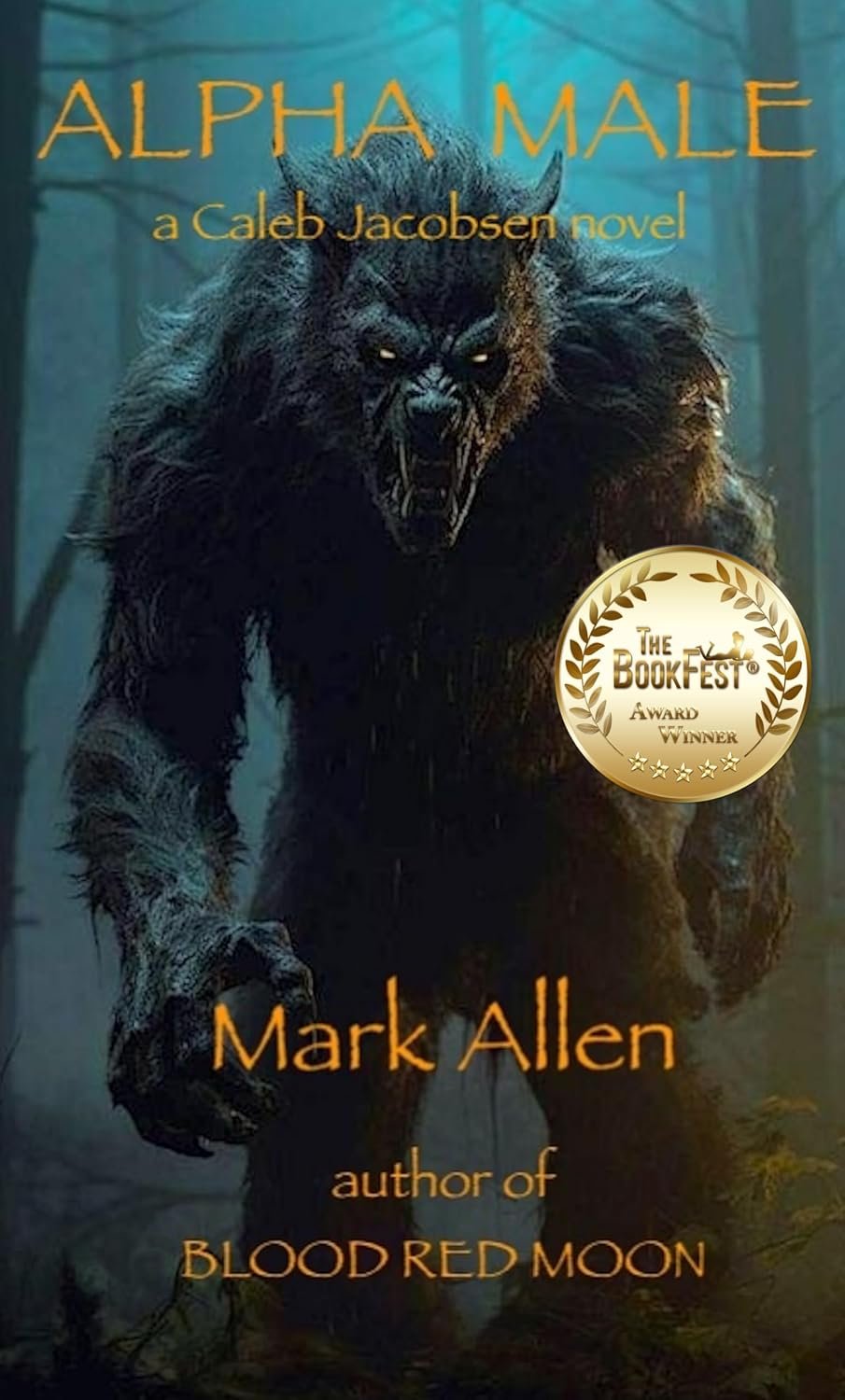
Caleb Jacobsen is a college history teacher and an extraordinarily old werewolf. After killing a former global leader of the packs to defend those close to him, he faces pressure to take the leadership he…
Books worth discovering. Authors worth knowing.
Caleb Jacobsen is a college history teacher and an extraordinarily old werewolf. After killing a former global leader of the packs to defend those close to him, he faces pressure to take the leadership he never sought. His attempt to reject a programme of domination provokes resistance from Logan Olivier, who wants the position for himself. Caleb’s…
Carefully sourced literary criticism and book-specific interpretation.
Caleb Jacobsen is a college history teacher and an extraordinarily old werewolf. After killing a former global leader of the packs to defend those close to him, he faces pressure to take the leadership he never sought. His attempt to reject a programme of domination provokes resistance from Logan Olivier, who wants the position for himself. Caleb’s relationship with Marla is also placed in the path of danger.
The politics of an alpha
The werewolf fantasy becomes more than a contest of physical strength when the reluctant leader must decide which rules can restrain others like himself. Caleb’s refusal to sanction indiscriminate harm to humans supplies a workable ethical boundary, but power that rests entirely on one admirable individual remains vulnerable. The premise therefore raises a political question beneath its horror action: how does a violent community become governable without simply installing a kinder tyrant?
When the monsters have moral limits
The adversary’s ambition offers a stark contrast, but genre fiction needs more than an evil rival and an obviously good hero. The published Kirkus account identifies moments where the morality of characters’ violence becomes difficult to separate. That is potentially a strength: supernatural bodies can make power visible, while moral reasoning remains as compromised as it is among humans. A meaningful continuation ought to expose the costs of the protagonist’s choices, not just stage superior force.
A sequel with its own reckoning
This is the second Blood Red Moon entry, and its series position matters. A continuing world must honour consequences from the previous book while offering a coherent dramatic question in its own right. Independent coverage describes the volume as accessible enough to newcomers, but the perspective of a reviewer who has read the full preceding novel would still be valuable.
A thriller for supernatural readers
Readers of political supernatural thrillers, mature werewolf fiction and stories of reluctant authority may find a strong fit. The available information confirms the principal conflict; the final measure of the work is whether the action, character loyalties and wider mythology remain proportionate.
What kind of leader can reject domination?
Caleb’s refusal to rule through indiscriminate violence is an obvious moral contrast with the predecessor whose authority he inherits. But the interesting question is whether moral restraint can be institutionalized. A leader who merely promises to be kinder than the last still holds an extraordinary concentration of power. In a fantasy of global packs, governance may depend on loyalty, fear and the threat of force. If Caleb wants more than a personal reputation for decency, he must confront how such arrangements might change when he is no longer present.
This problem is particularly rich for a supernatural character who has survived far longer than ordinary humans. Caleb’s apparent age and accumulated experience could make him more patient, but also more certain that his own perspective deserves to prevail. The college-teacher detail adds an appealing contrast: in one life he explains history, while in another he becomes part of a violent struggle for authority. A finished reading should ask whether knowledge of past events equips him to lead wisely or makes him vulnerable to repeating old patterns.
The rival as an ethical test
Logan’s ambition supplies a direct threat to the protagonist’s position, while Jacques introduces another layer of moral difficulty in accounts of the series. It is easy for supernatural fiction to divide its characters into the civilised monster and the monstrous monster, then let that division settle every argument. The published critical account points instead toward uncomfortable similarities in the treatment of violence. Readers may be asked to admire Caleb’s restraint while noticing that he too has used lethal force. That contradiction can be dramatically productive if the book recognizes it.
The stronger villain is not necessarily the one who kills more spectacularly; it is the one whose understanding of power makes a different social order imaginable. Does Logan seek status, security, ideology or simple appetite? The available outline suggests ruthless ambition but not enough to settle those possibilities. A reviewer should keep the question open, because a one-note opponent can reduce a political story to a sequence of attacks, while a recognisable if repellent worldview can challenge the hero’s confidence.
Romance within a dangerous community
Marla’s relationship with Caleb matters because the threat to loved ones could test his principles more sharply than a formal challenge to his leadership. It is easy to reject violence when discussing policy; harder when personal fear enters the room. The story has an opportunity to ask whether his obligations to the entire pack can coexist with the desire to protect one individual. The danger is making Marla merely a target whose suffering exists to motivate the hero. A compelling sequel would give her judgment and presence their own force.
The genre promises action, but the book’s richer appeal lies in the strange conjunction of public duty and private affection. Caleb is presented as a reluctant alpha, a position of symbolic strength that he experiences as moral necessity rather than destiny. Readers who enjoy werewolf fiction with a political and ethical dimension may find that predicament engaging. The available independent review supports discussion of its central conflict, while a fuller assessment of pace, violence and character development would still benefit from reading the novel itself.
The continuing-series format raises a final issue of scale. A global pack is an ambitious fictional society, yet the most compelling problems of leadership remain close to the body: whom one trusts, whom one threatens and which injuries one is willing to excuse. Caleb’s wish to preserve lives might be tested most sharply when preserving them conflicts with his personal loyalties. The synopsis and independent review indicate a story that can bring those two kinds of duty into collision. Readers who enjoy supernatural conflict with ethical consequences may find more here than the title’s masculine boast initially suggests. The alpha role is most interesting when it behaves like a responsibility rather than a prize.
The review’s scope
This assessment is based on the identified bibliographic records and available author, publisher and bookseller descriptions. The interpretive claims above are editorial judgments about the documented premise and genre choices, not testimony to having read every chapter or inspected every illustration. The published text may answer, complicate or contradict the critical questions raised here. A finished review would assess the language, structure and ending directly.
About the book.
The title, author/contributor record, source URL and matching cover file ID come from the current MarketAnyBook Journal Queue and its Drive asset folder. The review considers supernatural horror and thriller through verified available descriptions rather than firsthand full-book reading.
Unsponsored editorial book review based on publicly available bibliographic and descriptive evidence, with critical interpretation distinguished from verified book details.
Found a book worth opening?
Books worth discovering. Authors worth knowing.
Return to the Journal →