
An American Corgi Goes To Balmoral
Beth McClure’s An American Corgi Goes to Balmoral sends an American corgi named Isla to help her Scottish cousin Sandy investigate strange events around the Balmoral estate. The Royal setting and…
Books worth discovering. Authors worth knowing.
Beth McClure’s An American Corgi Goes to Balmoral sends an American corgi named Isla to help her Scottish cousin Sandy investigate strange events around the Balmoral estate. The Royal setting and playful canine point of view supply immediate picture-book charm, but the deeper appeal is the way a journey transforms a famous location into an…
Considered reviews, grounded in the book’s documented promise.
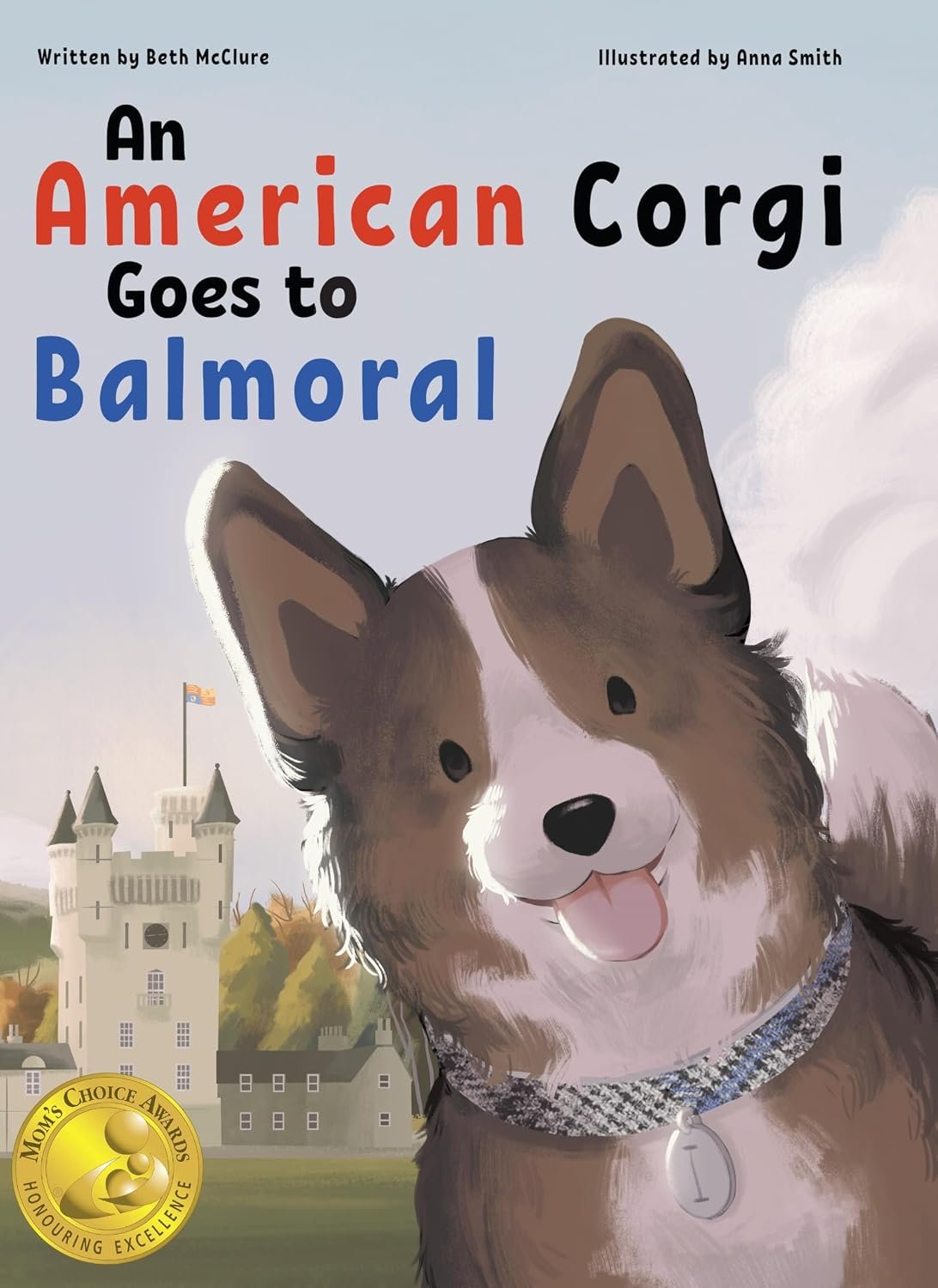
Beth McClure’s An American Corgi Goes to Balmoral sends an American corgi named Isla to help her Scottish cousin Sandy investigate strange events around the Balmoral estate. The Royal setting and playful canine point of view supply immediate picture-book charm, but the deeper appeal is the way a journey transforms a famous location into an approachable landscape of friendship and small uncertainties. Anna Smith’s illustrations are an important credited part of this edition, although the art cannot be meaningfully judged without seeing the complete spreads.
A palace becomes somewhere to explore
Balmoral could have been presented as a polished landmark, viewed at a distance through ceremony. McClure instead builds the premise around kinship and a problem that requires movement into the Highland surroundings. That choice lowers the barrier between child and setting. A family visit becomes an active encounter with place; the estate's trees and grounds matter as spaces where courage and curiosity are exercised. Children do not need a prior interest in royal history to participate in a mystery. The dog protagonists turn potential tourism into lived adventure.
Rhyme has work to do
The publisher’s sample verse is energetic, direct and addressed to the young listener. Rhyme in a picture book is not automatically a virtue: it can encourage anticipation and memory, but it can also force unnatural syntax or hurry emotions past their proper pace. The excerpt suggests an invitation into adventure rather than a detached narrator's lecture. A full assessment would need to test how the meter reads aloud over the whole book and whether the illustrations create pauses the verse knows how to use. It is precisely at bedtime or in a classroom that verbal rhythm reveals its strengths and weaknesses.
Courage at a child-sized scale
The threat is described as mysterious rather than terrifying. That is an appropriate potential balance for a young audience: enough uncertainty to make bravery meaningful, not so much that the atmosphere defeats the pleasure of discovery. Isla's effort to help Sandy also places care before heroism. The rescue impulse grows from relationship. If the eventual solution allows the dogs to cooperate rather than one protagonist simply outshining everyone else, the book could offer a quiet social lesson without pausing to deliver a moral sermon. That outcome must not be assumed from the short description.
The visual collaborator matters
Anna Smith's presence in the credits asks readers to attend to more than the words. A children's mystery gains information through eyes, gestures, scale and environmental detail. The image might show what the protagonist misses or reward a child who looks more carefully than the adult reading aloud. The publisher provides a sample glimpse, and the book has been recognized by the Mom's Choice Awards; neither replaces a critical inspection of full sequential art. Claims about character expression, layout or color control should be reserved until those pages are available.
Who will value this book
A promising family read-aloud for children who love dogs, travel and gentle mysteries. Its distinctive setting offers conversation about Scotland and the difference between being a tourist and becoming involved in a place. The publisher verifies the story premise and creator roles; this commentary does not imply inspection of all pages.
Scope of this assessment
This is a research-based editorial review drawn from identified bibliographic, author and publisher sources. It considers the work’s documented premise and the critical questions it invites, without claiming a complete firsthand reading. No unverified scene, character action or ending is asserted.
About the book.
An evidence-bounded critical introduction to illustrated children’s mystery and place-based adventure. Published descriptions support the stated premise; interpretations are identified as editorial analysis, not confirmed plot details.
This review concerns a book marked sponsored in the current MarketAnyBook queue. Sponsorship is disclosed, and all observations remain research-based.
Found a book worth opening?
Books worth discovering. Authors worth knowing.
Return to the Journal →