
Anne Has an Alligator
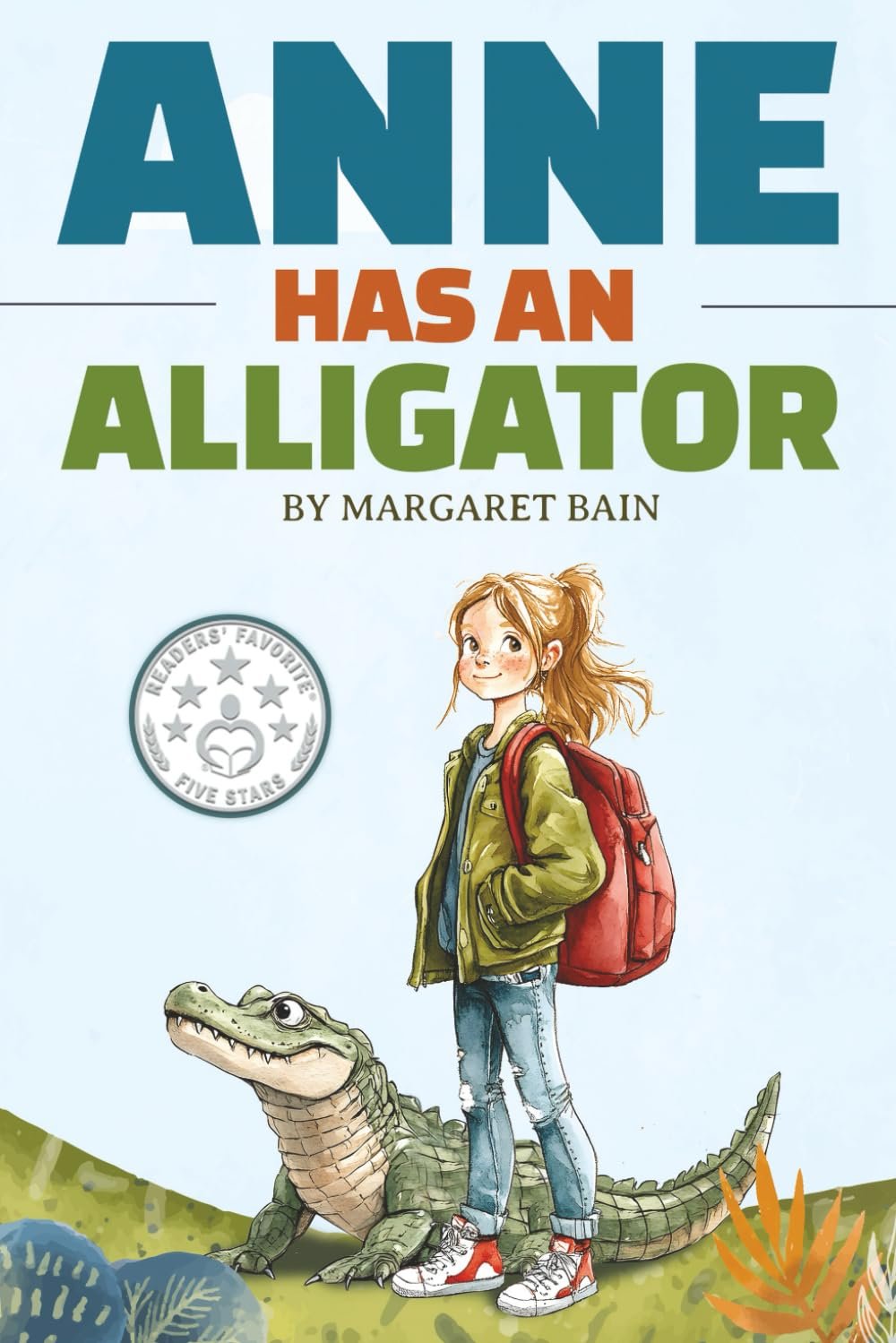
In Anne’s world, babies arrive with an animal companion given by the Stork, and that animal grows alongside them. Anne’s companion is an alligator. Starting at a new school introduces her to classmates with…
Books worth discovering. Authors worth knowing.
In Anne’s world, babies arrive with an animal companion given by the Stork, and that animal grows alongside them. Anne’s companion is an alligator. Starting at a new school introduces her to classmates with equally unusual animals, from birds to small mammals, and to a helpful zookeeper who knows that caring for an unpredictable companion takes practice.
Carefully sourced literary criticism and book-specific interpretation.
In Anne’s world, babies arrive with an animal companion given by the Stork, and that animal grows alongside them. Anne’s companion is an alligator. Starting at a new school introduces her to classmates with equally unusual animals, from birds to small mammals, and to a helpful zookeeper who knows that caring for an unpredictable companion takes practice.
Everybody carries a companion
The invented rule is wonderfully direct: everybody has a visible responsibility that other people can see. It gives children a playful way to think about difference without demanding that difference be hidden. Anne’s alligator might be inconvenient, but the creature also makes her recognisably herself. The premise can carry a discussion about what we nurture, what we struggle to control and how school communities make room for unfamiliar lives.
Teaching care rather than conformity
The zookeeper is an especially revealing figure. An adult who teaches care rather than instant obedience might allow the story to treat mistakes as occasions for learning. Yet stories that use unusual animals as metaphors have to be careful: the children must remain people, not diagrams of personality types. We would want to see the actual pages to judge the humour, pacing and interaction between Shey Smith’s illustrations and Margaret Bain’s text.
Fantasy with school-day texture
The bookseller synopsis mentions friendship, a bully, jokes and some mathematics. That varied register is potentially fruitful for middle-grade readers, who rarely experience school as a single moral problem. A world that lets absurdity and ordinary concern coexist can make its fantasy rule feel lived in. The title itself has the good comic economy of a child’s startling announcement.
A playful proposition
For families who enjoy imaginative school adventures and readers willing to accept a delightfully improbable animal premise, this has clear charm. The recommendation is limited to the documented concept and intended audience; the handling of bullying, illustrations and final narrative movement needs direct inspection.
The alligator nobody else can carry
A person’s animal companion in this imagined world is visible from infancy, growing in size and consequence as the child grows. That rule is particularly clever because it makes individuality both delightful and inconvenient. Anne cannot choose a more socially acceptable creature simply because the alligator is awkward at school. Yet she is also not reducible to her animal. A good children’s novel would allow the creature to reflect some aspect of Anne’s life without collapsing her entire identity into a single temperament.
The unusual companions given to classmates open the possibility of a lively social ecology. If everyone has a different creature, then belonging cannot mean acquiring one standard set of traits. The classroom may be where children learn to negotiate differences that are already present, not where difference is erased. Such a premise offers a subtler entry into empathy than a story in which one child alone is conspicuously unusual. The synopsis allows us to say the rule is fertile; only the pages can show whether the story develops it beyond a parade of charming animals.
The zookeeper as a model of adult authority
Introducing a zookeeper into a school story is an entertaining practical solution to a fantastic problem. It also creates a potentially generous model of instruction. The adult’s expertise is not in telling every child to suppress an animal’s nature but in teaching care, responsibility and reasonable limits. That distinction matters in books for readers whose differences may sometimes be treated as problems requiring correction. The best mentor helps a young protagonist understand the needs of others while preserving what is lively and singular about the protagonist.
There is, of course, a tension between metaphor and actual animal care. An alligator cannot sensibly be treated like a household pet, and an imaginative book should not be mistaken for real guidance about wildlife. The fantastical premise frees the writer to explore social feeling rather than zoological plausibility. The reader’s critical task is to notice whether the story uses the creature consistently and whether the zookeeper’s lessons emerge from events rather than interrupting them as speeches. The available record establishes the zookeeper’s role, not the artistry of the execution.
The value of disorder in a school story
Children’s school fiction often begins with a new environment and asks the protagonist to locate a place within it. Anne’s complication is that she arrives accompanied by a creature whose behaviour may be difficult to predict. The listing’s references to a bully, friendships and humour suggest several kinds of social challenge operating at once. That variety can prevent the story from becoming a single lesson about acceptance. Children may care about jokes, games and ordinary disagreements even when adults are preoccupied with a large moral message.
The strongest recommendation is therefore for the book’s central imaginative rule. It invites children to ask which animal they would bring into the world, an apparently playful question that can lead to surprisingly revealing conversation about temperament, comfort and responsibility. The book should be judged by whether Anne herself remains an interesting person after the novelty of the alligator has passed. For readers who like animal fantasy with an identifiable school-day emotional world, the documented premise makes a persuasive invitation.
The book’s invitation to imagine a lifelong animal companion also allows a child reader to consider why different creatures might need different care. That can be a more generous question than asking which animal is the most impressive. In Anne’s world, the unusual is universal; even a seemingly ordinary school day must accommodate many kinds of life. If the story treats that abundance with humour and practical affection, its fantasy may help readers recognise how communities become richer when nobody is required to be identical. The final critical issue is the individuality of Anne herself: can she act, err and learn without being swallowed by the spectacle of her alligator?
The review’s scope
This assessment is based on the identified bibliographic records and available author, publisher and bookseller descriptions. The interpretive claims above are editorial judgments about the documented premise and genre choices, not testimony to having read every chapter or inspected every illustration. The published text may answer, complicate or contradict the critical questions raised here. A finished review would assess the language, structure and ending directly.
About the book.
The title, author/contributor record, source URL and matching cover file ID come from the current MarketAnyBook Journal Queue and its Drive asset folder. The review considers illustrated children’s fiction through verified available descriptions rather than firsthand full-book reading.
Unsponsored editorial book review based on publicly available bibliographic and descriptive evidence, with critical interpretation distinguished from verified book details.
Found a book worth opening?
Books worth discovering. Authors worth knowing.
Return to the Journal →