
Brain Damage
A dermatologist is shot in her hallway and wakes unable to trust what she reads.
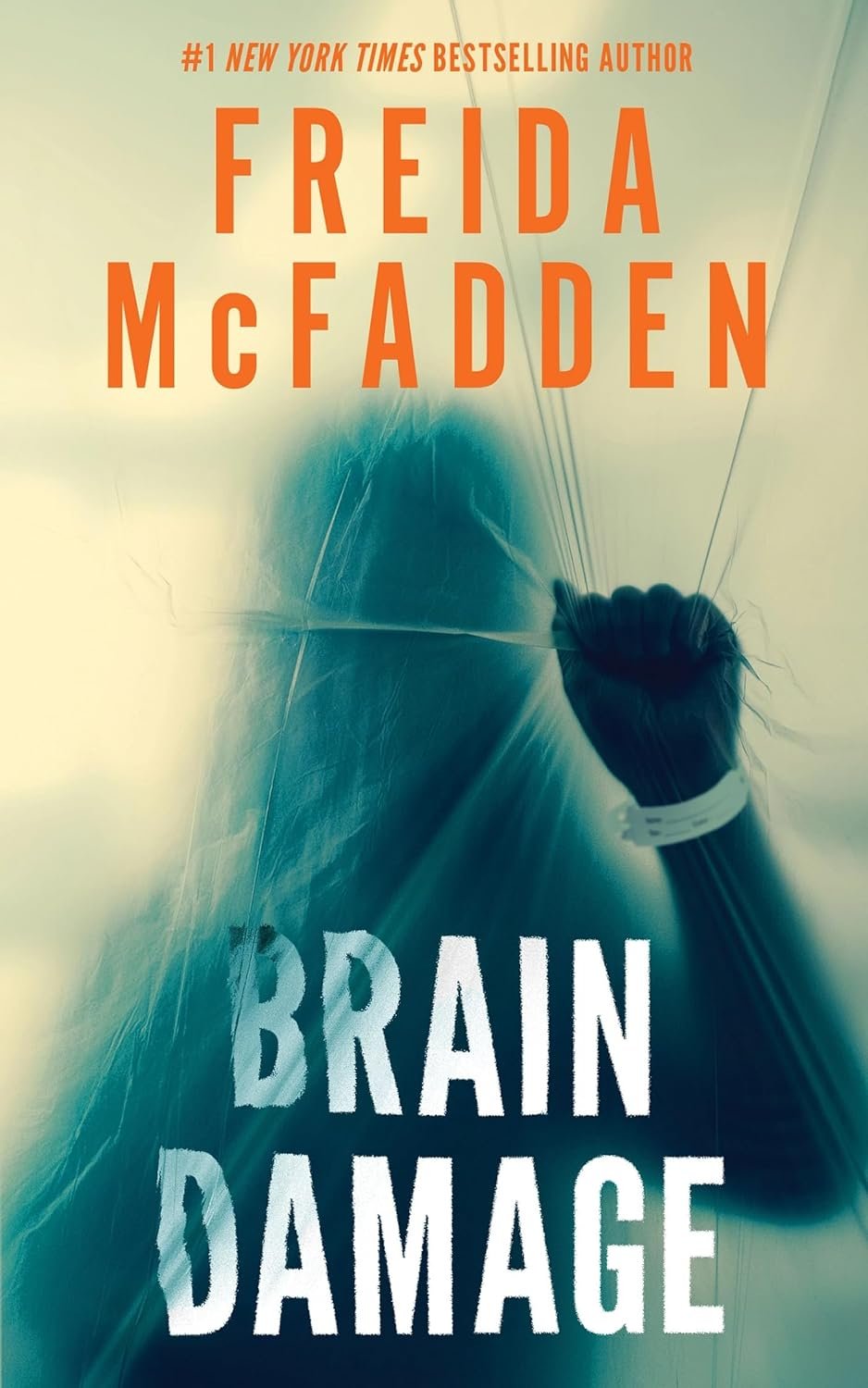
Freida McFadden’s novel Brain Damage.
Brain Damage is Freida McFadden’s psychological thriller about a woman who survives a shot to the head and cannot trust the sentence she was given. Dr. Charlotte McKenna, a Manhattan dermatologist, is shot in her own hallway. She wakes in a rehabilitation unit without her name, without the use of her left arm, and without sight on her left side. The man who shot her whispered one sentence into that left ear. Poisoned Pen Press first published the novel in 2016. This feature is about that book, now back in circulation.
A sentence she cannot check
What the injury does to the plot
Charlotte is thirty-seven. She paid for her own Central Park view. She has a rescue cat named Kitty. Those are the ordinary facts the reviews use to place her before the hallway. After the shot, ordinary reading fails. A man in blue scrubs comes into the room. His badge says Chris, and under that it says rapist. She is terrified, and no one has told her she can no longer trust a word. The scene, placed about a fifth of the way in, is a joke and the architecture. The brain damage is not color. It is the reason every clue can lie.
The whispered sentence is the plot, in the account reviewers give. She cannot see who is standing on her left. She cannot find the arm. She cannot be sure of a badge. A thriller usually hides the truth from the reader. This one hides it from the person who heard it. That is a meaner trick, and it is the one the book is built on.
This is a 2016 novel, earlier than the Housemaid books readers now use as the McFadden pattern. Reviews say it does not run on a late flip back through forty pages. The uncertainty starts in the hospital and stays in the body.
The life the bullet interrupts
A dermatologist is a useful protagonist for this injury. Her work is surfaces. The shot ruins the instrument she uses to read a room. The cat, the view, the paid-for apartment are the before. The unit is the after. A rehab ward is a closed set: badges, scrubs, visitors, and a patient who cannot audit them. The book uses that closed set.
The man who tried to kill her is not a stranger in the reviews’ framing. He leaned down. He chose the left ear. The choice of ear is the cruelty, because that is the side she can no longer check. A reader does not need the later McFadden novels to follow this. The hallway is the start. The unit is the problem.
I am not going to name the sentence. The reviews do not print it, and the book’s bargain is that Charlotte cannot verify it. A feature that invented the words would be doing the one thing the injury forbids.
The public pages are enough to know the door and not enough to walk the last room. A feature can name the injury or the war. It cannot pretend the ending has been checked, and it will not add a scene to make the count.
Who it is for
The book is for a reader who wants a thriller in which the detective cannot trust her own eyes. It is a poor fit for a reader looking for the later McFadden machine. This one is earlier, and the trick is medical.
Poisoned Pen Press is the publisher. The first publication is 2016. The return to circulation is why the book is on a 2026 shelf. The verified situation is the hallway, the left side, and the sentence.
The public record stops before the answer. That is the right place for a feature to stop.
More Journal stories are on the Journal, and other book articles are collected in Book Reviews.
About the book.
Brain Damage, first published by Poisoned Pen Press in 2016, follows Dr. Charlotte McKenna after she is shot in her hallway. She wakes in rehab unable to use or see her left side, and the shooter’s whispered sentence is the thing she cannot verify.
A short note
The injury is the mystery, which is the part I trust. Charlotte hears one sentence in the ear she can no longer use, then has to live in a ward where a badge can say anything. McFadden fits that trap because the book makes the body the unreliable narrator. I have not read the last page. The hallway is enough to open.
This MarketAnyBook feature is based on the publisher listing and verified public information. It is not a full-book review. Book links may be affiliate links.
Found a book worth opening?
Books worth discovering. Authors worth knowing.
Return to the Journal →