
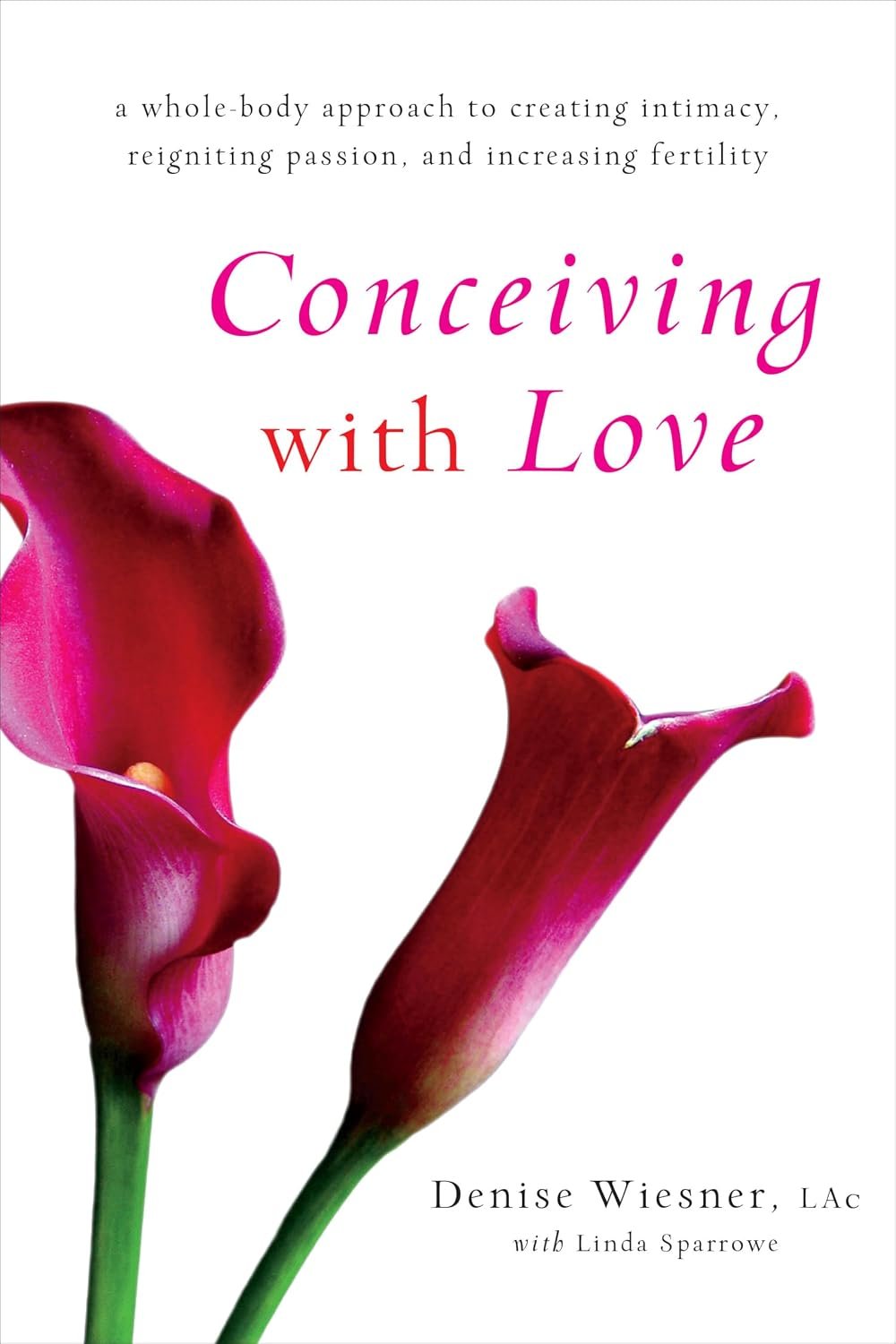
Conceiving with Love
A relationship-focused fertility guide explores connection and intimacy during the stress of trying to conceive.
Books worth discovering. Authors worth knowing.
Denise Wiesner’s Conceiving with Love approaches fertility discussions through the relationship between partners and the emotional toll that uncertainty can produce.
A sponsored nonfiction feature that distinguishes supportive intimacy practices from claims about medical outcomes and fertility treatment.
Trying to conceive can make a couple’s intimate life feel like a schedule of tests and deadlines. Denise Wiesner’s Conceiving with Love, developed with contributor Linda Sparrowe, begins from the concern that an intense focus on pregnancy may strain affection, self-confidence and a sense of partnership. The book proposes looking at the relationship itself alongside the practical questions of fertility.
Shambhala presents the guide as a whole-body approach bringing together perspectives from conventional reproductive medicine, traditional Chinese medicine and contemplative or sensual practices. It addresses both medically assisted and non-assisted paths to pregnancy. Those details make it a relationship-centered fertility book rather than a straightforward clinical manual. Readers should distinguish emotional support from evidence that any particular practice changes the probability of conception.
When intimacy becomes an assignment
Fertility struggles can alter the meaning of familiar rituals. An encounter that once expressed affection may become entangled with timing, medical appointments or anxious calculations. The resulting pressure does not mean a relationship is weak. It reflects the difficulty of combining a deeply personal hope with uncertainty and repeated decisions.
Wiesner’s publisher describes shame, self-blame and disconnection as problems the guide wants to address. Those feelings are not inevitable, and couples vary widely in how they experience the process. Yet the subject is worth bringing into view. A relationship can benefit from conversations about what feels supportive, what feels obligatory and which parts of shared life deserve attention apart from the desired pregnancy.
Two people, different experiences
Partners may not experience fertility assessment or treatment in the same way. The physical burden of tests, medications and procedures may fall unevenly, while emotional reactions differ in timing or intensity. An approach that makes room for both perspectives is more realistic than assuming that a couple will always want the same reassurance at the same moment.
Communication does not require perfect agreement. People can have different limits, fears and forms of hope without one person’s response invalidating another’s. The book’s advertised focus on intimacy suggests an interest in maintaining the relationship through uncertainty, not only reaching a particular reproductive result. That distinction may be its most enduring contribution for many readers.
What a whole-body approach suggests
The subtitle uses language of the whole body, and the publisher describes an integrative model. It includes reflection on physical experience, emotion, sexuality and supportive practices. Readers who feel that medical conversations have become dominated by numbers may welcome attention to how treatment affects daily life and connection with a partner.
But broad language should not blur differences in evidence. Fertility is influenced by many medical and biological factors, and some causes require diagnosis or specialist treatment. A book can provide complementary ideas about wellbeing without establishing that relaxation, movement or any traditional technique can overcome a specific reproductive condition. Keeping those limits visible protects people from misplaced self-blame.
Reclaiming choice around sexuality
The book’s stated concern with desire is significant. When intimacy is tied to conception, a couple may feel compelled to prioritize the goal over comfort or mutual enjoyment. Discussion of consent, preferences and changing needs can help partners remain people to one another rather than treating encounters as steps on a checklist.
Sexuality is also private and diverse. Not every couple will welcome the same exercises or language, and readers should feel free to reject approaches that do not fit their values or circumstances. The important idea is to preserve mutual respect during an experience that can become highly medicalized. Personal agency remains relevant at every stage, including when deciding not to follow a suggested practice.
Traditional practices and clinical care
The publisher identifies yoga, qigong and Tantra among the sources of exercises, alongside traditional Chinese medicine. These traditions have different histories and aims. Some readers may find movement or mindfulness helpful for managing stress. Claims that a practice increases fertility, however, require evidence specific to the treatment and circumstances; cultural familiarity alone is not proof of a medical effect.
People undergoing fertility treatment should discuss supplements, herbs or other interventions with their healthcare team because interactions and timing can matter. The book’s integrative framing is best treated as a menu of questions and supportive ideas, not a substitute for individualized reproductive care. Responsible exploration includes understanding where evidence is limited or uncertain.
Questions beyond the next test
A guide focused on couples can widen the conversation beyond the latest result. What does each person need to feel heard? Which activities still bring a sense of connection? When would it help to seek counseling or medical clarification? These questions may have value regardless of whether pregnancy occurs on a hoped-for timetable.
The book’s premise is therefore less narrowly outcome-driven than its fertility subtitle might first suggest. It aims to preserve intimacy in a process capable of making intimacy stressful. That goal should not be measured solely by reproductive success. A relationship may benefit from better communication even when the medical path remains complicated.
How to read the book critically
Self-help writing often combines practical exercises, personal experience and claims about health. Readers may want to separate those strands. An exercise that improves communication can be useful without proving a fertility effect. A recommendation about medical testing should be weighed against current professional guidelines. This distinction allows someone to appreciate support without treating every assertion as established fact.
Wiesner’s publisher acknowledges perspectives from both conventional and traditional medicine. Readers should not assume that mentioning both systems means all methods are equally well tested. The safest approach is curious but discriminating: choose practices that feel respectful and low-risk, and discuss treatment decisions with qualified fertility professionals.
Who might find Conceiving with Love relevant?
The guide may interest couples trying to conceive who feel that practical decisions are crowding out affection or pleasure. Its specific promise is a relationship-oriented perspective, with exercises that address intimacy and confidence as well as conversations about fertility. That makes it different from a purely technical overview of reproductive medicine.
Readers who require diagnostic advice, fertility probability estimates or a comparison of treatment effectiveness should consult specialist clinical resources. This is a sponsored MarketAnyBook feature, and it makes no claim that the book or its suggested practices guarantee pregnancy. The recommendation is to explore it for the relationship questions it addresses, while keeping medical decisions grounded in individualized evidence-based care.
A note on the author
Denise Wiesner is described by her publisher as a practitioner of traditional Chinese medicine, and the book credits Linda Sparrowe as a contributor. Wiesner’s official website explains her concern with the strain fertility uncertainty can place on intimacy. Those public sources inform the feature; they do not establish the clinical effectiveness of every technique in the guide.
About the book.
The guide combines relationship-focused practices with perspectives from Western reproductive medicine and traditional Chinese medicine, plus yoga, qigong and Tantra.
Sponsored book feature: this MarketAnyBook article is promotional editorial content. Descriptions and commentary are based on identified public sources, not a claim of firsthand reading or an independent review. The book link uses the owner-provided destination.
Found a book worth opening?
Books worth discovering. Authors worth knowing.
Return to the Journal →