
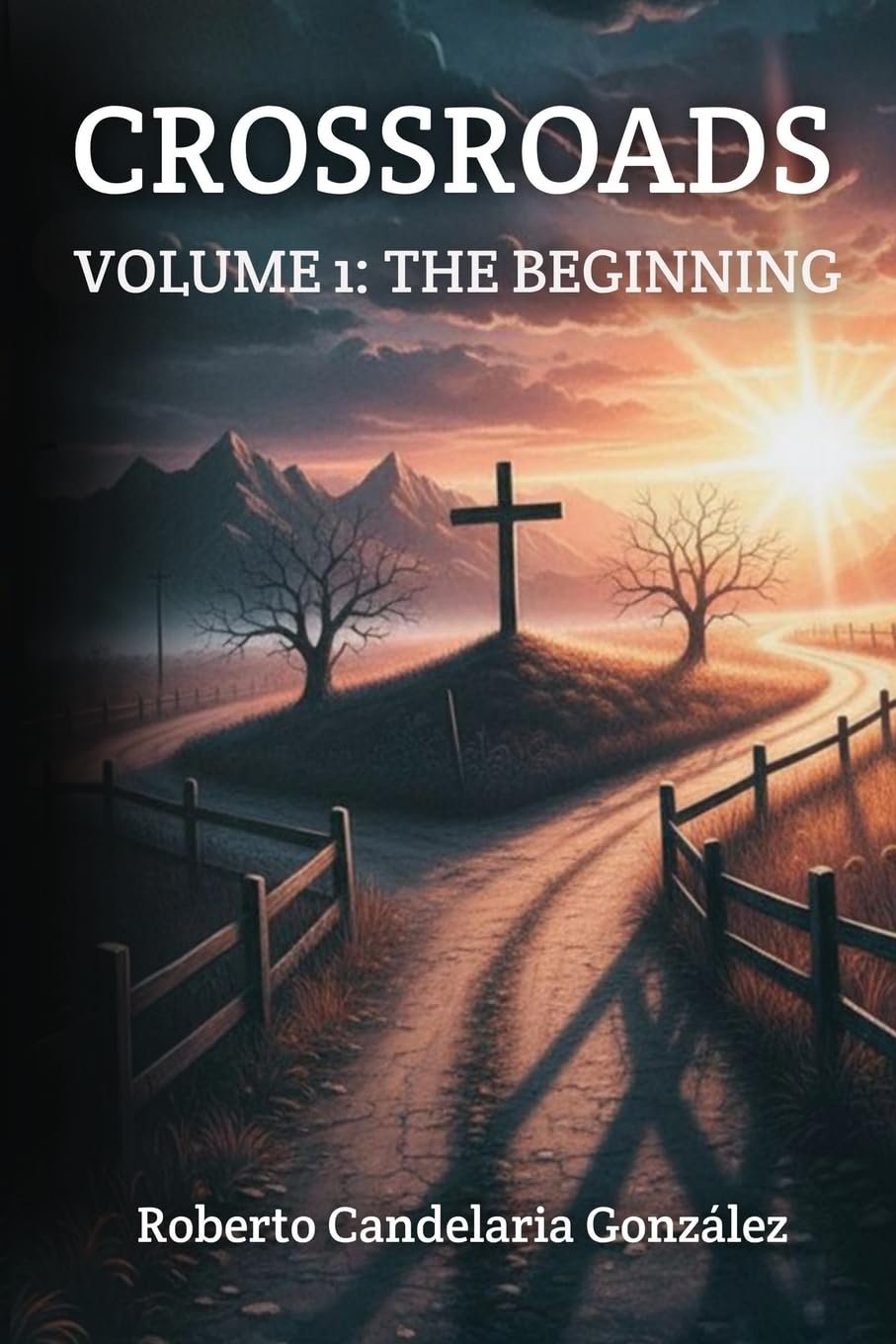
Crossroads: Volume 1: The Beginning
A young singer imagines his life taking one direction, and the person he loves chooses a different one for religious reasons. Roberto Candelaria González’s Crossroads: Volume 1: The Beginning…
Books worth discovering. Authors worth knowing.
A young singer imagines his life taking one direction, and the person he loves chooses a different one for religious reasons. Roberto Candelaria González’s Crossroads: Volume 1: The Beginning introduces Alejandro, an emerging musician whose relationship with Donavan ends when Donavan embraces Christianity and a future with a woman. A later tragedy…
Considered reviews, grounded in the book’s documented promise.
A young singer imagines his life taking one direction, and the person he loves chooses a different one for religious reasons. Roberto Candelaria González’s Crossroads: Volume 1: The Beginning introduces Alejandro, an emerging musician whose relationship with Donavan ends when Donavan embraces Christianity and a future with a woman. A later tragedy, according to the publisher’s description, creates a possibility of reconnection. The premise carries a particular emotional and ethical charge: it places romantic longing alongside faith, identity and the right of one person to make choices that injure another without becoming a simple villain.
The danger of an easy reconciliation
Second-chance romances often begin from an assumption that reunion is the most emotionally satisfying answer. Here that expectation cannot be taken for granted. Donavan’s original decision is framed by religious conviction and a heterosexual future, not merely a misunderstanding that can be resolved through one confession. If the story gives both men interior dignity, the possibility of renewed attachment must include the question of whether anything material has changed. Desire alone cannot make incompatible commitments disappear. The publisher’s description establishes renewed hope but does not disclose whether the book endorses reconciliation, demands a reckoning or leaves a possibility open. That restraint is crucial: any review that promises a particular romantic resolution would misrepresent what has been verified.
Faith as lived conflict rather than device
The decision to choose Christ and a relationship with a woman is described as Donavan’s motivating turn. Within this framework, faith is not background decoration but an active force reorganizing a life. A considered treatment would resist making belief synonymous with cruelty or, conversely, treating Alejandro’s loss as acceptable collateral to another person’s spiritual journey. One character’s religious understanding can be sincere and still produce injury; another character’s grief can be legitimate without authorizing control over someone else’s choices. González’s subject is compelling because these truths may coexist. The critical question is whether the narrative lets them remain difficult instead of resolving all the tension through a convenient moral hierarchy.
Artistic ambition and emotional vulnerability
Alejandro is introduced as a rising singer, a detail that can give his longing an expressive counterlife. A performer’s public voice may flourish while private speech falters; audiences can celebrate a person they do not know. Music might offer a language for conflict that remains unresolved in conversation. But the public blurb gives no songs, performances or artistic arc, so it would be misleading to claim that the novel develops these motifs in particular scenes. The reason to notice Alejandro’s profession is its structural potential. If used well, it could complicate the image of the abandoned lover, giving him a vocation that matters independently of whether Donavan returns.
Tragedy and the burden of a plot turn
The synopsis introduces tragedy as the circumstance that renews contact. This is a difficult device because calamity can either expose what matters or function as a shortcut around conflict. A tragedy may make previously defended positions unstable, but it should not erase the work that honest reconciliation would require. The title Crossroads implies that an encounter with crisis still leaves people responsible for choosing a path. Volume 1: The Beginning reinforces the sense that the narrative is opening rather than completing a longer reckoning. Readers may therefore expect a story attentive to consequences, not merely a single romantic reversal. The description is brief enough that pacing and outcome remain open questions.
Whose story is this?
The blurb gives Alejandro the position of emotional center and presents Donavan through the choice that separates them. That imbalance may be wholly appropriate to the narrative viewpoint; it can also leave readers wanting to understand what each person believes he is protecting. A professional review would ask whether Donavan is allowed complexity rather than serving as the instrument of Alejandro’s pain. This matters particularly for a story at the intersection of sexuality and belief, where simplified antagonists are easy to invent and difficult to defend. The material establishes the tension, not the author’s answer. That uncertainty is a reason to approach the book thoughtfully rather than market it as a straightforward uplifting romance.
What tragedy may not settle
A crisis often changes what people are willing to admit, but it cannot by itself resolve questions of theology, sexuality or commitment. This is the challenge for a romance that reconnects Alejandro and Donavan after a tragedy. The novel could use renewed contact to stage a difficult conversation about whether love requires one person to surrender a durable part of himself. The temptation in romantic storytelling is to make intensity function as evidence of destiny. In a narrative where faith has already altered the lovers’ path, intensity alone would be an incomplete answer. A sympathetic critic would look for sustained attention to individual responsibility, the burden of past decisions and the difference between wanting reunion and making reunion possible. None of these outcomes is confirmed by the public synopsis. They are the standards to which its provocative premise invites attention.
The beginning rather than an answer
The phrase “Volume 1: The Beginning” also changes the reader’s sense of closure. This may be the first movement in a larger account of transformation, and a provisional ending can be honest if it resolves enough immediate feeling to make the next movement necessary. The challenge is to avoid using a series label as permission to postpone every important decision. The promise of a new start should be felt through how Alejandro understands the cost of his choices, not simply through the announcement that another volume might follow. The published material identifies the novel as an opening; it does not specify its final scene or confirm any later installment.
Who will value this book
Crossroads may appeal to readers of emotionally serious contemporary fiction who welcome faith, identity and queer longing as central, sometimes conflicting commitments. It could provoke worthwhile book-group discussion about personal conviction, relational responsibility and what must change before a second chance becomes honest. Readers seeking a purely lighthearted romance should note the prospect of loss and tragedy. The publisher description gives enough context for a qualified recommendation but not for judgments about the final moral balance, the portrayal of religion or the exact form of reconciliation. Those require reading the whole work.
Scope of this assessment
This is a research-based editorial review drawn from identified bibliographic, author and publisher sources. It considers the work’s documented premise and the critical questions it invites, without claiming a complete firsthand reading. No unverified scene, character action or ending is asserted.
About the book.
An evidence-bounded critical introduction to faith-and-identity centered contemporary literary romance. Published descriptions support the stated premise; interpretations are identified as editorial analysis, not confirmed plot details.
This review concerns a book marked sponsored in the current MarketAnyBook queue. Sponsorship is disclosed, and all observations remain research-based. Narrative summary involves Christian faith, sexual identity and tragedy; the review does not infer an ending or judge characters from undisclosed chapters.
Found a book worth opening?
Books worth discovering. Authors worth knowing.
Return to the Journal →