
How to Love Your Business
Business therapist Nicole Lewis-Keeber asks founders to examine boundaries, old patterns and the emotional demands of work.
Books worth discovering. Authors worth knowing.
An entrepreneur can leave an old workplace and still carry its harmful habits into a new business of their own.
S.
When Your Business Feels Like a Bad Relationship
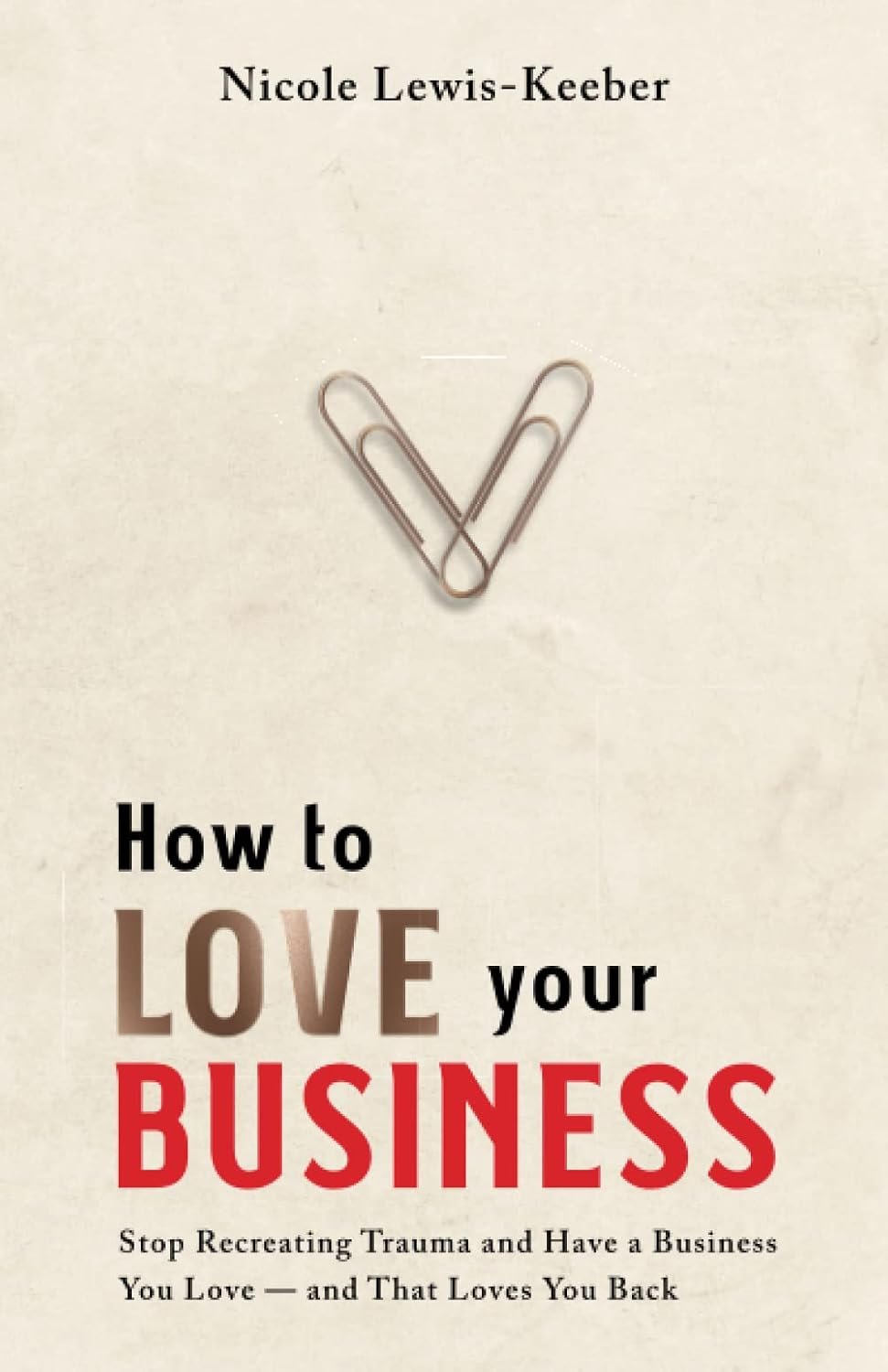
Nicole Lewis-Keeber’s How to Love Your Business begins with an unsettling observation: someone can leave an unhealthy workplace, start a company for greater freedom and discover that the new enterprise recreates the same exhausting dynamics. Long hours, unclear boundaries and chronic pressure may begin to feel like requirements for survival. The author, a licensed clinical social worker and business therapist, proposes looking at entrepreneurship as a relationship. Her central question is whether an owner has built a business that supports their life or one that repeatedly demands more than they can sustainably give.
This approach differs from conventional guides focused on marketing funnels, revenue targets and growth tactics. Lewis-Keeber is interested in the emotional habits founders bring into decisions. She describes how earlier experiences can shape the way someone responds to clients, staff, money and uncertainty. The book’s subtitle invokes trauma, but readers should understand that the framework is an approach presented by the author, not a diagnosis that every difficult business problem originates in childhood. Economic pressures and structural realities also matter, even when individual patterns are worth examining.
The relationship metaphor is useful because it makes behavior visible. People understand that a friendship cannot remain healthy if one side never rests, never says no and measures its worth only through approval. A business relationship can become similarly unbalanced when the founder treats every client request as an emergency. The metaphor invites a different kind of question from ‘How can I work harder?’ It asks what mutual support, limits and realistic expectations would look like in the organization an entrepreneur is building.
The Patterns We Bring to Work
Lewis-Keeber’s official book description argues that personal history does not vanish when a person takes on a professional role. Some owners may have learned that usefulness earns affection, that mistakes bring punishment or that asking for help is unsafe. In a company, those beliefs can show up as overpromising, excessive control, a reluctance to delegate or discomfort charging appropriately. These are examples consistent with the author’s themes, not claims that every owner with such behaviors has an identifiable trauma history.
The author writes about nearly abandoning her own business after realizing that its demands had become demeaning and overwhelming. That personal angle makes the premise more than a critique delivered from a distance. She describes discovering that the enterprise intended to create freedom had reproduced an oppressive dynamic. Readers may recognize a milder version of the problem: a calendar with no empty space, clients contacted at all hours or a belief that rest must be earned only after everything is finished. These are ordinary business choices with emotional consequences.
Examining a pattern is not the same as assigning blame. An owner may face real debt, unfair market conditions or a lack of social support. It would be reductive to suggest that better boundaries alone fix those problems. The book’s emotional lens is most useful when combined with practical knowledge of contracts, finances, staffing and obligations. Reflection can clarify how someone responds to pressure while leaving intact the need for material solutions. A sustainable business must work in both the psychological and economic senses of the term.
Values Before Endless Availability
One of the book’s described exercises concerns identifying values and noticing when daily decisions fall out of alignment with them. A founder may say that family time, integrity or creative independence matters, yet accept working arrangements that repeatedly undermine those priorities. This gap is not necessarily hypocrisy. It can be a sign that an owner has never translated a cherished idea into a practical rule about calendars, response times, pricing or the kinds of work they choose to accept.
Values become useful when they affect decisions that cost something. Someone who prioritizes thoughtful service might limit the number of clients they take. Someone who wants a humane workplace might budget for realistic deadlines rather than celebrating permanent emergencies. Someone who values family may need to make certain hours unavailable. These are illustrative applications of the book’s stated themes, not a set of prescribed steps quoted from its pages. Their common feature is that a value gains credibility when it changes how work is organized.
Boundaries as a Form of Care
The author places clear boundaries at the center of a healthier business relationship. In everyday practice, boundaries are often mistaken for rejection or inflexibility. They can instead communicate the conditions under which reliable service remains possible. Clients benefit when commitments are clear, and owners benefit when the workday has limits. A promise to be permanently available may sound generous but can eventually produce the exhaustion and resentment that make good service difficult.
Her description also includes making room for one’s business, a phrase that can seem paradoxical when work already occupies too much time. The distinction is between chaotic attention and intentional attention. A founder might need a regular period to review finances and strategy instead of responding only to immediate crises. Without that space, the urgent can crowd out the important. A boundary can protect the quiet work necessary for responsible decisions just as surely as it protects time away from the company.
Money, Worth and the Inner Critic
Money is never only an abstract number in a small business. It determines what can be paid, who can be hired and whether the owner can meet personal needs. It can also carry feelings about deservingness, risk and security. Lewis-Keeber includes examination of one’s relationship with money among the topics she addresses. That focus may help readers notice emotions around quoting fees, asking for payment or accepting profitable work that conflicts with their values. The purpose is awareness, not the claim that financial mathematics can be replaced with a change of mindset.
These themes connect because financial pressure and self-judgment can reinforce each other. Someone afraid of appearing inadequate may accept every project, undercharge or refuse help. The result may be less economic stability rather than more. Lewis-Keeber’s approach invites founders to examine the emotional logic of those decisions while still considering market rates, accounting, tax obligations and cash flow. A feeling can explain why a choice is difficult without establishing whether the choice is financially sound.
Building an Emotionally Sustainable Company
The author describes an Emotional Sustainability Plan as a guide for daily business decisions. The phrase is important because it shifts attention from short bursts of motivation to the conditions that make work livable over time. A company may survive an intense launch or occasional demanding season, but constant crisis is not a desirable operating model. Sustainability concerns how owners, staff and clients interact under routine pressure, not just whether the next ambitious milestone is reached.
A good plan would need to connect reflection with reality. If someone identifies rest as important but has no coverage for essential responsibilities, a new calendar boundary may collapse immediately. If an owner recognizes a tendency to overdeliver, clear scopes of work and pricing policies may be more effective than daily affirmations alone. These are practical implications of the author’s framework, not detailed steps claimed to appear in a specific chapter. The most credible use of emotional insight is to let it inform structures that can be maintained.
A Different Measure of Success
How to Love Your Business will appeal to owners and aspiring entrepreneurs who suspect their stress is not explained entirely by workload. It may be useful alongside conventional business guides, not instead of them. A reader looking exclusively for sales tactics will find a different focus: values, relationships, boundaries, emotional patterns and the daily experience of operating an enterprise. That distinct emphasis can be particularly relevant to service professionals whose work involves constant personal availability and difficult expectations.
Lewis-Keeber’s strongest provocation is that success should include the quality of a founder’s life, not merely the size of a business. More revenue is not automatically a better outcome if the structure required to earn it becomes unsustainable. Nor is a peaceful workday sufficient if an enterprise cannot pay its bills. The challenge is to design a relationship between people, money and purpose in which those realities are considered together. The business should be able to grow without demanding that the owner continually abandon their own needs.
The book’s relationship metaphor brings that challenge home. A healthy relationship requires repeated choices, repairs, boundaries and a willingness to be honest when something is wrong. Lewis-Keeber asks entrepreneurs to apply similar attention to the organizations they create. Her approach will not eliminate uncertainty or difficult work, but it offers a way to identify patterns before they become unquestioned rules. A business worth loving, the book suggests, is not one that asks for unlimited sacrifice. It is one whose everyday conditions allow the people sustaining it to remain fully human.
About the book.
Lewis-Keeber uses the metaphor of a relationship with one’s business to explore childhood patterns, personal values, boundaries, money and emotional sustainability.
Editorial book feature, not paid sponsorship. Research-based original commentary from public author, publisher, retailer and bibliographic sources; not a first-hand complete-book review. A cover placeholder will be resolved by the owner’s publishing automation.
Found a book worth opening?
Books worth discovering. Authors worth knowing.
Return to the Journal →