
It’s Okay Not to Know
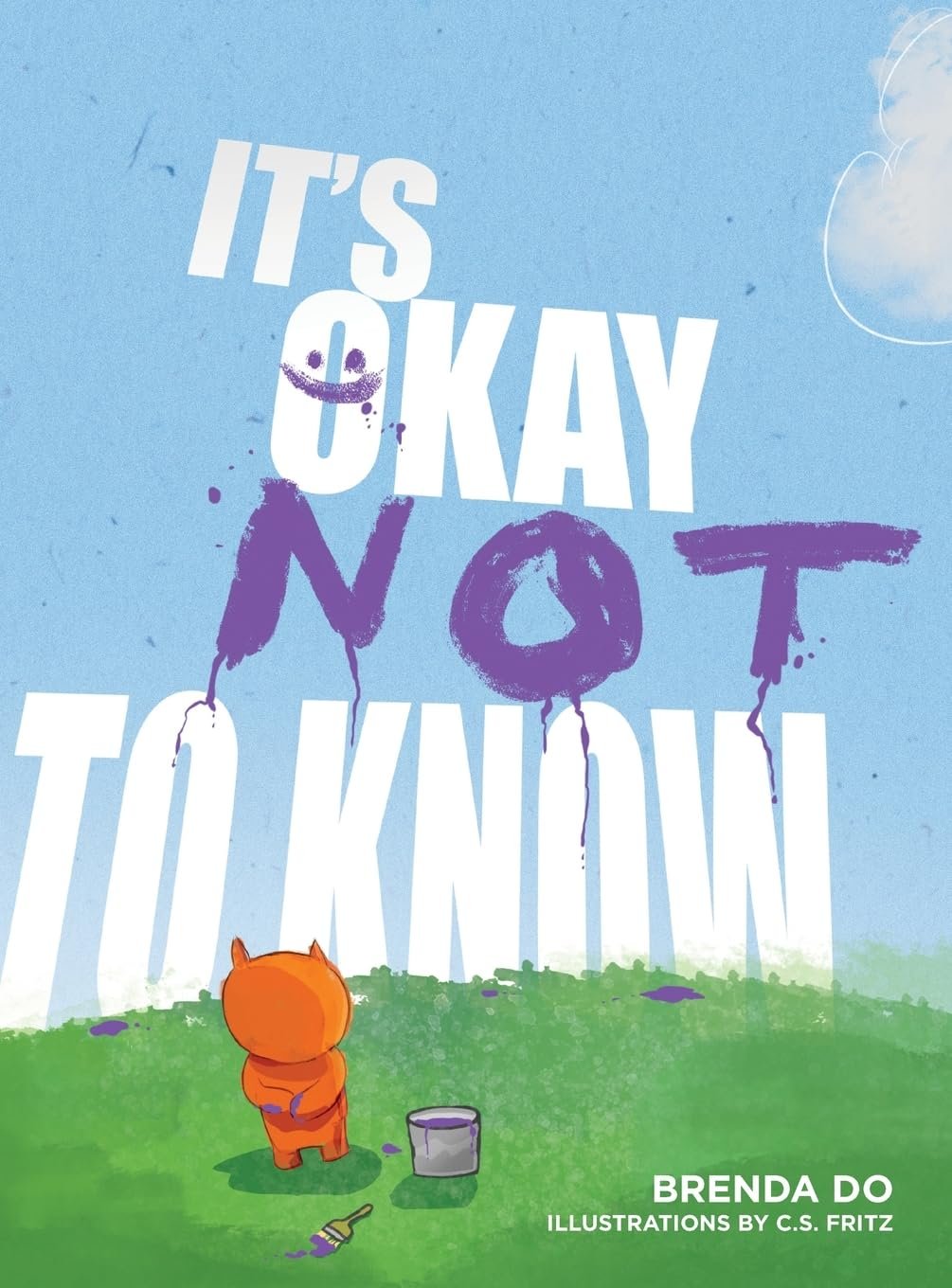
Bink, a little monster, learns to replace fear of mistakes with curiosity and self-compassion.
Books worth discovering. Authors worth knowing.
Brenda Do’s picture book follows Bink, a small, non-gendered monster who feels inadequate when things do not go as planned.
A children’s feature about emotional learning, curiosity and the difference between accepting an error and accepting defeat.
Children can turn a small mistake into a large judgment about themselves. A dropped object, a wrong answer or a puzzle that will not fit may suddenly feel like proof of not being clever enough. Brenda Do’s picture book It’s Okay Not to Know responds to that familiar frustration through Bink, a little monster who learns that uncertainty is not a verdict on personal worth but a place from which discovery can begin.
The author’s website and public book description frame the story around curiosity, kindness and self-compassion. Bink feels discouraged when attempts fail or answers remain out of reach. Over time, the character begins to see mistakes as opportunities to ask questions and learn. The concept is simple enough for a picture book, yet it addresses a belief many adults continue to carry: the idea that being wrong makes a person less deserving of respect.
The difference between a mistake and an identity
A child who says “I made a mistake” is describing an event. A child who says “I am stupid” is turning that event into a definition of the self. The distinction may seem small, but its emotional consequences are enormous. Bink’s advertised struggle rests in that gap. The young monster assumes difficulty means something permanent about intelligence or ability rather than something temporary about a task.
Picture books can be especially effective at exploring such moments because the emotional meaning is visible through facial expressions, pauses and reactions. The public sources do not establish every illustration’s contents, so this feature does not invent pages. What matters is the character’s recognizable experience. Young readers may understand Bink’s disappointment long before they know terms like perfectionism or self-criticism.
Why not knowing can feel unsafe
Children often live in settings where adults already know the answers and peers seem to learn at different speeds. A child may worry about being singled out, slowing the group or disappointing someone important. Those fears can turn a normal stage of learning into an experience of shame. The book’s premise invites adults to notice how their own reactions to mistakes influence whether a child remains curious.
Reassurance is useful, but it is more effective when paired with patience. Telling a struggling child that everything is easy can make the task feel even more intimidating when it remains difficult. A more honest response acknowledges effort and suggests another way to approach the problem. Bink’s story appears to encourage precisely this kind of shift: from a judgment about ability to a question about what can be tried next.
Curiosity as an alternative to judgment
The author’s official description places curiosity at the center of the book. Asking “why?” makes room for investigation where a negative label would close the conversation. A failed attempt becomes a source of information: perhaps an instruction was misunderstood, the task needs more practice or the chosen method simply does not fit. Such questions do not guarantee success, but they keep learning possible.
The emotional transition is just as important. Curiosity is easier to practice when mistakes are treated as ordinary rather than humiliating. A child who feels safe to ask an obvious question can use the people around them as resources. The book presents an inviting version of this lesson through a fictional character, not a scientific claim that one phrase can change every child’s behavior.
Self-compassion without avoiding effort
Some adults worry that kindness toward oneself means letting mistakes go uncorrected. The two are not incompatible. A child can recognize that something needs work while refusing to describe themselves as hopeless. Self-compassion helps make the next attempt more approachable. The premise of It’s Okay Not to Know links this inner shift with continued curiosity rather than with abandoning the challenge.
That is a useful distinction in social-emotional learning. A gentle voice does not remove responsibility for completing tasks or making amends when a mistake harms another person. It changes the emotional setting in which the child tries again. Bink’s advertised discovery suggests that confidence can develop through an increasingly healthy relationship with uncertainty, not only through accumulating correct answers.
The value of a non-gendered protagonist
Public descriptions identify Bink as a non-gendered little monster. That choice can make the character accessible to children who do not share a particular human identity or background. The fantasy design invites readers to recognize an emotion before sorting the protagonist into familiar categories. Because the problem of feeling inadequate is widely shared, a playful monster offers an effective point of entry.
The value of representation depends on the whole work, and this feature does not claim to evaluate its illustrations in detail. The documented character concept is still worth noting. Bink is not defined by being best at something. The story’s central appeal is a small creature trying to learn while discovering that uncertainty need not mean isolation.
How adults talk about their own mistakes
A picture book about self-kindness can have an unexpected second audience. Children watch what adults say after spilling something, forgetting an appointment or failing to solve a problem. An adult who responds with harsh self-criticism may unintentionally model a standard they would never apply to a child. Reading about Bink can prompt a conversation about what compassionate persistence sounds like in daily life.
Adults need not pretend to be endlessly patient or always cheerful. They can acknowledge frustration and demonstrate repair: taking a moment, trying a new approach or asking for help. Those actions show that mistakes do not end the story. The book’s emphasis on curiosity offers a language for both generations without claiming that every child will respond identically.
Picture books and shared reflection
Young readers can benefit from stories that let them observe another character’s feelings at a slight distance. It may be easier to say that Bink looks sad or worried than to describe a personal experience directly. A caregiver can then ask when the child has felt something similar, without pushing for an immediate confession. That approach uses fiction as an opening to communication rather than as a lecture disguised as entertainment.
The book is presented as social-emotional learning, but that label should not be mistaken for therapy. Children dealing with severe anxiety, learning difficulties or persistent distress may need more specific support. A short story can contribute to a caring environment by making ordinary learning setbacks discussable. Its success is best judged as a piece of literature and a conversation starter, not as a medical intervention.
Who may enjoy the book?
It’s Okay Not to Know may suit families, teachers and librarians looking for a gentle picture book about mistakes, confidence and learning. Children who dislike being corrected or become discouraged easily may recognize Bink’s feelings, while other children may learn to respond more kindly to struggling classmates. The premise offers a cheerful imaginative character alongside a subject with real emotional significance.
This feature is grounded in the author’s public explanation and book listings, not in claimed firsthand reading of every illustrated page. The invitation is practical and humane: being unsure of an answer is not a failure of character. It may be the beginning of a question worth asking.
A note on the creators
Brenda Do is credited as the author of It’s Okay Not to Know, with C. S. Fritz identified in public listings as the illustrator. Do’s official website discusses Bink and the book’s emphasis on curiosity and self-compassion. No invented classroom reactions or private author history have been added.
About the book.
Bink struggles with mistakes and not knowing answers, then discovers that an uncertain moment can become an opportunity to ask why and keep learning.
Independent MarketAnyBook book feature based on public bibliographic, publisher and author information. It does not claim firsthand reading, reproduce an unpublished manuscript or invent quotations. The book link uses the owner-provided destination.
Found a book worth opening?
Books worth discovering. Authors worth knowing.
Return to the Journal →