
It’s OK to Be Beautiful!
A thirty-day devotional pairs faith, reflection and small personal habits with a message of dignity that goes deeper than appearance.
Books worth discovering. Authors worth knowing.
A thirty-day devotional pairs faith, reflection and small personal habits with a message of dignity that goes deeper than appearance.
L.
A Different Meaning of Beautiful
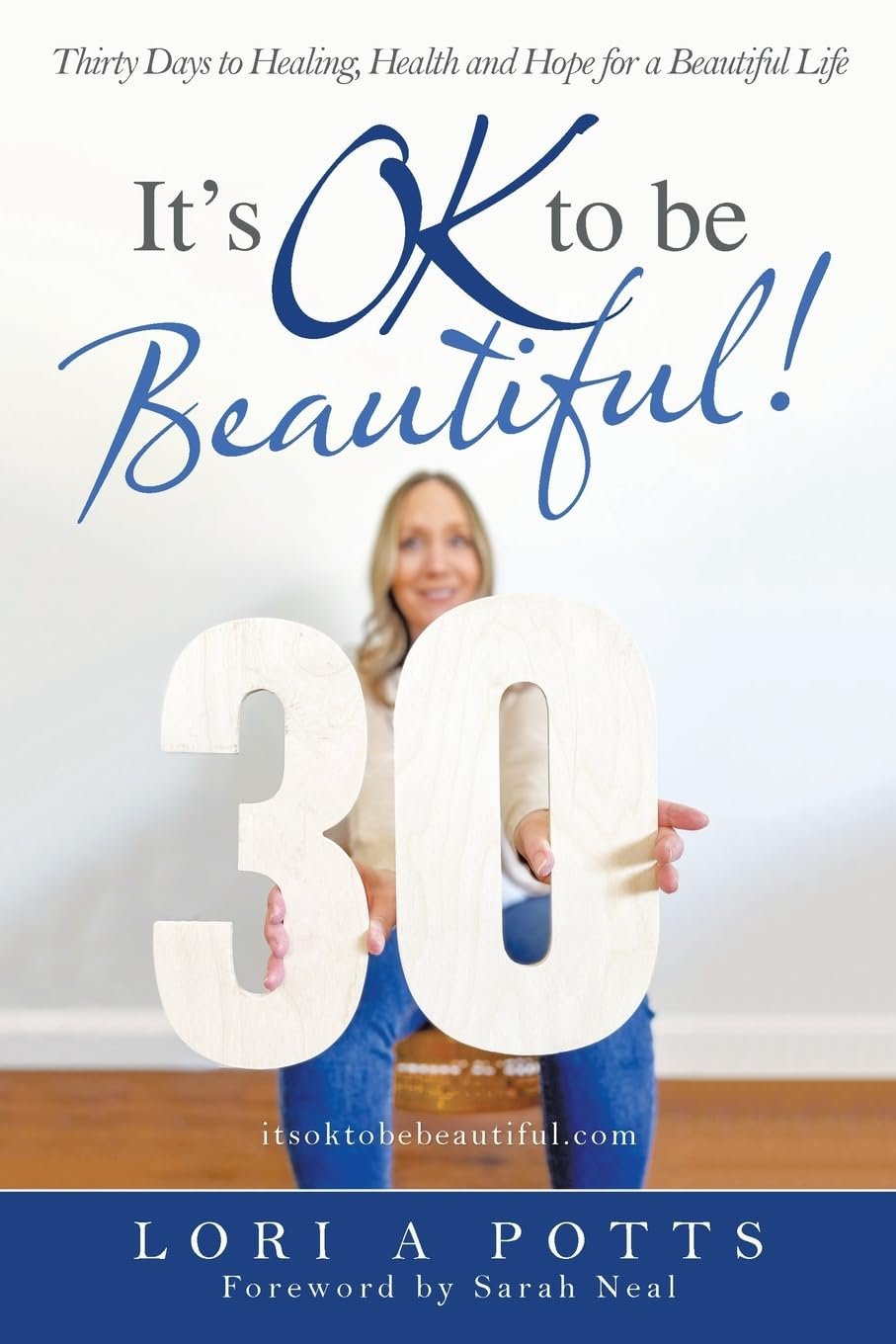
The word beautiful carries a great deal of cultural baggage. It is often attached to appearance, youth, comparison and standards that keep changing. Lori A. Potts approaches it from a consciously different direction in *It’s OK to be Beautiful!*, a Christian devotional whose full subtitle promises thirty days oriented toward healing, health, hope and a beautiful life. Her official book website describes a month of small habit changes involving heart, mind and body. In a published bookseller interview, Potts explains that she wants readers to recognize their worth in God’s sight. The promise is theological and reflective rather than cosmetic. Beauty, in this framing, begins with dignity and the possibility of care.
The thirty-day structure is significant. Many readers find it easier to engage with a bounded devotional than with an open-ended instruction to transform their lives. A day can hold one reflection, one prayer or one manageable choice. A month can create rhythm without requiring perfection. Potts describes the book as bringing together inspirational stories, biblical promises, wellness observations and nutritional guidance. Those are different kinds of material, and a responsible reader can take them on their own terms. Spiritual encouragement may be meaningful without constituting clinical treatment, while general wellness ideas still deserve the same discernment as any health information.
The Power and Limits of Small Steps
The official description emphasizes tiny beginnings. This is a useful counterweight to the dramatic language often attached to self-improvement. People are frequently told to overhaul everything at once, and then left feeling defeated when complicated lives resist simplistic plans. A smaller daily practice may be more compatible with work, caregiving and unpredictable energy. The book’s devotional form creates opportunities to examine an attitude, notice a pattern and make one modest change. It does not require the reader to produce a spectacular before-and-after account. The more substantial question is whether the process creates time for compassion toward oneself and others.
Small steps should not, however, be sold as guaranteed cures. Healing from illness, trauma or ongoing mental-health difficulty can involve professional care, support networks and circumstances far beyond the reach of a thirty-day reading practice. This feature does not treat the book’s faith-centered language about healing as medical evidence. A reader can appreciate its encouragement, food-related notes and invitation to reflect without substituting them for diagnosis or treatment. That boundary respects both the author and the people who might turn to such a book during an especially difficult period. Hope can be valuable while uncertainty remains honestly acknowledged.
Faith as the Book’s Foundation
Potts is explicit about the devotional’s Christian foundation. In her bookseller interview she describes the project as a response to a religious calling and identifies a moment involving a young woman at church as part of its inspiration. She also connects personal worth to the conviction that each life has a God-given purpose. Readers who share this framework may recognize familiar practices: setting aside quiet time, reflecting on scripture, considering a prayer and asking how faith changes daily choices. Readers from another tradition should know that the work is not a secular wellness planner with occasional inspirational quotations. Christian belief is part of its central reasoning.
That clarity can be a strength. A book that explains its outlook allows readers to decide whether the approach will nourish or frustrate them. Spiritual literature is often most useful when its commitments are visible rather than hidden behind vague language about universal transformation. Potts’s approach links inward reflection with care for physical routines, relationships and emotions. What might be understood as simple self-maintenance becomes, in her description, a way to honor a life understood as meaningful. Readers can engage with that idea thoughtfully without assuming everyone needs the same spiritual vocabulary to pursue healthier habits or a kinder inner voice.
More Than a Mirror
The familiar struggle with body image can make the title sound like a beauty-industry intervention, but Potts’s stated aims are broader. She speaks about a message held up to the reader like a mirror: recognizing unique worth rather than failing a standard of outward presentation. This kind of reframing matters because shame can become an obstacle to ordinary self-care. Someone who sees every missed routine as proof of personal inadequacy may eventually abandon the routine altogether. An encouraging devotional can offer a different opening: begin with the assumption that care is deserved, then decide which practices are realistically sustainable.
There is also an important distinction between admiration and attention. Being told that one is beautiful may provide a moment of reassurance; being invited to examine what one believes about personal value can require deeper work. A thirty-day reading sequence may create space for that examination by slowing it down. Each day’s reflection can be taken as a prompt rather than a verdict. The published description does not justify claims about measurable long-term outcomes, but it does identify the book’s intended function: helping readers approach themselves with greater hope through daily spiritual engagement.
Reading With Discernment and Gentleness
The inclusion of nutritional and wellness material calls for a thoughtful approach. General information about eating or physical habits should be understood in context, especially for readers with medical conditions, restrictive food histories or specific needs. The author’s own account blends faith and wellness because that is how she understands her life. A reader need not reproduce every suggestion in order to benefit from a particular prayer or reflection. It can be entirely reasonable to speak with a qualified professional about significant dietary or health changes while still using a devotional for motivation, meaning and emotional steadiness.
Equally, a thirty-day framework does not have to become another performance target. If a reader misses a day, the value of reflective reading has not vanished. One of the kindest ways to use a book about worth is to refuse to turn it into a contest. Take the parts that invite thought. Ask which practices feel supportive rather than punishing. Notice where a message about beauty leads toward connection instead of comparison. A devotional can be a companion without being an authority over every detail of someone’s physical and emotional life.
*It’s OK to be Beautiful!* is most clearly suited to readers seeking explicitly Christian encouragement combined with a practical daily rhythm. The author’s own statements verify its intentions, its faith basis and its mix of reflection and wellness topics. A research-based introduction cannot promise the healing outcomes named in its subtitle or claim familiarity with all thirty entries. It can identify the invitation: to spend a finite period treating dignity and hope as starting points for care. For readers who are tired of being told they must fix themselves before they deserve kindness, that is a meaningful perspective to bring to the page.
A reader might make the book’s reflective method their own without treating a prescribed schedule as a test. Keep a page for one idea worth remembering, another for an old judgment worth questioning, and a third for something to discuss with a trusted person. This approach respects the devotional’s stated emphasis on daily attention while leaving room for individual needs. It also highlights a useful distinction: a ritual can support change without proving that change must occur on a fixed calendar. The most worthwhile outcomes may be less dramatic than a life overhaul—better self-understanding, more patience and a renewed willingness to ask for help when it is needed.
About the book.
A Christian devotional structured around thirty days of heart, mind and body reflection, spirituality, nutrition notes, and a positive understanding of personal worth.
Editorial book feature, not paid sponsorship. Independent research-based commentary using publicly available descriptions and author material, not a claim of first-hand full-text review. The cover placeholder will be resolved by the owner’s publishing automation.
Found a book worth opening?
Books worth discovering. Authors worth knowing.
Return to the Journal →