
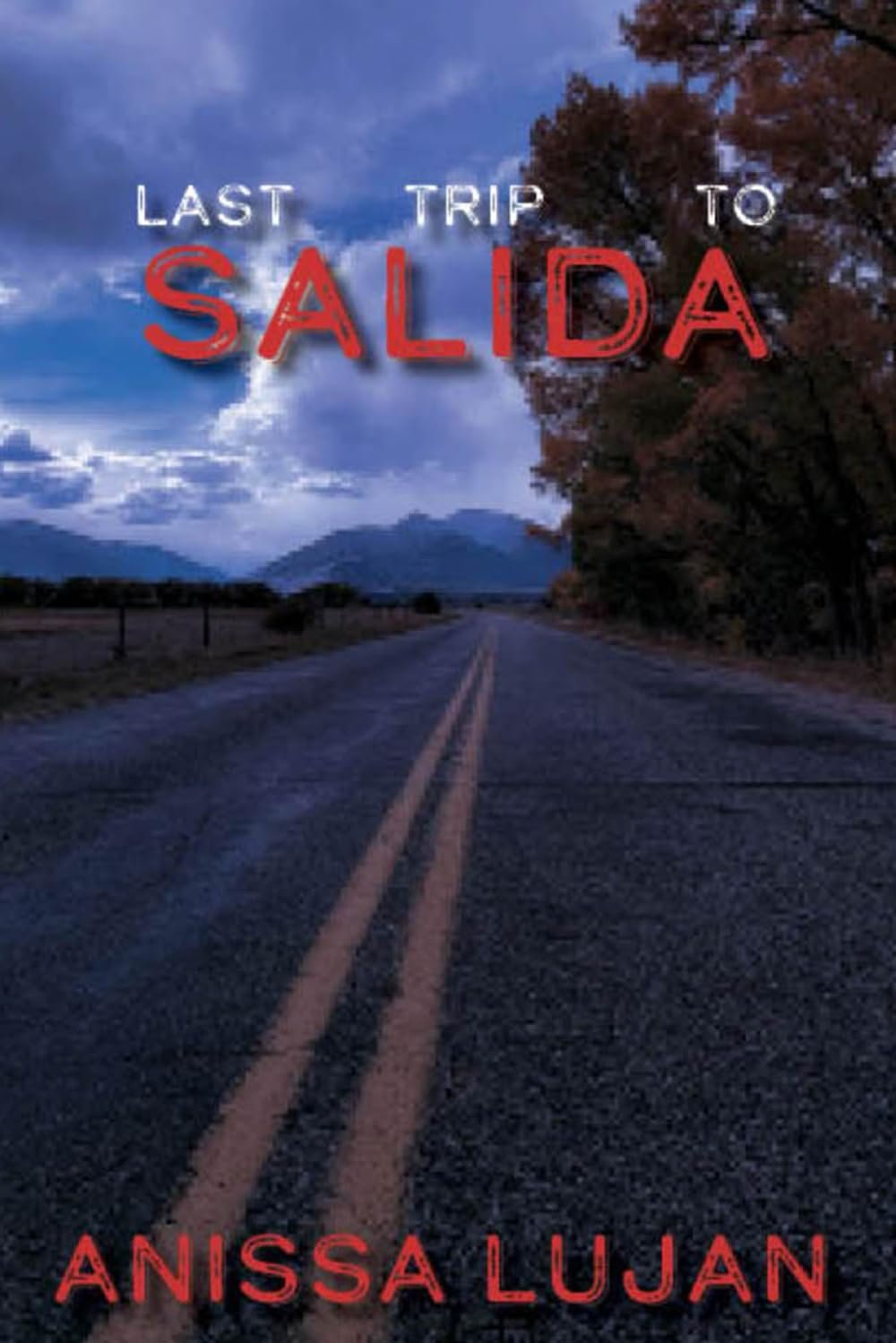
Last Trip to Salida
Four college students cross three states while confronting an apocalypse and the personal burdens they carry.
Books worth discovering. Authors worth knowing.
Camila, Ophelia, Ezekiel and Leo set out on a journey that becomes a test of survival and solidarity.
A college road trip meets apocalyptic adventure, with the group dynamic as its most intriguing promise.
Four college students, three states and an apocalypse: Anissa Lujan’s Last Trip to Salida announces its ingredients with striking economy. Its official retail synopsis names Camila, Ophelia, Ezekiel and Leo as young people trying to survive a collapsing world while carrying personal burdens of their own. The college-road-trip premise gives the story an immediately practical shape. Travel normally promises independence and shared experience; an apocalyptic emergency transforms the same journey into a test of judgment, cooperation and trust. The central question is not simply whether the group reaches a destination, but whether they can face the external threat without being defeated by their private difficulties.
The available book descriptions are unusually precise about the ensemble yet deliberately spare about the catastrophe. There is no reliable public detail about how the apocalypse begins, which locations they visit, or which danger they meet first. A substantial feature need not invent those scenes. Instead, it can consider what this setup offers readers: a contained group of young adults forced to grow up in circumstances that make the normal uncertainties of college life seem both distant and newly important.
The road trip changes meaning
The appeal of a road-trip story often comes from motion. Characters leave their ordinary surroundings, share time in a vehicle, and discover sides of one another that routine might keep hidden. That structure can move easily between comedy, romance, adventure and personal revelation. In Last Trip to Salida, the apocalypse alters the risks without erasing the social potential. A long journey is still a place where friendships are tested, disagreements become difficult to avoid and common plans must be renegotiated. The added survival stakes make each of those familiar tensions more urgent.
Three states suggest a geographic journey larger than a single town, but the published synopsis does not name the precise route. What matters editorially is the pressure of movement through changing circumstances. A group on the road may need to decide how much to share, how to respond when priorities conflict and whether stopping is more dangerous than going onward. These are genre possibilities raised by the announced premise, not claims that a particular episode occurs. Their importance lies in the basic problem of keeping a group together when ordinary supports disappear.
Four names, not a lone hero
Camila, Ophelia, Ezekiel and Leo are introduced together. That choice makes the ensemble central to the book’s invitation. A survival narrative with several protagonists can explore how strengths are distributed across a group. The person who notices a threat may not be the one who knows how to respond; the strongest voice may not always offer the wisest plan. The published material leaves their individual histories and personalities largely undescribed, so assigning each a fixed role would be a fabrication. It is enough to recognize that four people can produce four different perceptions of the same crisis.
The number also matters emotionally. A story with a single protagonist can turn survival into a private struggle against the world. A group narrative repeatedly asks what each person owes the others. How much freedom should one traveler surrender for common safety? When does protecting a friend become controlling that friend? A college-age ensemble is especially apt for these questions because its members may be navigating independence for the first time. Apocalypse fiction magnifies everyday negotiations into decisions of apparent consequence.
Personal burdens do not disappear
The official description expressly states that the characters must overcome personal burdens alongside the apocalypse. This pairing is the premise’s emotional core. Catastrophe does not grant a person instant freedom from grief, insecurity, conflict or past decisions. Under pressure, existing problems can become harder to manage; they can also appear in a different light. Lujan’s story is presented as one where the inner struggle cannot be separated from the outward danger. Which burdens belong to which characters remains a discovery for the actual book.
That restraint is important. It would be easy to supply imagined trauma, family secrets or romances to flesh out an appealing setup. Doing so would misrepresent the published work. Readers can instead approach Last Trip to Salida with a useful expectation: the survival adventure is designed to carry character-focused stakes. Whether those are resolved through cooperation, confrontation or independent choices is exactly the kind of narrative development a feature should preserve rather than spoil or invent.
Youth, uncertainty and the end of ordinary plans
College represents a particular kind of transition. Students may be far enough from home to make new decisions but still close to the safety nets and expectations they have known. An apocalyptic event removes assumptions that make the future feel predictable. Coursework, careers and ordinary social plans suddenly compete with more immediate needs. Even if the book is read simply for action, this background creates a symbolic question: what does growing up mean when the future you expected has changed beyond recognition?
A trip among college students also places intimacy inside uncertainty. Friends have to learn not only what others believe but how they behave when frightened. Loyalty becomes meaningful through decisions rather than declarations. The available listings include romance among their discovery categories, although the synopsis itself does not define a central couple or specific relationship arc. It is therefore fair to describe the book as an action-forward ensemble with possible romantic interests, not to promise a particular love story.
Reading the stakes responsibly
Apocalyptic fiction can vary from horror to speculative action to emotionally grounded adventure. Public listings for Last Trip to Salida place it across action, suspense, horror and LGBTQ-related romance categories, but categories alone do not prove the balance of the finished story. The short premise emphasizes an action-packed survival scenario and unresolved personal problems. Readers seeking a clear early statement of the entire catastrophe’s rules may need to discover those directly from the novel rather than from a short retail blurb.
The book is best approached by readers who enjoy young-adult or new-adult casts, group dynamics, dangerous journeys and characters trying to retain personal identity under extreme pressure. It is less obviously aimed at readers seeking a strictly technical disaster simulation; nothing in the accessible description supports such a claim. The stated four-character focus suggests that human decisions are just as important to the book’s appeal as the external emergency.
A journey whose destination cannot guarantee safety
There is a pointed irony in the title Last Trip to Salida. A destination usually provides the shape of a plan, but a collapsing world makes arrival itself uncertain. The novel’s advertised question asks whether the four students will survive both the apocalypse and the things each is already carrying. That is an effective foundation for suspense because it puts relationships and survival on the same road. Readers do not need an invented map of hazards to understand the appeal. They need only the premise of a trip that can no longer be treated as ordinary and a group that cannot escape itself simply by traveling farther.
About the book.
A group of four students travels across three states as an apocalyptic crisis places both survival and personal relationships under pressure.
Independent MarketAnyBook Journal book feature based on publicly available book descriptions and sources. This is editorial interpretation, not a claim of firsthand reading or independent verification of every publisher claim. No fictional scenes, quotations or unverified author facts were invented. Book links use the exact owner-provided destination.
Found a book worth opening?
Books worth discovering. Authors worth knowing.
Return to the Journal →