
Life and Times of Hobo Joe
Daniel Ray Arguelles’ title and railway cover frame a figure named Hobo Joe without disclosing the full narrative.
Books worth discovering. Authors worth knowing.
Daniel Ray Arguelles’ title and railway cover frame a figure named Hobo Joe without disclosing the full narrative.
Source-based review: verified bibliographic facts and independent interpretation, without a claim to full-text reading.
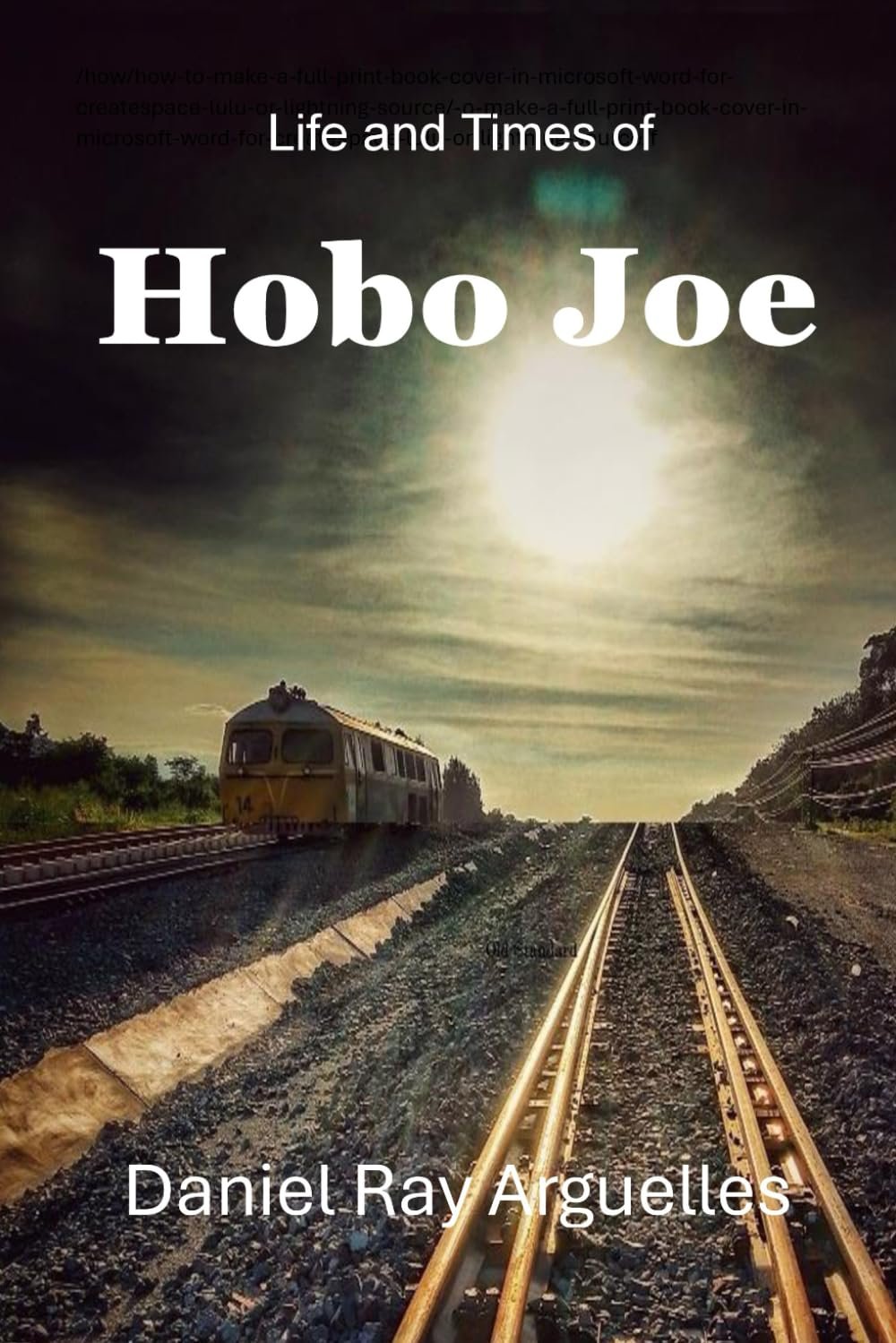
Life and Times of Hobo Joe by Daniel Ray Arguelles is packaged with a railway image: tracks run into the distance, a train approaches, and light breaks over a large landscape. The title names Joe and implies that his life unfolds across time rather than in a single episode. Published biographical material confirms Arguelles as an author and records this title, but it does not establish whether the book is fiction, memoir, biography or a hybrid. This review therefore treats the name, title and cover as evidence of its presentation, not as proof that Joe undertakes a specific journey or that his story reproduces any experience of the author.
The promise of a life story
When a book is called Life and Times of someone, readers often expect more than a single incident. The phrase suggests an individual viewed in relation to a wider environment: habits, encounters and changing circumstances may matter as much as an isolated decision. That is a conventional association, not confirmation of this book’s narrative structure. The identity of Hobo Joe is not explained by an accessible synopsis. We cannot say whether he is a historical figure, a fictional wanderer, or a nickname used for a narrator. It is better to let that question remain open than supply a biography the author did not make available.
The term hobo carries a distinctive cultural history associated with mobility, precarious work and railway travel, particularly in North America. Its romantic treatment in popular culture sometimes emphasizes freedom while minimizing hardship. The title may evoke that tradition, but there is no basis for assuming the work is set in the early twentieth century or follows a historically typical rail worker. A reader can approach the title with interest in the tension between freedom of movement and the conditions that make movement necessary. The book may engage that tension, reject it or work in another direction entirely.
What the railway image communicates
The cover’s converging tracks create a clear perspective: the reader’s eye moves toward a bright horizon. Such imagery often signals transition, uncertainty or the passage of time. Here it is a verified visual feature, not a report that a named character travels on the depicted train. A railway can represent connection between places and separation from home at once. It can also evoke labor, infrastructure and communities built around travel. Those associations help explain why the artwork is memorable. They cannot replace an actual reading of the story.
The cover also contrasts the solidity of rails with the openness of landscape. One is engineered, repetitive and directional; the other is expansive and difficult to contain. That visual tension might invite reflection on whether a life is shaped more by routes already laid out or by unexpected choices. It would be tempting to turn that question into an asserted theme. Without text evidence, doing so would be premature. The most responsible approach is to name the interpretation as something the reader brings to the image rather than something demonstrated by Arguelles’s prose.
Avoiding the romance of hardship
Writing about itinerant lives can easily become sentimental. From a distance, the road appears free of ordinary obligations; up close, unstable housing, employment and safety can demand constant negotiation. Readers should be wary of accounts that reduce real social conditions to scenery. This concern belongs to the cultural history surrounding the word hobo, not to a verdict on Arguelles’s book. We do not know how the work represents hardship or whether it seeks realism at all. What we can say is that a title invoking a wandering figure can open questions about how literature balances adventure, vulnerability and dignity.
It is also worth distinguishing observation from assumption when discussing the author. Public reporting about Arguelles includes elements of his personal history, but those accounts are not evidence that Hobo Joe is autobiographical. A writer’s biography does not automatically become the book’s plot. Assigning motives or experiences to a character from an unrelated article risks misrepresenting both. The title deserves to be approached on its own terms until an authorized description establishes its relationship to lived events.
Time, character and the question of home
The words Life and Times direct attention toward duration. A life changes through repeated encounters, losses, choices and relationships; the meaning of a place can shift with the person returning to it. If the book follows a protagonist across years, those are useful things to notice, but the duration has not been verified here. A reader could look for how Joe is introduced, whether his identity remains stable, and how locations shape the storytelling. These are prompts for the reading experience rather than claims about what happens on any particular page.
Home is another question that the railway image can raise. For someone constantly moving, home may be a physical address, a community, a memory or a state of mind. The cover does not tell us which, if any, the narrative explores. A reader who encounters this book can assess whether it complicates familiar romantic imagery or leans into it. The most meaningful review of its craft would also address character voice, structure and evidence of place; none of those qualities can be honestly graded from the cover alone.
Who may be curious
Life and Times of Hobo Joe may interest readers drawn to journey-centred titles, railway imagery and stories that seem to promise a person’s development across time. People interested in the figure of the wanderer in literature may recognize a potentially intriguing point of entry. This is not a verified recommendation to readers seeking a factual history of American hobos or an author memoir; the book’s classification and contents remain uncertain. Those who require exact genre, age suitability or a plot synopsis should seek a sample before buying. For more exploratory readers, the title and cover offer a strong visual invitation whose actual narrative meaning remains to be discovered.
This review identifies the book and author without claiming to have inspected its complete text. It does not attach the author’s reported personal circumstances to Joe or manufacture a route for the train. What remains is a genuine invitation to read carefully: a named figure, a landscape built for departure, and the unresolved possibility that moving through the world can also be a way of asking who one is.
About the book.
Daniel Ray Arguelles’ title and railway cover frame a figure named Hobo Joe without disclosing the full narrative. Review framing reflects documented descriptions and clearly limited sources.
Non-sponsored book: the MarketAnyBook source queue marks this listing as non-sponsored. This is a research-based review-style editorial discussion and not an assertion that the writer read the complete book. When interior text was unavailable, analysis of themes or possible reading questions is explicitly interpretive and not presented as documented plot.
Found a book worth opening?
Books worth discovering. Authors worth knowing.
Return to the Journal →