
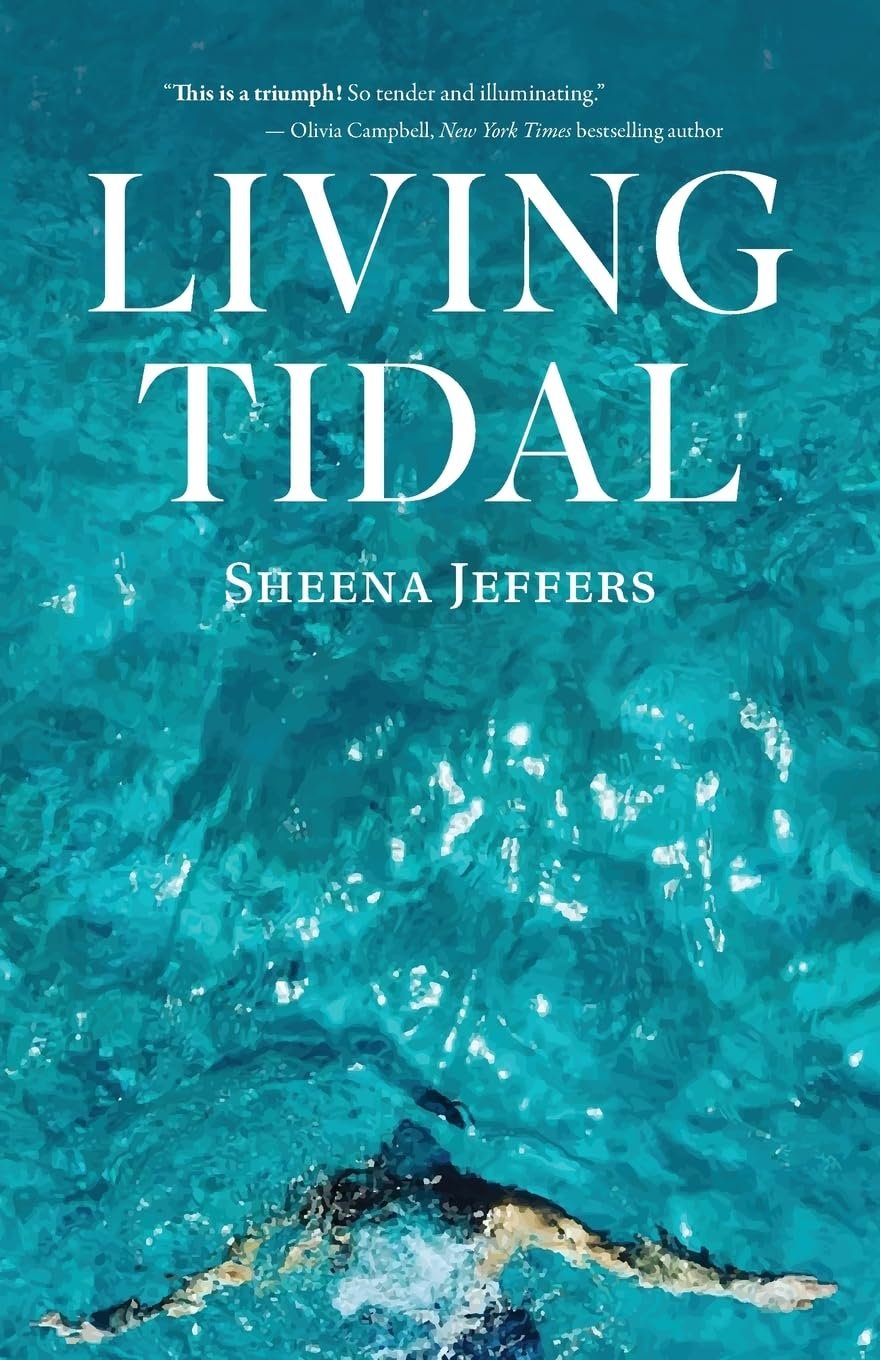
Living Tidal
A young journalist unties a sailboat from the dock and discovers that a journey across open water can change her understanding of home.
Books worth discovering. Authors worth knowing.
A young journalist unties a sailboat from the dock and discovers that a journey across open water can change her understanding of home.
S.
The Moment the Dock Lines Come Loose
A frigid November night and a high tide provide the departure scene for Sheena Jeffers’s Living Tidal. The publisher describes a young woman standing aboard a sailboat as familiar land slips away. She has a jacket, a scarf, and a powerful desire to reinvent herself. These details are small enough to feel ordinary, yet the choice they frame is enormous: step beyond a known life and accept that the next destination may change more than a mailing address. Unlike a fictional heroine who can be assured of a tidy plot, a memoirist sails into uncertainty without knowing which experiences will eventually matter most.
Living Tidal is a coming-of-age memoir as well as an adventure and a love story. Those categories meet naturally on a boat. Travel requires navigation, but intimacy requires a different sort of attention: the ability to share discomfort, recalibrate expectations and recognize when another person sees the same horizon differently. The publisher does not present the sea as a magical cure for self-doubt. Rather, Jeffers carries her questions aboard. The ocean supplies an environment in which familiar habits are harder to maintain, making previously quiet anxieties much more visible.
A Journey Recorded as It Happened
Jeffers explains on her own website that the book originated in journal entries begun in 2016. She started recording what was happening before she fully understood the significance of her situation. Her journals and laptop accompanied her onto the vessel. As she and her companion traveled, she continued noting places, people, other boats and the changes she noticed in herself. That first-person account is important because it distinguishes the project from an invented adventure stitched together long afterward. The writing began as an attempt to understand an experience while it unfolded.
Journal-based memoir has a useful tension. The person recording a difficult day does not yet know which part will become funny in hindsight or which passing meeting will prove enduring. When those notes later become a book, two perspectives coexist: the earlier self discovering the world and the later self selecting what readers most need to see. A good reading question for Living Tidal, therefore, is not merely where the boat travels, but how Jeffers’s account of the voyage might differ from the way she understood it at the time. The publicly available descriptions do not authorize a full scene-by-scene reconstruction, but her writing process gives a reliable window into the memoir’s origin.
What a Sailboat Changes About Ordinary Life
The publisher’s presentation invites readers to consider how practical dependence can create emotional honesty. A boat has limited room; weather does not negotiate; movement depends on preparation and attention. Such realities are common to sailing, not claims that any particular crisis takes place in these chapters. In a conventional routine, a person can often distract themselves from an uncomfortable question by switching tasks or locations. At sea, the usual places to escape into may be absent. The result can be uncomfortable, illuminating, or both.
Jeffers’s journey also has a romantic dimension. University coverage summarizes the broad arc as two young people buying an old sailboat and spending roughly two years sailing around the Caribbean. What interests the editorial reader is the relationship between shared risk and individual identity. A couple can plan the same route while secretly imagining two different futures. Growth does not necessarily arrive as a grand declaration; it can happen through accumulated decisions about when to press onward, when to wait, what to repair, and whose needs deserve attention that day.
The Difference Between Escape and Discovery
Leaving familiar surroundings sounds liberating, but departure by itself does not answer the questions that made someone restless. Living Tidal’s central promise is that the physical voyage and the inward search are intertwined. The publisher identifies curiosity, self-doubt and the desire to experience the world deeply as central concerns. They are not exotic emotions. What changes is the setting in which Jeffers confronts them. A wide horizon can make a person feel less trapped, yet also more responsible for the direction they choose.
This offers an alternative to travel writing that treats destinations like prizes to collect. The boat is not simply a platform from which attractive coastlines can be described. It becomes a test of the narrator’s assumptions about comfort, belonging and capability. The author notices how encounters leave lasting marks on memory; that attention suggests the importance of people met along the way, rather than only landmarks visited. Readers who enjoy memoirs where external movement mirrors an uncertain emotional life will recognize the appeal. Readers expecting a technical navigation manual should instead approach this as reflective nonfiction.
Love, Companionship, and the Changing Self
The promotional description calls the book part love story. That is an invitation to consider what it means to reinvent oneself alongside another person. Reinvention may sound intensely private, but relationships rarely stay outside the process. A new habit can alter how someone communicates. Increased confidence can change the terms of dependence. A shared dream may need renegotiation as each partner learns who they are becoming. These are lenses for reading the memoir, not claims about private conversations or specific disagreements that have not been verified publicly.
A particularly compelling question is how a person tells a true love story without reducing the other person to a supporting character in their own growth. Jeffers’s practice of recording names and encounters indicates an awareness of the wider community around the voyage. Her readers are invited to see the world as populated, connected and capable of surprising them. In that sense, the romance need not compete with the travel narrative. Both are concerned with recognizing another human being as more complicated than an initial impression.
The Writer Behind the Passage
The published information identifies Jeffers as a journalist, and her own biographical page describes further work in movement, wellness and family life. Those pursuits should not be used to infer unwritten episodes from the book. They do, however, help explain the voice of an author interested in the relation between body, environment and reflection. Her account of drafting amid travel shows someone using language not simply to memorialize places but to identify feelings that are difficult to name in the moment.
The 2024 publisher listing identifies a 193-page paperback and accompanying ebook, a manageable length for readers who want a concentrated personal narrative rather than an exhaustive history of an expedition. The university’s later account confirms the memoir’s broad Caribbean setting and its emphasis on inner discovery. Together, these sources anchor the book as a true-life voyage with a literary rather than purely instructional ambition. Claims about precise ports, storms or dramatic rescues would require the full text; this feature intentionally avoids inventing them.
For Readers Considering a Different Course
Living Tidal is likely to appeal to readers of intimate travel memoir, stories of first adult independence and accounts of relationships transformed by unusual choices. Its interest does not depend on wanting to buy a boat. Most people know the sensation of standing before a decision they cannot fully explain, aware that staying still has consequences as real as leaving. Jeffers makes that emotional threshold visible through the image of a vessel finally moving away from shore.
A useful way to read the book is to watch for the gap between what the narrator hoped departure would accomplish and what the experience actually taught her. The publisher speaks of a lifelong journey toward knowing oneself; that phrase resists the fantasy of permanent arrival. A voyage can end while self-understanding remains unfinished. Jeffers’s account offers an invitation to take uncertainty seriously without treating it as defeat. It suggests that a new course is not proof someone has solved their life, only evidence that they have decided to engage with it more fully.
About the book.
Sheena Jeffers recounts leaving familiar life for a sailboat adventure and love story, drawing on journals begun in 2016; her publisher describes a departure on a frigid November high tide.
Editorial book feature, not paid sponsorship. Independent research-based commentary using publicly available descriptions and author material, not a claim of first-hand full-text review. The cover placeholder will be resolved by the owner’s publishing automation.
Found a book worth opening?
Books worth discovering. Authors worth knowing.
Return to the Journal →