
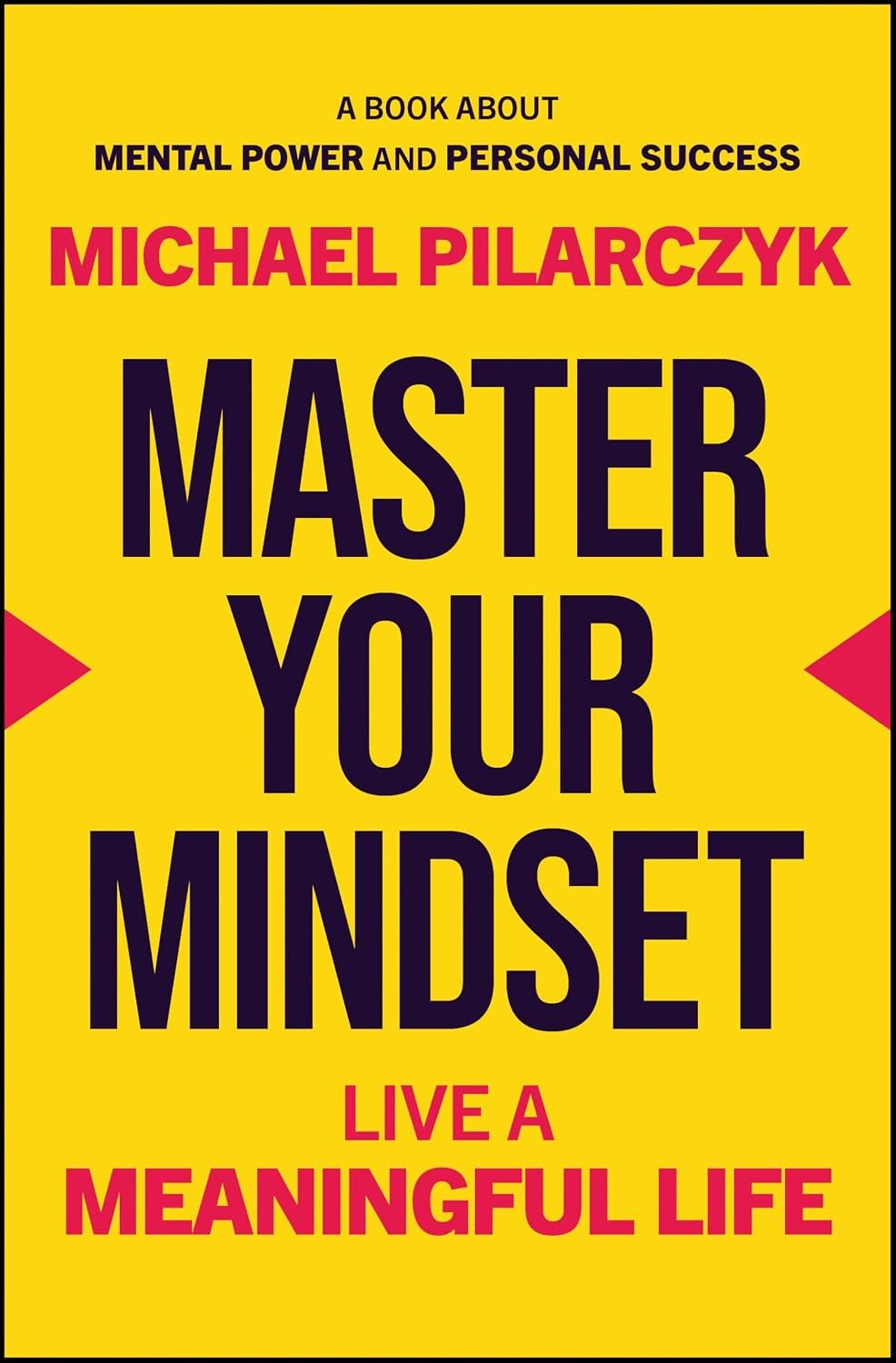
Master Your Mindset: Live a Meaningful Life
Michael Pilarczyk offers a twelve-step framework for clarifying priorities, challenging unhelpful beliefs and pursuing a meaningful life.
Books worth discovering. Authors worth knowing.
The promise here is not merely thinking positively, but examining how attention, choices and action align with personal values.
A Wiley-published practical self-help book outlining a twelve-step approach to habits, mindset, meaningful goals and mindful decisions.
Personal-development books frequently promise that changing thought will change life. Michael Pilarczyk’s Master Your Mindset: Live a Meaningful Life approaches that territory through a specifically advertised twelve-step strategy, combining reflection on beliefs with habits, focused action and the search for meaningful goals. Wiley’s publishing description positions the book as guidance for people who want to challenge limiting patterns and pursue personal or professional growth. The claim is a practical self-help proposition, not independent proof that the method works equally well for every person or every problem. The most useful entry point is to examine what mastering a mindset might mean beyond simply choosing encouraging words.
Pilarczyk’s author site emphasizes purpose, resilience, inner calm and disciplined decisions. Its promotion draws on his entrepreneurial life and interest in teaching personal development. Readers can appreciate that background while distinguishing an author’s experience from evidence for general psychological efficacy. A framework can help someone reflect more deliberately and still have limits. Economic conditions, disability, illness, relationships and structural barriers can shape outcomes regardless of optimism or effort. A responsible book feature therefore treats Master Your Mindset as an invitation to engage with its ideas critically, not as a promise that difficult circumstances disappear when a person thinks differently.
The difference between a thought and a choice
Mindset is an appealing term partly because it seems to make the invisible processes behind action available for inspection. Beliefs about ability, safety and worth can influence which opportunities a person notices or avoids. Yet noticing a belief is not the same as changing a habit, and changing a habit is not the same as guaranteeing a result. Wiley’s description makes attention, perspective and conscious action part of the advertised approach. That allows readers to look for how the book connects reflection with concrete choices. The specific exercises should be learned from the book itself, rather than guessed from its subtitle or summarized as a generic morning routine.
The distinction matters when someone encounters failure. A simplistic message might suggest that setbacks are merely products of negative thinking. A more useful way to approach self-development is to ask which decisions are controllable, which circumstances are not and where support may be needed. Pilarczyk’s framing about changing limiting beliefs could help readers test assumptions that genuinely restrict their actions. It should not be turned into blame for people facing hardship. A book can offer personal agency without pretending that every obstacle is internal. That balance is an important reading criterion for anyone considering an ambitious mindset programme.
The advertised twelve-step structure is another point of interest. Numbered methods create a sense of progression and can give readers manageable places to stop and reflect. But a sequence of twelve headings does not automatically establish a scientifically validated programme. What matters is whether steps are intelligible, workable, proportionate and adaptable to different circumstances. Prospective readers might keep notes on which recommendations are specific enough to try, which rely on metaphor and which make claims that would need separate evidence. That kind of active reading can preserve the motivational energy of a self-help book without suspending judgment about its reach.
Meaning as a different measure of success
The subtitle, Live a Meaningful Life, broadens the promise beyond career advancement. People may pursue status, wealth or recognition and still feel uncertain about why those achievements matter to them. Pilarczyk’s public positioning emphasizes clarity and alignment, making personal values relevant to decisions in daily life. A valuable question is not merely what goal someone wants to reach, but what would make the pursuit worthwhile. A reader could ask how a proposed action fits with relationships, responsibilities and long-term wellbeing. Those are reasonable reflections prompted by the author’s themes, not a claim that the book supplies one universally correct definition of meaning.
The word success can be misleading without context. For one reader it may mean professional independence; for another, time to care for family, relief from frantic comparison or a steadier relationship with work. Pilarczyk’s book is marketed to people seeking both personal and professional fulfillment. That wide audience can be a strength if the advice supports individual interpretation rather than presuming a single ideal life. Readers should look for whether the text helps them identify their own priorities before translating those priorities into targets. The distinction protects self-development from becoming a contest in which everyone is asked to want the same outcome.
A further advertised theme is mindfulness in everyday decisions. In ordinary use, mindfulness can refer to noticing experiences and reactions without being entirely captured by them. It is not necessarily the same as suppressing unwelcome thoughts or maintaining constant calm. The publisher says the book integrates mindfulness into work, relationships and choices, though the exact method should be assessed from its chapters. Readers who already practice attention exercises may find a point of connection; beginners may want to understand how much explanation is provided. No feature based on a catalogue description can verify clinical stress reduction or mental-health treatment effects from these pages.
Discipline without the myth of perfect control
Self-discipline appears in the author’s description beside inner calm. The pairing is intriguing because discipline is often presented as relentless effort, whereas calm suggests restraint and perspective. The two need not be opposites. A person might use regular routines to make important decisions easier, while allowing rest and reassessment when a plan stops fitting life. It is sensible to approach Pilarczyk’s advice as a possible source of questions about sustainable habits: which routines matter, what trade-offs do they impose, and how might someone revise them thoughtfully? These are reader applications, not verified exercises or success stories from particular chapters.
The book’s emphasis on transformation also deserves a measured response. People can find motivation in accounts of dramatic life changes, especially from authors who have pursued demanding entrepreneurial paths. However, anecdotes are shaped by memory and selection. They reveal one person’s perspective and may be inspiring without predicting another person’s outcome. Pilarczyk’s site recounts his own business background and personal search for meaning, a context that explains why the book speaks with a self-mastery vocabulary. Reading critically means appreciating the narrative without turning it into a guarantee. A person living through setbacks does not owe the world a spectacular turnaround to deserve respect.
Another useful way to approach the title is to distinguish mastering from controlling. No one can choose every thought that appears or eliminate emotion by command. What a reader may be able to practice is how to respond to an unhelpful thought, seek better information or decide on a proportionate next step. The book’s promotional emphasis on habits and action makes that interpretation plausible. It should not be confused with a promise of flawless mental control. A realistic self-help conversation gives room for uncertainty, mistakes and support from other people, even while encouraging responsibility for decisions within one’s reach.
For readers seeking deliberate change
Master Your Mindset is likely to attract people who enjoy structured reflection, practical personal-growth writing and the relationship between goals, habits and a sense of purpose. The Wiley edition’s twelve-step framing makes it especially relevant for readers who want an organized book rather than an unsystematic collection of inspirational sayings. Those seeking treatment for a mental-health condition, medical guidance or a guarantee of business success should not substitute motivational advice for appropriate specialist support. The best use of a mindset text may be to test a few ideas thoughtfully against everyday life while remaining alert to the limits of any universal-sounding promise.
Michael Pilarczyk is credited by Wiley as the author, and his official site presents him as an entrepreneur and self-development educator. The publisher and bibliographic records identify this English-language title and its structured self-help approach. This feature does not claim to have validated the complete method experimentally or to have read unpublished exercises. The strongest question the book raises is an enduring one: once a person has separated inherited expectations from values they actually hold, what repeated decisions would make a meaningful life more visible in practice?
About the book.
Self-development / mindset and goal-setting. A Wiley-published practical self-help book outlining a twelve-step approach to habits, mindset, meaningful goals and mindful decisions. Source-based feature, not a firsthand review.
Independent editorial book feature; not designated sponsored. This article uses verified public descriptions and reasoned reading context; it does not claim a full firsthand reading. WordPress cover media fields await publisher automation.
Found a book worth opening?
Books worth discovering. Authors worth knowing.
Return to the Journal →