
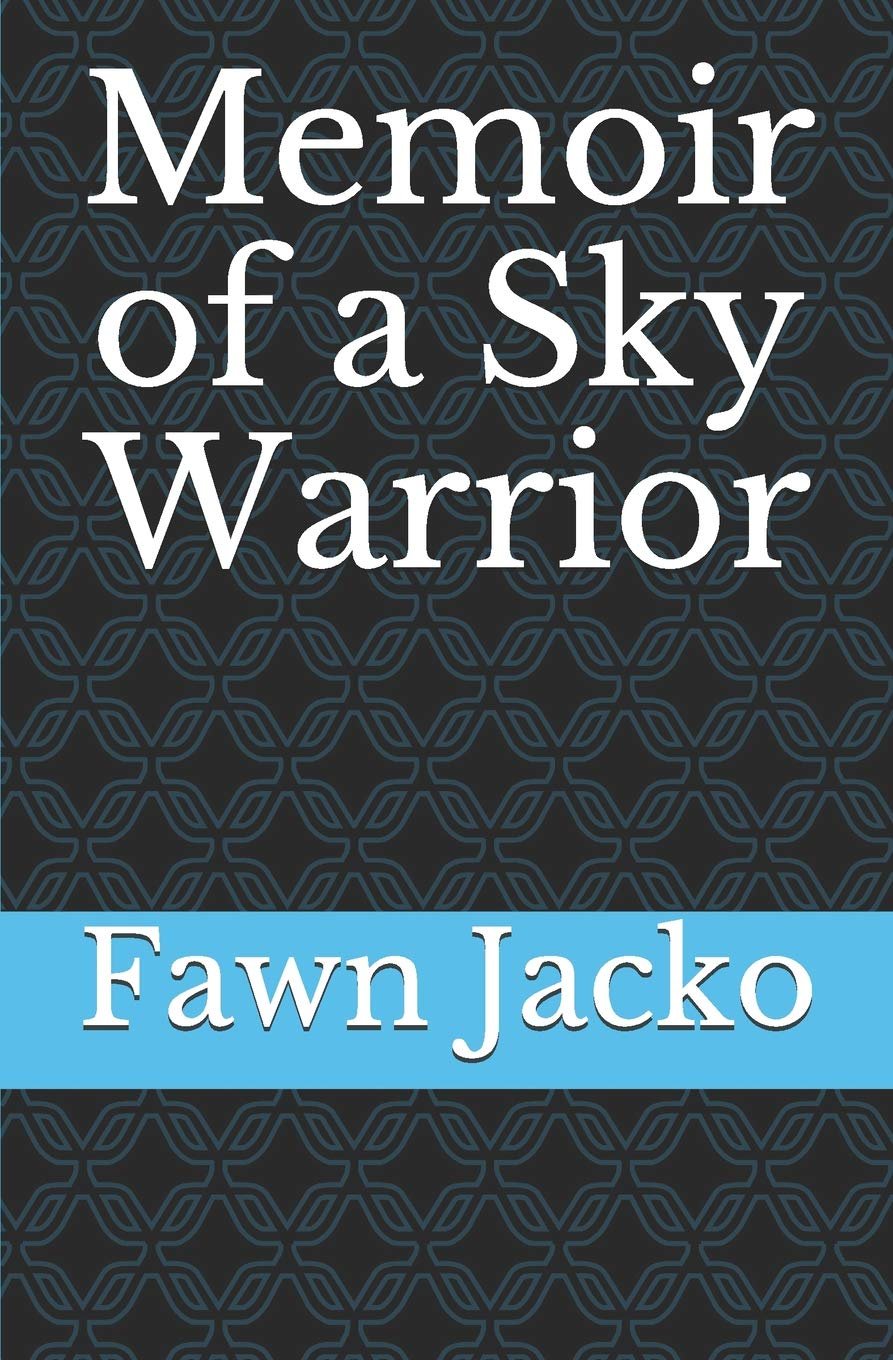
Memoir of a Sky Warrior
A personal narrative involving spiritual awakening, Anishnaabe identity and experiences of mental illness.
Books worth discovering. Authors worth knowing.
A personal narrative involving spiritual awakening, Anishnaabe identity and experiences of mental illness.
Research-based literary perspective on a verified edition.
Fawn Jacko’s Memoir of a Sky Warrior is publicly described through a series of deeply personal experiences: bereavement, a lightning strike, spiritual awakening, psychiatric care, encounters interpreted through Indigenous and spiritual belief, and an ongoing search for hope. The author’s account includes Anishnaabe identity and a sense of moving between different understandings of the world. These are sensitive matters, and the distinction between memoir and independent verification is essential. The book can be introduced as a person’s testimony about how she interprets her life without claiming that its supernatural experiences have been objectively established or that its account of psychiatric treatment applies generally to others.
The challenge of telling an extraordinary life
Memoir asks a reader to enter someone else’s remembered experience. Unlike an external biography, it places the narrator’s understanding near the centre of the work. That understanding may change over time, and the narrator may use religious, cultural or symbolic language to make sense of events that are difficult to express. Jacko’s published description is unusually direct about experiences she regards as spiritually transformative. The appropriate response is not to rewrite her account into a different story, but to keep clear which claims are attributed to her perspective.
That distinction matters in both directions. Treating personal testimony as proven supernatural fact would exceed the evidence; dismissing it as meaningless because another person interprets events differently would miss what memoir seeks to communicate. A reader can take the emotional stakes seriously while remaining thoughtful about causation and interpretation. The genre’s promise lies in understanding how events were experienced, how they changed a life and what language the writer found to describe them. It does not demand that every reader share the same metaphysics.
Grief as a rupture in ordinary time
The available description places the death of a childhood friend near the beginning of the events the author recounts. Grief can disturb a person’s sense of continuity. Familiar places remain unchanged, yet the future that once included a particular person suddenly cannot happen in the same way. Memoir has space to show how that disorientation may intersect with other experiences and beliefs, without reducing it to a single explanatory cause. Here the account moves from loss toward events the narrator identifies as awakening, setting emotional bereavement beside spiritual transformation.
Readers should resist the temptation to impose a neat formula: a death happens, a revelation follows, and everything is resolved. Human recovery is rarely so orderly, and the description makes clear that the author describes later periods of distress. A more respectful reading asks how grief continues to shape choices and self-understanding even when other dramatic events occupy the foreground. The difficult question is not whether a particular interpretation can be proven through the synopsis, but how a person learns to live when the terms of ordinary life seem to have shifted.
Lightning, the body and the meanings people make
The author’s public account includes being struck by lightning and experiencing bodily symptoms afterward. Lightning injuries are medically serious and individual symptoms require professional evaluation; a memoir cannot establish a general treatment or scientific explanation. Within Jacko’s story, the event is presented as part of a spiritual turning point. Reading it responsibly involves separating the physical event described from the meanings the narrator assigns to what followed. Those meanings belong to her self-portrait, while medical conclusions remain outside the evidence available for this feature.
Such a distinction does not diminish the narrative. Many memoirs revolve around a bodily event that changes how an individual thinks about vulnerability, possibility and control. An experience can become significant because it reorganizes the story a person tells about herself. Readers can explore why the author places the lightning strike at a pivotal moment, and how she describes its relationship to her other experiences, without taking the leap from a reported event to an established supernatural mechanism.
Movement as a search for belonging
The description refers to travel from Ontario to Alberta, time in Calgary and a return home. Such movement can be read as more than a change of geography when it appears within an account of searching for oneself. Leaving one place may promise a new beginning; returning may mean encountering old relationships with altered eyes. The public material frames these movements as part of the author’s journey, but does not allow an outsider to reconstruct every decision, period or social circumstance. Those particulars properly belong to her own narrative.
The metaphor of walking between worlds is especially resonant here. It can refer to conflicting spiritual interpretations, differences between private experience and public expectations, or the effort to understand identity through more than one vocabulary. Rather than force the phrase into a single meaning, readers can attend to the contexts in which Jacko uses it. A memoir is often richest when a motif remains complex enough to carry several forms of longing at once.
Indigenous identity requires care
The description identifies the author as Anishnaabe and refers to a sweat lodge as significant to her personal experience. These details should not be generalized into claims about all Indigenous communities or described as a universal practice with a single meaning. Cultural identity is not a decorative source of mysticism for a reader’s entertainment. It is part of a person’s relationship to family, community, history and living traditions. The most respectful approach is to let the writer speak from her own position without presenting her testimony as representative of an entire people.
This also creates an important difference between curiosity and appropriation. A reader may want to learn more about cultural practices mentioned in the memoir, but the book’s personal narrative is not necessarily an authoritative instructional guide to those practices. Further learning should include community-based sources and the voices of other Anishnaabe writers. Jacko’s account can be encountered as one person’s experience situated within identity, not as a shortcut to claiming comprehensive knowledge.
Mental health, belief and personal dignity
The published synopsis mentions hospitalization and a schizophrenia diagnosis, as well as distress and suicidal thoughts. These are sensitive subjects that should be approached without sensationalism. Psychiatric diagnoses are clinical matters, and neither the narrative description nor this feature can establish what caused a particular experience or what treatment another person should seek. The presence of spiritual interpretation alongside psychiatric care does not justify reducing the author to a diagnosis, nor does it make the care itself evidence of a supernatural event.
A respectful reader can hold several things in view: the seriousness of the distress described, the author’s own account of meaning and identity, and the importance of appropriate professional support for people experiencing mental-health crises. Where memoir narrates a personal struggle, an editorial response should avoid turning it into a prescriptive model of recovery. The human interest lies in how a person attempts to build a livable story after difficult experiences, not in whether the reader can issue a diagnosis from a book listing.
Hope without a simple resolution
The public description speaks of a continuing healing journey and a commitment to light, love and hope. Such language can be sincere without serving as proof that pain has disappeared. In memoir, hope often matters because it persists alongside unresolved difficulties. A triumphant ending is not the only valid form of survival. Sometimes the achievement lies in continuing to seek connection, gaining more precise language for experiences, or deciding that a life remains worth attending to even when it does not resemble an earlier plan.
This is a useful approach to a story whose reported events are intense and varied. A reader need not endorse every belief to value perseverance, self-reflection or the desire for belonging. The task is to stay attentive to the person rather than treating extraordinary episodes as isolated curiosities. Jacko’s title offers a self-image of courage and perspective; the full text determines how that image grows from her particular experience.
Who may want to read it
Memoir of a Sky Warrior may interest readers of personal spiritual testimony, narratives of identity and recovery, and accounts that describe life at the intersection of cultural tradition and contemporary institutions. It is best approached with an openness to the narrator’s perspective and an equally firm awareness that personal interpretations are not universal scientific findings. Readers who are sensitive to bereavement, psychiatric hospitalization or suicidality should consider those reported subjects before beginning. The description establishes the book’s intensely personal orientation, not a complete picture of its prose or a definitive explanation of every event. Those seeking medical guidance or an overview of Indigenous traditions should look for additional specialized sources rather than expecting a single memoir to supply them.
The verified listing credits Fawn Jacko, and available bibliographic descriptions convey a life story shaped by grief, belief, identity and determination. This is an introduction to the work as a personal narrative, not a verdict on the truth of every supernatural interpretation it contains. Its central invitation is to listen carefully to a person describing how she has tried to understand herself when familiar categories no longer seemed sufficient.
About the book.
A personal narrative involving spiritual awakening, Anishnaabe identity and experiences of mental illness. The purchase link preserves the original listing in the queue.
This is an independent research-based editorial introduction, not a claim to firsthand reading or a personal review of the full book. Sources comprise publicly available publisher, retailer or bibliographic descriptions and the verified queue and cover; detailed interior content has not been independently examined.
Found a book worth opening?
Books worth discovering. Authors worth knowing.
Return to the Journal →