
Men in Books Aren’t Better: 1
A romance novelist short of inspiration hires a man whose job is to perform romantic attention. That is the knowingly self-conscious premise of Men in Books Aren’t Better, the first Plus One novel…
Books worth discovering. Authors worth knowing.
A romance novelist short of inspiration hires a man whose job is to perform romantic attention. That is the knowingly self-conscious premise of Men in Books Aren’t Better, the first Plus One novel from co-authors Amanda Nelson and Lisa-Marie Potter. Molly Covington faces an unfinished manuscript and a deadline; Jared Washington, an extreme-sports…
Considered reviews, grounded in the book’s documented promise.
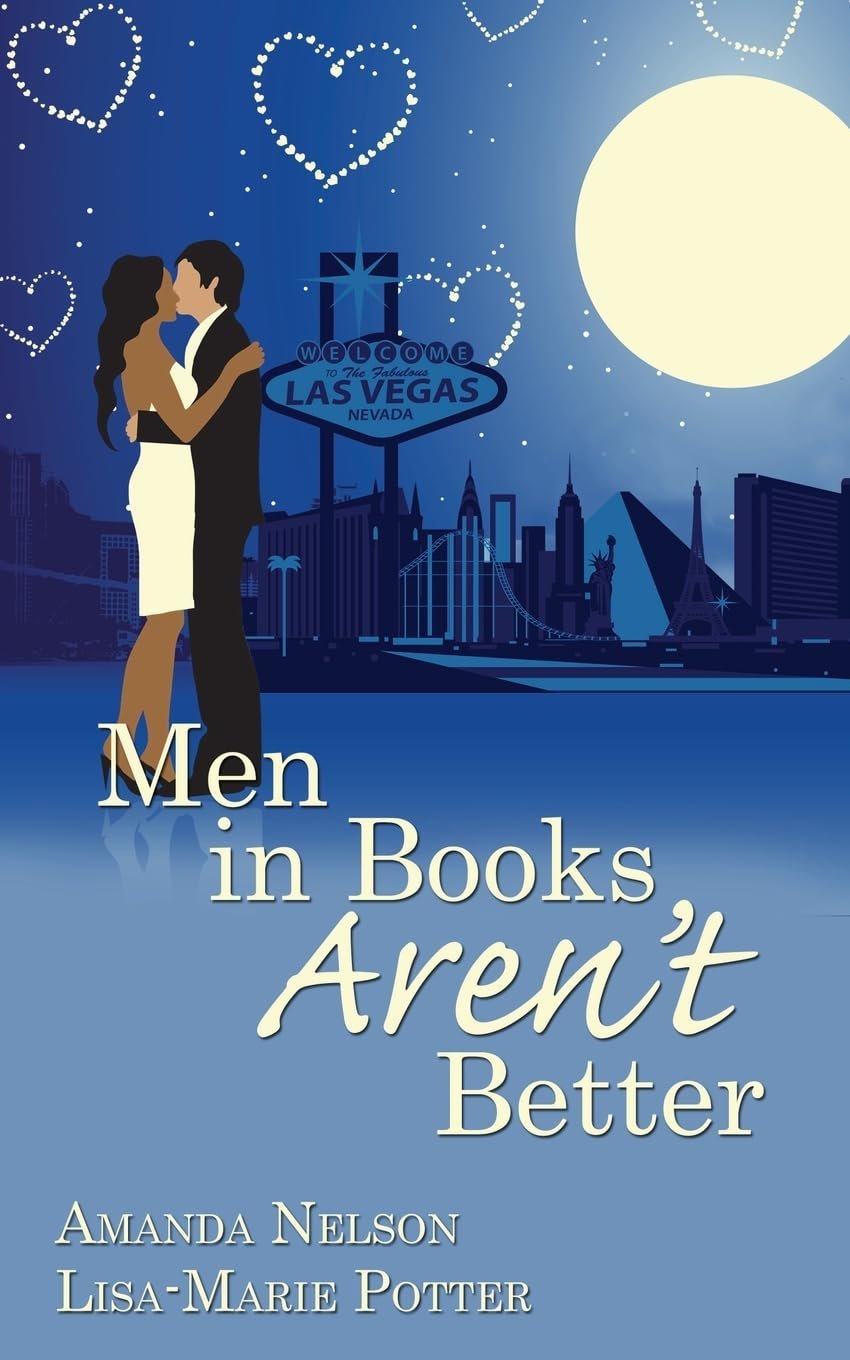
A romance novelist short of inspiration hires a man whose job is to perform romantic attention. That is the knowingly self-conscious premise of Men in Books Aren’t Better, the first Plus One novel from co-authors Amanda Nelson and Lisa-Marie Potter. Molly Covington faces an unfinished manuscript and a deadline; Jared Washington, an extreme-sports enthusiast and relationship skeptic, works as a companion while trying to finance his own business. The arranged three-day research trip to Las Vegas creates a convenient stage for attraction but also an unusually fertile question: what happens when someone trained to invent love stories encounters feelings she cannot contractually control?
Research, imagination and an inconvenient reality
Molly’s decision to hire a companion is funny partly because it treats emotional experience as a solvable research problem. Writers often seek the believable detail that separates a manufactured scene from a remembered sensation. But authenticity does not arrive on demand simply because one pays for an approximation of intimacy. The heroine’s professional motive therefore creates a potential conflict between observing Jared as material and meeting him as a person. This can give the book more than the usual “fake dating becomes real” arc. A romance about a romance writer is able to question the tidy expectations it is itself encouraging. The publisher’s synopsis establishes the contract and deadline but not Molly’s eventual method of negotiating that ethical boundary.
Jared is more than the hired fantasy
The description gives Jared a practical reason to accept the arrangement: money could bring him closer to owning a business. It also gives him an appetite for extreme sports and a pronounced skepticism about relationships. These details matter because a paid companion can otherwise become an idealized projection, present only to satisfy the customer’s needs. Here the contract is potentially consequential for both parties, with desires that extend beyond romance. The strongest treatment would preserve Jared’s right to pursue his own future even when that conflicts with Molly’s emotional or creative needs. A reader should also ask whether the book confronts the unequal freedoms of a person who hires affection and one whose livelihood depends on pleasing the client. The summary promises chemistry, not how carefully it handles that asymmetry.
Las Vegas and the three-day clock
A brief encounter in Las Vegas has an almost theatrical shape. The city is associated with performance, risk and the temptation to treat a consequential choice as a holiday from ordinary responsibility. Three days give a romance a natural clock: every small exchange may feel more important because the temporary arrangement has a definite end. Yet compression is also a narrative hazard. If emotional transformation appears too complete after a handful of conversations, the story may ask readers to confuse intensity with knowledge. The charm of the trope lies in watching a fleeting performance acquire unexpected sincerity. What matters is not how quickly Molly and Jared fall for one another but whether the text gives them reasons to trust one another that survive the end of the booking.
A title that argues with the genre
Men in Books Aren’t Better is a deliberately provocative title for a book that offers a potential book boyfriend. It acknowledges the pleasure of romantic fiction while resisting the claim that fictional partners are automatically superior to complicated real people. This self-awareness can provide useful comic distance. Molly has professional expertise in imagined relationships, but perhaps less confidence in the unresolved vulnerability of an actual one. Jared’s skepticism can puncture fantasy just as Molly’s imaginative attention can challenge his resistance. There is a risk that such a setup will simply reassure readers that the hired companion is the exception who proves the ideal. The more interesting reading would let both fictional and real models of love remain insufficient by themselves.
Partnership on the page and behind it
The co-authors’ website identifies Amanda Nelson and Lisa-Marie Potter as a writing team and lists this novel separately from the later Just What the Doctor Hired. Their collaboration is not grounds to merge the stories: Molly and Jared are distinctly identified leads, while the next volume centers on a different pair. Shared series architecture can reward readers through recurring institutions, motifs or conventions, but a book’s own conflict must carry its emotional weight. A qualified appraisal should resist attributing individual sentences or character voices to a particular co-author without evidence about composition. What can be credited is a consciously constructed premise with a professional author heroine, a paid companion and a real deadline.
A romance of negotiated reality
The contract between Molly and Jared also makes the idea of consent unusually concrete. They can agree to time, travel and public behavior, but no agreement can oblige either person to feel love. When the possibility of affection enters, the meaning of the original transaction changes. A mature story can allow both characters to renegotiate instead of romanticizing the disregard of agreed boundaries. This tension is particularly apt for a heroine accustomed to arranging imaginary relationships according to narrative need. Jared is not one of her characters, and his business ambitions are not an obstacle that fiction may erase for convenience. The premise may be playful, but its sharpest question is whether two people can stop performing long enough to choose one another freely.
Who will value this book
This should suit readers of contemporary rom-coms who like a limited-time contract, role-playing, creative-profession heroines and romantic leads whose economic interests complicate attraction. It may particularly interest readers who enjoy stories that wink at their own genre without abandoning heartfelt stakes. Those who dislike transactional romantic setups should know that the employment relationship is integral to the premise. The publisher provides enough character and situation detail for a solid editorial introduction, but not enough to certify the humor, heat level, dialogue or final quality of the romantic payoff. That judgment belongs to a complete reading.
Scope of this assessment
This is a research-based editorial review drawn from identified bibliographic, author and publisher sources. It considers the work’s documented premise and the critical questions it invites, without claiming a complete firsthand reading. No unverified scene, character action or ending is asserted.
About the book.
An evidence-bounded critical introduction to contemporary fake-dating romantic comedy. Published descriptions support the stated premise; interpretations are identified as editorial analysis, not confirmed plot details.
This is an unsponsored, research-based editorial review, not a claim to firsthand reading of the complete book. MAB-1112 is a different Plus One book with the same co-authors; do not deduplicate by author.
Found a book worth opening?
Books worth discovering. Authors worth knowing.
Return to the Journal →