
Mere Creativity
Jodi Rose Crump invites beginners and experienced makers to experiment with accessible creative exercises.
Books worth discovering. Authors worth knowing.
Jodi Rose Crump invites beginners and experienced makers to experiment with accessible creative exercises.
A multidisciplinary creativity guide from an author, artist and musician, framed as a playful invitation to explore.
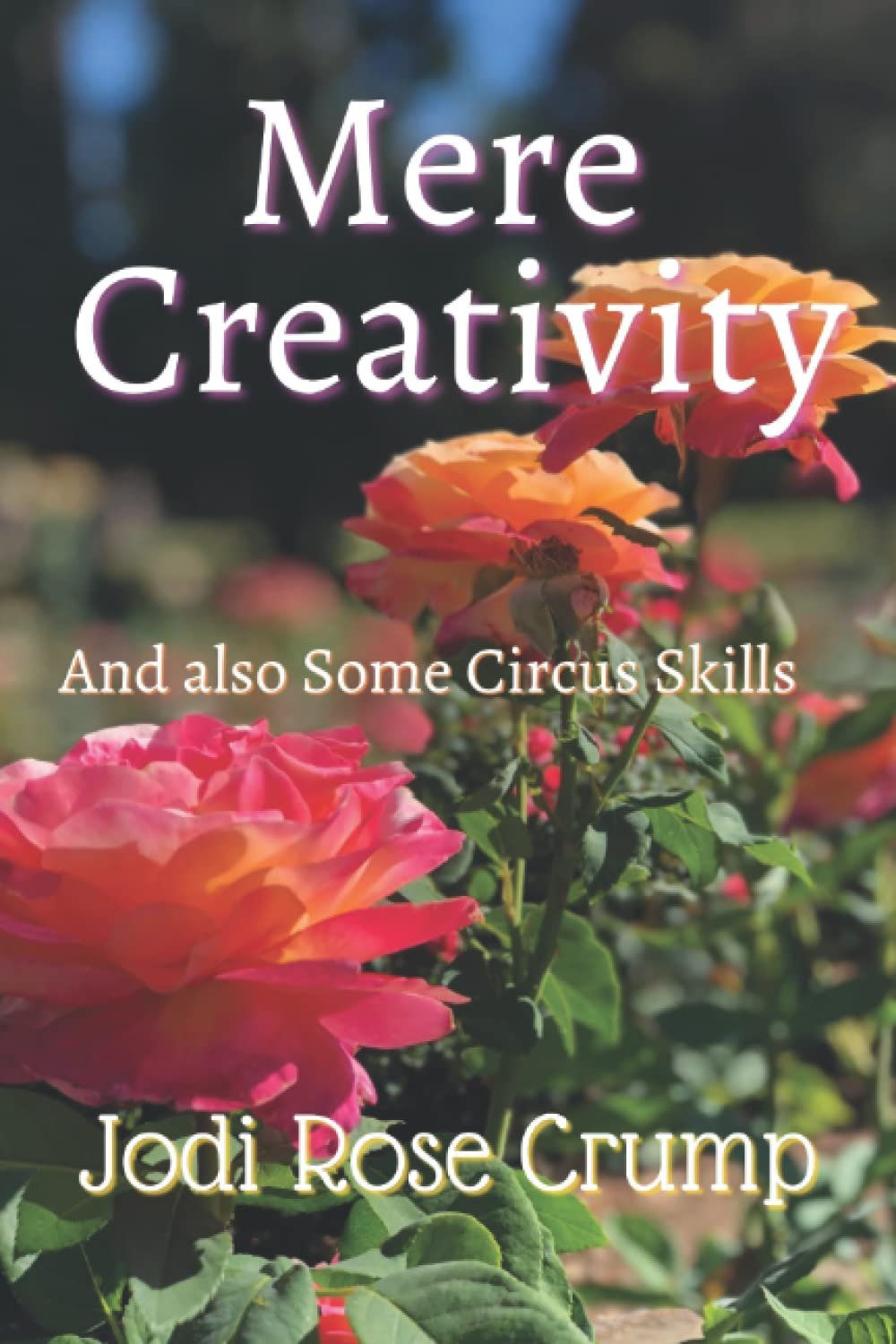
Creativity is often described as though it belongs to a select group of naturally gifted people. Jodi Rose Crump’s Mere Creativity: And also Some Circus Skills takes a more welcoming direction. The author’s own public recommendation says the book is for people who want to be creative but are unsure where to start, and for experienced makers who want to stretch themselves. She describes simple exercises as a central part of the experience. Those confirmed details position the work as an invitation to participate, not merely a collection of abstract reflections on artistic talent. This feature explores what that invitation can offer without inventing specific exercises not visible in public descriptions.
Creativity as a practice rather than a possession
One of the most persistent obstacles to making art is the belief that creative people were born with something unavailable to everyone else. A book structured around exercises challenges that assumption by giving readers a way to do something instead of waiting for inspiration to arrive. A person can write a few lines, rearrange a visual idea, explore sound, or approach a familiar material differently without first claiming the identity of artist. The author’s description does not identify which of these activities appear in the book; they are examples of everyday creative practice that help explain why a participatory guide can appeal broadly.
The distinction matters because having ideas and acting on them are different experiences. Many people notice possibilities throughout the day but hesitate when a blank page or unfinished project demands a decision. An exercise provides a beginning, a boundary, or a question. It can also reduce the stakes by shifting attention from producing a masterpiece to exploring a process. Crump’s stated aim of helping both beginners and experienced creators makes this approach especially logical. The same activity may reassure one reader that starting is possible and challenge another to abandon a habitual approach.
The playful promise of circus skills
The subtitle adds a delightfully unusual element. Circus skills evoke coordination, repetition, showmanship, risk management, and sometimes a willingness to look foolish during early attempts. Whether the book teaches a specific juggling or performance exercise cannot be confirmed from the available source material, so this feature will not fabricate a curriculum. Even as a framing choice, the phrase changes the tone of the project. It suggests that making and performing can share a spirit of experimentation, practice, and play. A person need not become a professional performer to appreciate the metaphor of learning something unfamiliar.
There is also an important safety distinction. Real aerial work, balance acts, fire skills, or physical tricks may require professional supervision and suitable equipment. A creative book should not be treated as a license to attempt dangerous stunts. The title alone does not justify assuming what activities it describes or whether they are physically demanding. Readers drawn by the subtitle can verify the exact edition and contents before choosing it. The strongest supported promise is an unconventional creative guide from an author who speaks openly about enjoying different artistic forms, rather than a guaranteed circus-training manual.
An author who works across different forms
Crump introduces herself publicly as an author, artist, musician, and traveler. She also describes writing other books and creating a newsletter, suggesting a creative life that is not confined to one medium. That background helps explain why an invitation to explore may appeal to readers with mixed interests. Someone might make music but resist drawing, enjoy writing but feel intimidated by performance, or have years of experience in a craft while longing to approach it with fresh attention. Crossing between forms is one way to notice habits that have become invisible in a familiar practice.
None of this proves that every autobiographical experience appears in Mere Creativity. An author’s broader practice informs the context without replacing the text itself. It is better to use her self-description as evidence of a multi-disciplinary perspective and leave chapter-level claims unmade. Readers can bring their own interests to the guide without needing to reproduce the author’s career. The central idea is that creative exploration can remain open-ended: one experiment does not need to become a profession, a product, or even a public performance to be valuable.
Starting before feeling ready
Beginners often postpone making something until they have bought equipment, mastered a technique, or found time for uninterrupted practice. That delay can become a surprisingly durable barrier. A modest exercise may be useful because it limits the task to something approachable. The outcome can be surprising precisely because expectations are lower. The author’s stated intention to serve people who do not know where to begin suggests that Mere Creativity recognizes this kind of hesitation. The practical question for a reader is whether the book’s directions actually make starting feel manageable.
Experienced creators face a different version of the problem. Skills can turn into routines that are efficient but predictable. A person may learn to avoid mistakes so successfully that experiments become rare. A guide promising new ways to push oneself can invite those readers to reconsider what counts as progress. Instead of improving the same technique indefinitely, they might explore unfamiliar constraints or reframe the purpose of a project. Such possibilities are discussion points generated by the book’s premise, not a claim to have seen any particular workshop activity in its pages.
The importance of a low-pressure environment
Creative exercises are most helpful when people feel free to attempt them without a constant comparison to other people’s results. The language surrounding a book can either encourage that freedom or undermine it. Crump’s public presentation is informal and welcoming, with emphasis on trying things rather than achieving a prestigious outcome. That is a valuable orientation for a mixed audience. A professional writer and a person picking up a pencil after many years can both benefit from a moment in which experimentation matters more than external approval.
There is a broader cultural reason to value such an approach. Everyday creativity often happens outside galleries, studios, or commercial platforms. It can appear in how people decorate, communicate, arrange a space, tell a story, or solve a practical problem. Recognizing those activities does not erase the skill needed for professional work; it simply makes room for a fuller understanding of creative life. The book’s accessible self-description invites readers to consider participation first and status second. That can make the idea of beginning less intimidating.
Using a creative guide thoughtfully
A reader who picks up Mere Creativity could keep a small record of which activities feel energizing, which feel awkward, and which produce unexpected questions. The point is not to score each attempt. It is to notice how assumptions change through action. If an exercise is uncomfortable, the reader might adapt the scale or choose another starting point. If it produces an intriguing result, there may be value in repeating it under different conditions. These are general strategies for using a practical creativity book, not instructions extracted from unseen chapters.
Readers interested in a structured fine-arts course, accredited circus training, or a detailed theory of aesthetics should check the table of contents and sample pages before assuming the book offers them. The accessible description supports a more specific expectation: an invitation to unlock creativity through approachable experimentation, with an unusually playful subtitle. Its appeal depends on how those exercises meet the reader’s current needs and curiosity, something only an actual reading and practice session can establish.
Who may enjoy this invitation
Mere Creativity: And also Some Circus Skills is a natural option for hobbyists looking for a starting point, seasoned makers hoping to break familiar habits, and readers who enjoy multidisciplinary approaches to expression. The author’s own words support both beginner and advanced audiences, which makes the book less narrowly targeted than a manual for one technique. The exact contents remain a matter for readers to verify, and this feature makes no claims about the success of exercises it has not tested.
A useful question to carry into the book is simple: what would you try if the first attempt did not need to be impressive? That question captures the spirit of the documented premise without impersonating an unpublished quotation or promising a particular artistic transformation. Jodi Rose Crump’s guide offers a title with humor, a stated commitment to creative exercises, and an open invitation to people who want to make something. Its most grounded promise is not effortless mastery, but permission to begin exploring.
About the book.
A multidisciplinary creativity guide from an author, artist and musician, framed as a playful invitation to explore.
Independent MarketAnyBook editorial book feature. This feature is based on identified public research sources, not firsthand reading or a star rating. WordPress image media will be resolved by the publisher.
Found a book worth opening?
Books worth discovering. Authors worth knowing.
Return to the Journal →