
Miles In Time
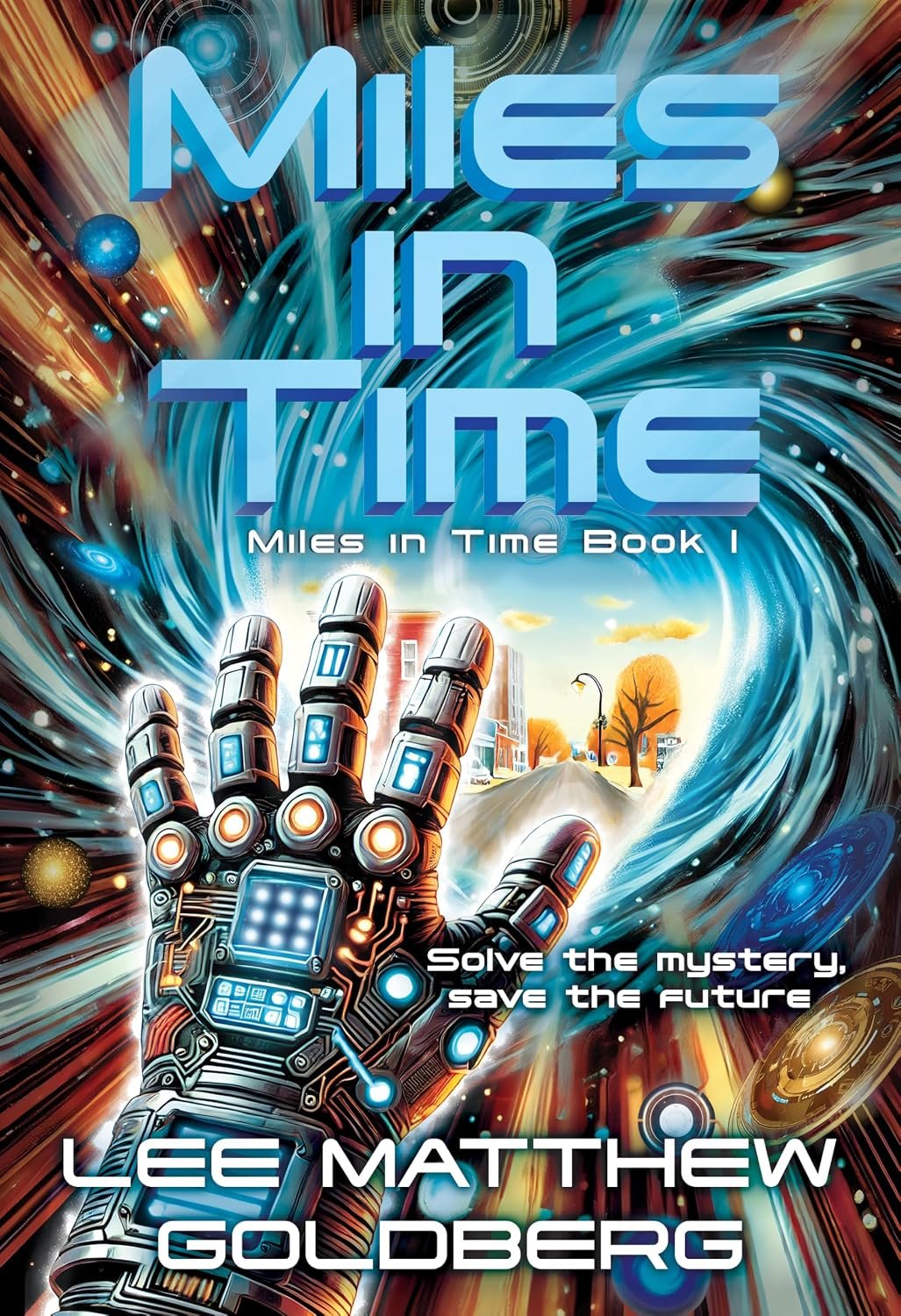
Fourteen-year-old sleuth Miles Hardy discovers his dead brother’s time machine and a warning about the future.
Books worth discovering. Authors worth knowing.
A teenage detective’s first real case could rewrite everything he thought he knew about time.
YA detective adventure connecting family loss, an inventor’s secret lab, and the hazards of altering history.
An impossible first case Lee Matthew Goldberg’s Miles In Time gives fourteen-year-old Miles Hardy a mystery far beyond the small assignments he knows. Miles runs a detective agency with his friend and assistant Kevin in the sleepy town of Frontier, Iowa. Their investigations have not previously amounted to much more than lost pets. Then Miles’s inventive older brother Simon dies, and the search for an explanation leads to a secret laboratory and a time machine. The author’s official synopsis makes the problem urgent: Simon left behind a video warning that someone was after the invention and that Miles must uncover the threat before the technology reaches the wrong hands.
The premise joins two kinds of tension that work especially well together. A detective story asks who did something and why. A time-travel story asks whether learning the answer can alter the past or destabilize the future. By giving a novice investigator personal reasons to pursue the case, Goldberg turns the mechanical puzzle into an emotional mission. Miles is not merely curious about an extraordinary machine. He is trying to understand what happened to his brother, and every possible clue carries the weight of family loss.
Miles Hardy, amateur detective Miles’s dedication to detective work is one of the first details in the public description. He sees himself as a young Sherlock Holmes, which suggests a taste for observation, deduction, and the excitement of a difficult case. Yet an amateur detective’s confidence can run ahead of experience. A missing cat is not a conspiracy involving a revolutionary invention. The shift in scale creates an opportunity for character development: the skills that make a teenager feel clever in routine circumstances may need to become more disciplined when mistakes have real consequences.
The town of Frontier adds a useful contrast. A quiet environment can feel full of mysteries to an imaginative young person, even when most events turn out to be ordinary. When a genuinely dangerous problem appears, that same setting makes the change more startling. The story is therefore not only about visiting other times; it starts by disrupting the apparent safety of home. The published synopsis names Miles’s agency and its limited cases, allowing readers to understand why Simon’s death represents a turning point without spoiling later investigative discoveries.
Simon’s invention and the warning he leaves Simon is described as a brilliant older brother who built a time machine in secret. After his death, Miles finds a recorded warning that the invention has attracted dangerous attention. That message is a classic mystery device: it supplies information while leaving crucial questions unanswered. Who has been watching Simon? How much did he know? What can a younger sibling safely do with instructions left under such circumstances? These are natural questions arising from the author’s own synopsis, not invented revelations about what Miles later discovers.
The existence of a hidden laboratory also complicates Miles’s memories of his brother. Someone can feel familiar and still have conducted important work in secret. A detective’s task may therefore involve learning a new version of a person he thought he knew. That emotional dimension gives the mystery more than a technical mechanism. Time travel offers the possibility of changing history, but even without it, a child who has lost a sibling might desperately wish for a second chance to ask questions. The book’s premise makes that wish literal.
Kevin and the value of a partner The official summary identifies Kevin as Miles’s good friend and loyal assistant. That role matters because a young detective cannot always be a reliable judge of his own theories. A companion can ask questions, notice an overlooked detail, and remind the investigator that there are emotional stakes beyond solving the puzzle. The exact division of work between Miles and Kevin is not provided in the short public synopsis, so this feature will not invent dialogue or action sequences for them. Their partnership is nevertheless a confirmed part of the book’s setup.
Friendship can also become more difficult when a case has personal significance. A professional investigator might try to maintain distance from a victim. Miles is investigating the death of someone he loves. That could make him exceptionally determined while also challenging his judgment. Kevin’s presence creates room for support and disagreement, both of which can help turn a clever puzzle into a coming-of-age adventure. Young readers may recognize the importance of having someone beside them when excitement gives way to a genuinely frightening choice.
Suspicion in a larger world The author’s synopsis indicates that suspicious classmates and shadowy corporations are among the possible sources of danger. This range is deliberate. It allows a young person’s familiar social environment to overlap with institutions that possess far more resources. Someone Miles meets at school might know something useful, but a corporation seeking the machine could operate according to motives he is only beginning to understand. The resulting uncertainty gives the mystery different levels of scale without requiring that any named group be declared guilty in advance.
A story built around suspicious people can tempt readers to hunt for the first person who seems unusually secretive. Detective fiction often rewards a slower approach. Motive, opportunity, and evidence have to be evaluated separately, while the possibility of changing time makes even a straightforward clue potentially unreliable. Goldberg’s public premise invites that kind of active reading. The goal is not simply to predict an action scene but to think alongside Miles about which facts can survive scrutiny. The answer is deliberately withheld in this introduction.
A mystery designed for younger readers Goldberg’s official page calls Miles In Time a time-travel mystery for young detectives. The combination suggests a fast-moving adventure accessible to readers who enjoy solving clues, imagining scientific devices, and debating what they would change if given the chance. The lead’s age offers a point of identification for younger teens, while the mystery’s family stakes may also interest adults who read middle-grade and YA adventure. It has the recognizable pleasures of amateur sleuthing with the added uncertainty of a device that can alter history.
The tone of the premise includes both excitement and bereavement. Anyone choosing the book for a particularly sensitive young reader should note that a brother’s death initiates the plot. Because the summary does not offer detailed content guidance, individual families may want to review additional information. The presence of a crime and the threat of a corporation do not automatically establish a graphic level of violence, and this introduction avoids making unsupported claims either way. Audience suitability depends on the reader, not simply the protagonist’s age.
Curiosity, caution, and consequence One of the most engaging things about the premise is the potential clash between Miles’s investigative curiosity and the restraint his situation demands. A detective wants to know what happened. A time traveler must consider whether obtaining knowledge might change the answer. The warning about meeting his past self puts that conflict into a memorable rule. In this world, looking too closely can become an action with consequences, not merely an observation. That offers fertile ground for suspense and for a young protagonist’s growing sense of responsibility.
The story also asks what makes a person an investigator. Miles’s youthful detective agency began with an imaginative sense of purpose, but Simon’s death gives the work an urgency he cannot turn into a game. His friendship with Kevin and his love for his brother form the human context for the science-fiction puzzle. Even readers attracted mainly by the time machine may find the family stakes a compelling reason to continue. The exact answer to the mystery must come from the book, not a synopsis-based feature.
A final recommendation Miles In Time is a promising choice for readers who enjoy young amateur detectives, science-fiction rules, and family-centered mysteries. Its confirmed setup is strong: a fourteen-year-old sleuth, a brother’s death, a hidden time machine, a recorded warning, and a strict prohibition against meeting one’s past self. Those ingredients make the adventure more than a conventional whodunit. The time-travel device puts every investigative choice under unusual pressure and turns the desire to save a loved one into a question about the future itself. This is a researched introduction, not a verdict on the mystery’s payoff; the novel preserves that discovery for its readers.
About the book.
The author’s official page identifies Miles Hardy, his friend Kevin, his brother Simon, a hidden time machine, and the warning not to meet his past self.
Independent MarketAnyBook editorial book feature. This article is an introduction grounded in public listings and is not a firsthand reading, rating, or guaranteed endorsement. Descriptions and interpretive commentary are distinguished; the separate Python publisher will resolve the public WordPress cover URL and media ID.
Found a book worth opening?
Books worth discovering. Authors worth knowing.
Return to the Journal →