
Seymor
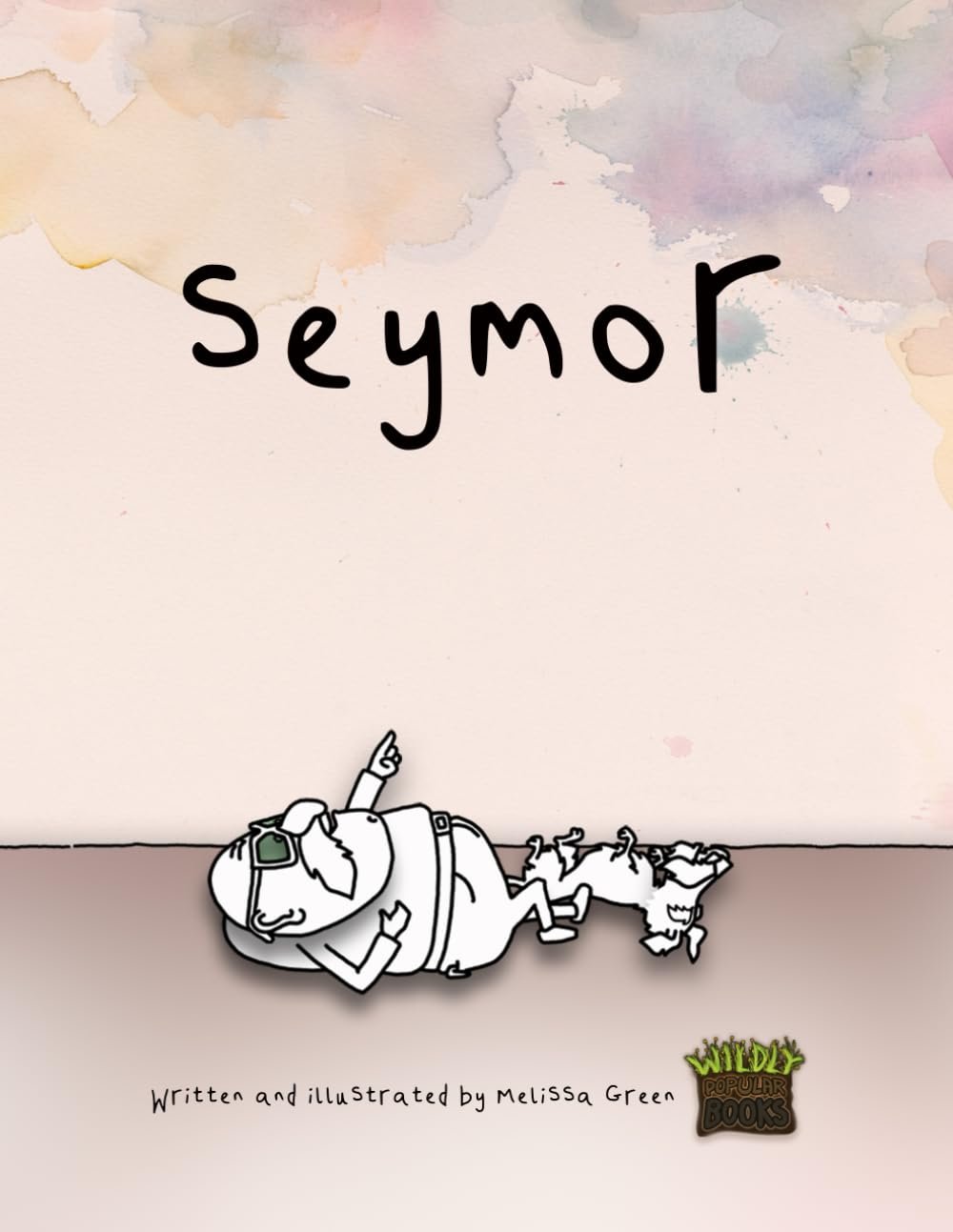
Seymor and his dog Fooey invite children to rediscover imagination through a fantastical visual search.
Books worth discovering. Authors worth knowing.
Seymor and his dog Fooey invite children to rediscover imagination through a fantastical visual search.
An illustrated search-and-find book about Seymor overcoming an imaginative block by noticing impossible creatures.
Finding the extraordinary in a picture book Melissa Green’s Seymor approaches imagination not as a distant fantasy realm but as something a reader can practice. The public bookseller description calls it a search-and-find book filled with impossible people and creatures. Its central figure, Seymor, has forgotten how to use his imagination, and that loss has left him stuck. He is joined by his dog, Fooey, as the pair explore a strange, image-rich environment. The setup is inviting because Seymor does not begin as a master of make-believe. He begins with the ordinary difficulty of not knowing what to notice or how to start seeing possibility again.
That makes the picture book’s format part of its meaning. A conventional story may tell a child that creativity matters; a busy illustrated spread can invite the child to test that statement by doing something. Search-and-find reading asks for close attention, patience, and willingness to consider shapes that initially appear meaningless. A child and adult can look at the same page and discover different details. The interaction is not a distraction from the story. According to the listing, discovering fantastical creatures and challenging one another to find more are central to the experience Green has designed.
Seymor’s forgotten imagination The idea of a character forgetting how to imagine is a thoughtful beginning for an illustrated book. Children are often told that creativity is natural and inexhaustible, but anyone can feel blocked or uncertain. Seymor’s predicament gives that feeling a name without requiring a lecture. A child who struggles to invent a drawing or join a pretend game might recognize the frustration. The book then seems to offer an alternative to demanding instant inspiration: look carefully, stay curious, and allow surprising possibilities to become visible.
The public synopsis explains that Seymor gradually gains confidence and even begins challenging the reader to see what he sees. The shift from passive observer to active participant gives the search-and-find format a satisfying direction. It also changes the relationship between book and audience. Instead of merely cheering for a fictional child, the reader is invited into the activity that helps that child move forward. The story’s broader lesson can be discussed as an interpretation, but it should not be confused with a verified account of every page or a claim about specific illustrations that have not been examined.
Fooey and the comfort of companionship Fooey, Seymor’s dog, appears in the bookseller description as his companion through the imagined landscape. A small animal friend can serve a useful role in children’s illustration: giving the eye a familiar anchor amid busy and unfamiliar shapes. The presence of a dog also reinforces the idea that discovery need not be a solitary performance. A child may be unsure what they will find, but the adventure can still feel friendly when an approachable companion is nearby. The listing does not provide a detailed sequence of Fooey’s actions, so those must remain unknown rather than expanded into invented scenes.
For parents and educators, companionship is an accessible entry point to conversation. Children can be asked what a character might notice differently with a friend, why someone may feel braver when accompanied, or what makes an imaginative search enjoyable instead of frustrating. Such questions encourage interpretation without turning the reading session into a test. Seymor and Fooey provide two recognizable figures through whom a child can approach an unusual world. What matters most is the invitation to notice, not a demand to arrive at the same answer as everyone else.
A search-and-find book as shared play The book’s description emphasizes that adults and children alike can search for extraordinary creatures. That shared dimension may be one of its most practical strengths. A parent does not need to perform every page in a dramatic voice or explain a complicated plot. They can simply look alongside the child and compare discoveries. One reader sees a face; another spots an animal; a third notices a detail everyone previously passed over. A playful disagreement can become part of the experience because visual interpretation is not always immediate.
This kind of reading also makes repetition productive. Returning to the same illustration does not necessarily produce the same session. A child who was interested in one creature last week may notice an entirely different arrangement today. Familiar pages can support confidence while still offering novelty. The bookseller describes hundreds of fanciful elements, which suggests considerable visual density, though an editorial feature should avoid claiming to have independently counted them. The essential point remains that this is a participatory illustrated experience, not merely a conventional narrative with pictures placed beside the words.
Imagination can be practiced without pressure There is a temptation to frame every children’s activity as a developmental miracle. That would overstate what can be established from a book description. Seymor can reasonably be described as an invitation to practice attention and playful association. It is not necessary to promise measurable gains in intelligence, emotional regulation, or academic performance. The value of shared picture-book time may simply lie in letting a child point at something odd, tell a story about it, and hear an adult respond with curiosity instead of correction.
One useful approach is to invite a child to invent a name for a creature they spot, describe where it might live, or explain why two shapes resemble different things from different angles. These are optional reader activities, not claims about exercises printed in the book. By keeping the activity open-ended, adults respect the freedom that makes imagination appealing. Seymor’s initial difficulty becomes especially sympathetic here: the goal is not to prove that a child is creative enough, but to make the first playful observation easy and welcoming.
Illustration and the story’s particular form Melissa Green is credited in the queue as both author and illustrator, and the book’s identity is inseparable from its visual world. The public product information describes a substantial large-format paperback, consistent with a search-and-find experience where a page should provide space for details. Art is not simply decoration under those circumstances. Composition, contrast, and visual surprise can carry the reader’s attention. Each spread may work differently when viewed from a distance, close to the page, or with another person pointing out a hidden form.
Readers expecting a chapter book should adjust their expectations accordingly. The book is designed around images and participation; its story of Seymor rediscovering imagination is a guiding framework. A family looking for a quiet literary narrative may choose a different format, while a family looking for interactive visual discovery may find this exactly the relevant distinction. The official title and the presence of a named animal companion make it approachable, but the specific artwork deserves to be explored directly rather than invented in a preview article.
Who is Seymor for? Seymor is especially relevant to families who enjoy visual puzzles, whimsical creatures, and reading sessions in which the child can lead the conversation. It may also suit a classroom or library environment where learners look closely at a shared image and explain what they see. Adults who enjoy the absurd and the unexpected need not stand outside the fun; the book description explicitly includes them. The invitation is to rediscover curiosity together with the character rather than watch from a distance.
This MarketAnyBook feature is based on bibliographic data and the detailed bookseller description, not an assertion that every illustration has been inspected or every creature identified. The confirmed facts are Seymor’s imaginative block, the companionship of Fooey, and the search-and-find format full of fantastic sights. The full book remains the place to discover how the images actually work. Its appeal is refreshingly simple: a page may be familiar, yet there is always the possibility of finding something that was invisible the last time you looked.
About the book.
An illustrated search-and-find book about Seymor overcoming an imaginative block by noticing impossible creatures.
Independent MarketAnyBook editorial book feature. This is a research-based introduction, not a firsthand review, star rating, or guarantee. WordPress cover media are resolved by the publisher.
Found a book worth opening?
Books worth discovering. Authors worth knowing.
Return to the Journal →