
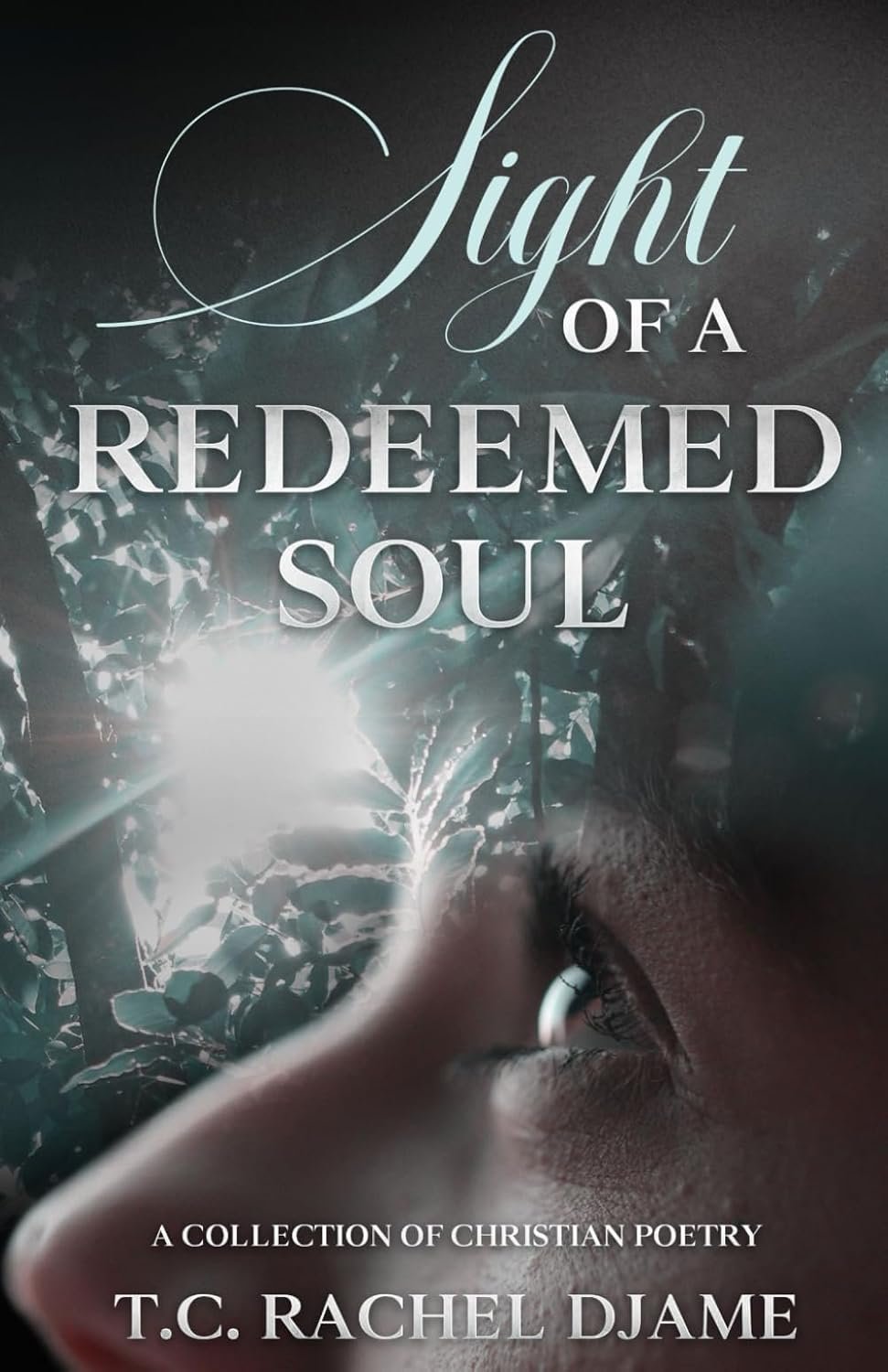
Sight of a Redeemed Soul
A poetry collection whose language of seeing and redemption invites thoughtful attention, though independently verified poem descriptions are unavailable.
Books worth discovering. Authors worth knowing.
A poetry collection whose language of seeing and redemption invites thoughtful attention, though independently verified poem descriptions are unavailable.
T.
A Title That Speaks Before the Poems Do
Sight of a redeemed soul: A Poetry Collection is listed in the MarketAnyBook queue under the name T.C. Rachel Djame. A bookseller record independently confirms a collection of the same title and credits Rachel Djame. Those records establish the existence and broad format of the book, but they do not provide a verified table of contents, sample poems or an account of the author’s personal history. This feature therefore takes the form of a transparent literary spotlight: it considers the invitation contained in the title and the experience of approaching contemporary poetry, without pretending to quote or interpret verses that are not available for verification.
That limitation matters. Poetry is especially vulnerable to inaccurate descriptions because readers expect meaning to reside in precise words, breaks and images. Claiming that a particular poem describes an event or resolves a spiritual question would require seeing the poem. What the available title does support is an encounter with three suggestive ideas: sight, redemption and the soul. Each word carries a different kind of expectation. Together they frame an invitation to reflection without supplying the answers. A prospective reader can use that invitation to decide whether this collection belongs in their reading life.
What It Means to See Anew
Sight can describe physical vision, but literature often extends it into recognition. A speaker may have always known a painful fact while only later becoming able to understand its emotional meaning. A familiar street, a family conversation or a personal mistake can appear changed when seen through a new state of mind. The title’s focus on sight opens such interpretive possibilities. They are possibilities in the language, not findings about the collection’s actual poems. The author could use sight literally, spiritually, ironically or in another way entirely; the available catalog records do not settle the question.
Approaching a poetry collection with that openness can be rewarding. Rather than asking immediately what a text teaches, a reader can attend to what it notices. Which objects become important? Whose perspective is present? Is the voice looking outward at the world or inward at remembered experience? These questions allow poetry to remain an encounter instead of a puzzle that must yield one correct solution. They also respect the writer’s individuality. The word sight belongs to many traditions, but no specific tradition should be assigned to Djame without direct evidence.
Redemption Is Not One Simple Story
Redemption may suggest renewal after wrongdoing, relief from shame, recovery of value, or a religious understanding of grace. These meanings overlap but are not identical. A poem could celebrate one, resist another, or question whether redemption is possible. The title does not tell readers which route the collection takes. It does indicate a word rich enough to reward careful attention. A thoughtful reader might enter the book with a question: who has the authority to declare a soul redeemed, and what changes when that declaration is accepted or refused?
Such questions often matter deeply in personal writing. A person can seek release from a judgment imposed by others or struggle with a judgment they have imposed on themselves. Healing may involve changed behavior, a revised understanding of the past, or simply refusing to allow one moment to define an entire identity. These are general literary possibilities relevant to the title, not claims about Djame’s biography or individual poems. The distinction is crucial. A publisher-style feature should illuminate what can responsibly be known while leaving the undisclosed parts of the book for the text itself.
The Poetry Collection as a Form
A collection is not the same as one long statement divided into pieces. Individual poems may speak from different moods, times and positions. They can revise one another or place incompatible feelings side by side. Readers sometimes assume an intensely personal poem is a direct confession; that assumption can be misleading. Poetry can use invented speakers, borrowed imagery and formal play. Without a verified sample, there is no basis for assigning a consistent confessional voice or particular technique to this collection. The safest and most interesting reading stance is receptive rather than prescriptive.
A useful practice is to read one poem twice before moving on. The first reading offers an impression of sound and feeling; the second can reveal how the lines turn, what is repeated and where the language resists immediate understanding. If a collection concerns change of perspective, such a practice may be especially apt. Yet even that connection remains a possibility prompted by the title. Readers deserve to know when a feature is supplying reading strategies rather than reporting content. This article is deliberately making that distinction visible.
Where Spiritual and Secular Readings Meet
The phrase redeemed soul may lead some readers to expect explicitly religious poetry. Others may hear it in a broader language of self-recovery or moral change. Both reactions are understandable because the phrase circulates across spiritual and literary contexts. Neither should be treated as a verified description of Djame’s approach. A careful review would consult the actual verses before identifying doctrine, devotional purpose or autobiographical testimony. In the absence of those materials, the most responsible observation is that the title is hospitable to more than one kind of readerly expectation.
That ambiguity need not be a weakness. Many meaningful collections reward readers who bring different experiences to the same image. One person may read redemption through the vocabulary of faith, another through reconciliation, another through the slow rebuilding of personal trust. Such readings can coexist provided they are recognized as responses rather than facts about the author’s intentions. The purpose of literature is not always to settle a concept once and for all. Sometimes it is to make familiar language feel newly available for questioning.
A Note on Credits and Verification
The MarketAnyBook source row names T.C. Rachel Djame. An independent retailer listing credits Rachel Djame and records the paperback ISBN 9798324317980. The difference in displayed names may be an abbreviated bibliographic style, but the available sources do not prove why it exists. Preserving the queue’s author credit while mentioning the shorter catalog form avoids inventing an explanation. Likewise, a current source does not reveal the exact number of poems, their sequence, publication backstory or any particular award. None of those details should be supplied from guesswork.
The absence of extensive public commentary is not a judgment on the quality of a book. Some independently published collections circulate without large review campaigns or searchable extracts. Others have material available only in the physical edition. For editorial purposes, the proper next step before an evaluative review would be to obtain a copy or a sample from the publisher or author. Until then, this spotlight can fairly introduce the title, its creator as credited, and the questions suggested by its language. It should not be misrepresented as a firsthand reading.
For Readers Drawn to Reflection
Sight of a redeemed soul may interest people seeking a poetry collection whose title evokes changed perception, reconciliation and questions of inner life. The word may is intentional: suitability can only be established fully by consulting the poems. A reader wanting specific meters, forms, religious themes or autobiographical subjects should check a sample rather than relying on the cover or title alone. That is not a barrier to curiosity. It is an invitation to let the text, when encountered, define its own territory.
The most compelling aspect of the available information is the title’s sequence. It moves from an act of perceiving toward a claim about inward transformation. Whether the poems affirm, complicate or challenge that movement remains to be discovered. A good literary introduction can sometimes end with a question rather than an answer. Here the question is simple: what might become visible when someone is prepared to see themselves differently? The collection is the only authoritative place to learn how Djame chooses to explore it.
About the book.
The source queue and a bibliographic retailer record confirm the title, format and author identity. No trustworthy public table of contents or individual poem texts was verified; this is a limited-source editorial spotlight.
Editorial book feature, not paid sponsorship. Independent research-based commentary using publicly available descriptions and author material, not a claim of first-hand full-text review. The cover placeholder will be resolved by the owner’s publishing automation.
Found a book worth opening?
Books worth discovering. Authors worth knowing.
Return to the Journal →