
Tequila Sunrise
A hurricane turns an everyday promise of safety into a question of minutes, distances and decisions no one can comfortably make. Caroline Clemens’s Tequila Sunrise brings.
Books worth discovering. Authors worth knowing.
A hurricane turns an everyday promise of safety into a question of minutes, distances and decisions no one can comfortably make. Caroline Clemens’s Tequila Sunrise brings.
Evidence-conscious literary criticism, not a claim of firsthand full-text reading.
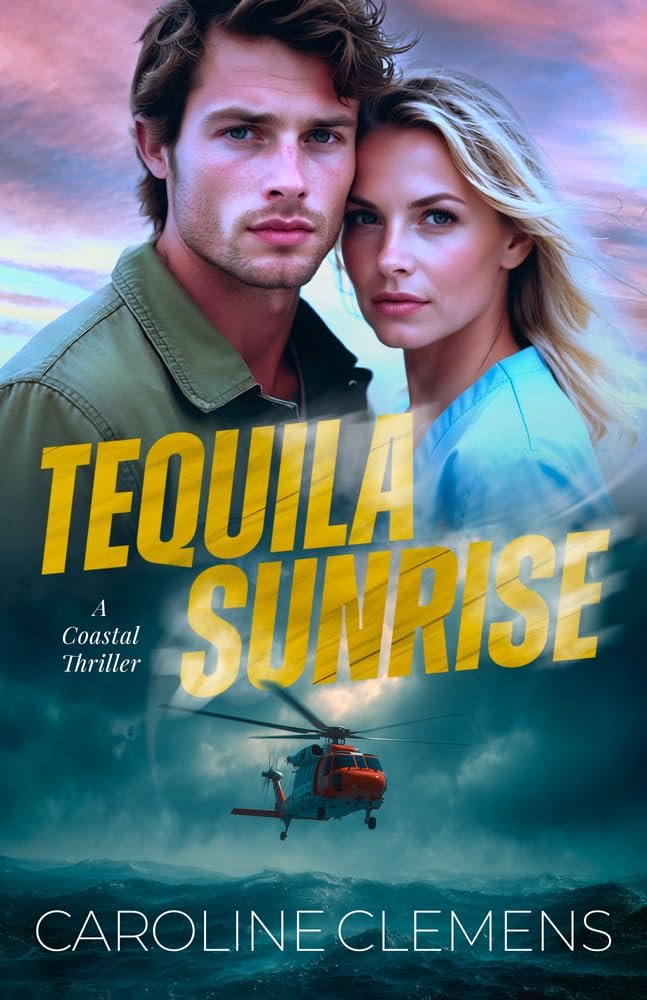
A hurricane turns an everyday promise of safety into a question of minutes, distances and decisions no one can comfortably make. Caroline Clemens’s Tequila Sunrise brings that pressure into a romantic suspense narrative about Rachel, a nurse pursuing work in aerial rescue, and Rocco, a helicopter pilot whose business takes him toward storms. When Hurricane Rebekah threatens the coast, the danger becomes painfully personal: among the people stranded at sea is Rachel’s son Patrick. The public synopsis sets a professional calling beside a mother’s helplessness, an arrangement with more emotional potential than a routine disaster spectacle.
The skill to help and the need to wait Rachel wants to learn a demanding form of emergency care. Her attraction to Rocco grows alongside respect for the work he performs, which involves long hours, intense training and risk. That is a promising foundation for romantic tension because admiration is tied to concrete ability. Yet the storm forces a reversal. The aspiring rescuer must wait while someone she loves enters danger. The novel’s emotional question is therefore not just whether the helicopter mission can succeed, but how a person accustomed to helping others endures a moment when she cannot act.
Rocco’s profession carries its own contradiction. Courage is necessary when someone has to fly toward peril, but courage can become recklessness if the impulse to help overrides judgment. A story set in aerial rescue has the opportunity to distinguish bravery from a fantasy of invulnerability. Readers may be drawn to the dramatic flights, but the more persuasive moments would involve decisions about when to go, whom to prioritize and what risks can ethically be imposed on a crew.
The storm and the private world The author’s account includes two friends stranded in a small craft as the hurricane changes direction. Such a setup gives the disaster both breadth and immediacy. Wind and water threaten an entire region, but the emotional focus settles on people for whom the danger has a name. Disaster fiction is strongest when spectacle does not swallow its people. The sea is not a villain with motives; it is a force that exposes the limits of planning, experience and reassurance.
At the same time, a hurricane story risks using nature merely to accelerate a romance. There is more to be gained if weather challenges the characters’ deepest assumptions. Rachel’s professional ambitions and personal attachments may be in tension; Rocco’s willingness to rescue others may be a quality she loves and fears. In such a relationship, an apparent heroic virtue can also be a source of conflict. The publicly available synopsis establishes these positions but does not confirm how sensitively the complete book resolves them.
Series labels and a changing project The queue lists this title as the first <em>Coastal Thriller</em> book. On her own website, Clemens has also discussed <em>Tequila Sunrise</em> in connection with a broader sequence she calls the <em>Southern Surveillance</em> series, later reframed as coastal crime thrillers. That discrepancy is not evidence of a different book; it is a reminder that series branding and editions can change. The exact retailer link and cover must remain attached to the queue entry, and readers should verify the edition before assuming where the volume sits in a larger chronology.
The author describes her work in terms of rescue, romance and peril near the coast. Those elements make the setting integral rather than interchangeable. A storm story near Florida brings particular expectations of geography, evacuation and emergency systems. A complete critical reading would need to assess the practical plausibility of the rescue details, without requiring a romance novel to function as an operational manual.
Professional knowledge and narrative plausibility A disaster thriller with medical and aviation protagonists invites a more demanding kind of attention than one built solely around tourists in peril. Rachel and Rocco are described as professionals whose training matters to their decisions. A credible narrative would show the limits of that expertise as clearly as its benefits. Air rescue is constrained by weather, equipment, visibility and the safety of crews. Characters who ignore every constraint without consequence may look heroic in the moment but weaken the deeper conflict between duty and judgment.
For Rachel, medical training can also complicate maternal fear. She may know enough about danger to imagine precisely what could happen, while having no way to intervene. Knowledge is not the same as control. Her predicament therefore gives the storm an unusually intimate psychological dimension: the person learning to save lives must endure waiting as someone else attempts to save her own child. The public synopsis offers that tension, and the full novel would need to make it emotionally credible without treating maternal suffering as merely a spectacle.
The pressure of a coastal setting Hurricane fiction depends on an environment that can change rapidly and indifferently. The sea offers a powerful contrast to the promises people make to one another. Love asks for presence and reassurance; the work of rescue may require departure at precisely the worst moment. That contradiction gives the romantic element real substance. The narrative’s most persuasive resolution would not be one in which danger ceases to exist, but one in which the lovers come to understand the cost of the commitments that initially drew them together.
The author’s evolving series descriptions are worth noting because they shape expectations of continuity. A reader choosing the book as the start of the Coastal Thriller sequence should not be misled by a different chronology used in earlier author posts. Clarifying the edition is a practical detail, yet it also respects the story’s place within a larger project.
For readers attracted to risk and attachment <em>Tequila Sunrise</em> looks best suited to readers who enjoy romantic suspense shaped by demanding professions and a strong external threat. They should expect high stakes involving a child in danger and severe weather, not a light holiday mystery despite the title’s sunny associations. The pairing of medical and aviation work may appeal to those who like romances where competence matters alongside attraction.
Our assessment is based on the author’s published description and bibliographic material rather than a firsthand reading. The premise’s most effective tension is clear: Rachel is drawn to a person whose vocation makes him more likely to leave safety at the moment she most wants him near. If the novel allows that conflict to remain difficult rather than solving it with simple heroics, its hurricane setting can become a meaningful test of intimacy as well as survival.
About the book.
The title, contributors, routing category, original retailer link and unique Drive image file were checked against the live queue. The review is based on publicly available evidence and original editorial analysis. Author website calls this fourth in an evolving Southern Surveillance/Coastal Crime Thriller sequence, while queue calls it Coastal Thriller Book 1. Series designation requires an edition-level check.
This is an unsponsored editorial book review. This research-based critical review interprets the verified book listing and available external descriptions; it does not claim a complete reading. Author website calls this fourth in an evolving Southern Surveillance/Coastal Crime Thriller sequence, while queue calls it Coastal Thriller Book 1. Series designation requires an edition-level check.
Found a book worth opening?
Books worth discovering. Authors worth knowing.
Return to the Journal →