
The Great Dick: And the Dysfunctional Demon
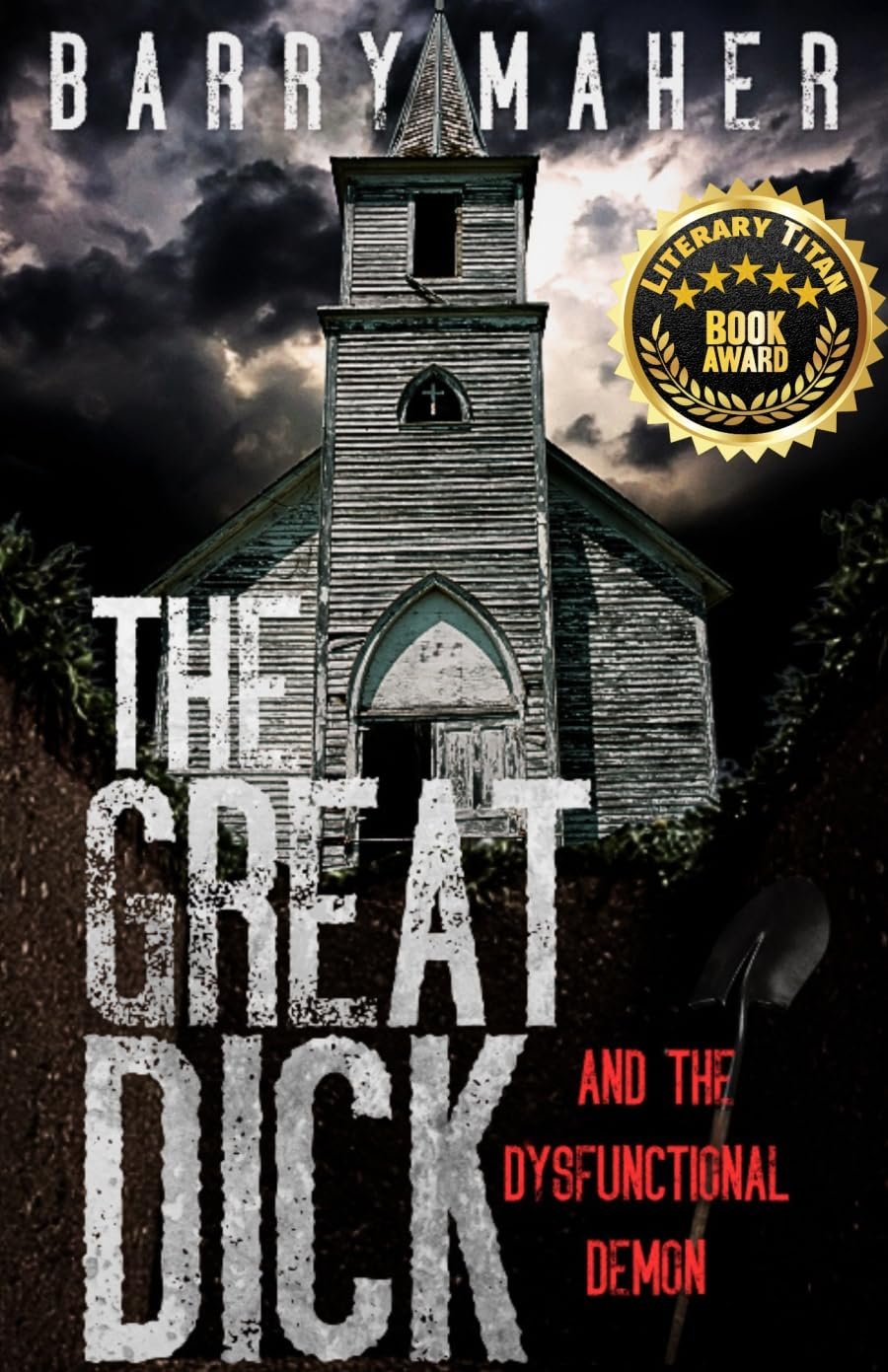
Barry Maher's The Great Dick: And the Dysfunctional Demon carries a title designed to provoke before its first scene is even opened. The author's interviews place the work near psychological horror…
Books worth discovering. Authors worth knowing.
Barry Maher's The Great Dick: And the Dysfunctional Demon carries a title designed to provoke before its first scene is even opened. The author's interviews place the work near psychological horror, literary satire and the disturbances of memory. Maher says the idea came to him after surgery for a serious brain tumor and remained unusually vivid. That…
Considered reviews, grounded in the book’s documented promise.
Barry Maher's The Great Dick: And the Dysfunctional Demon carries a title designed to provoke before its first scene is even opened. The author's interviews place the work near psychological horror, literary satire and the disturbances of memory. Maher says the idea came to him after surgery for a serious brain tumor and remained unusually vivid. That striking origin story is not evidence of supernatural truth; it is a clue to the book's creative pressure, the sense that a story can arrive with the force of an experience its maker did not choose.
Literary allusion behind the joke
In an excerpt circulated during the book's publicity, a fictional academic compares the struggle to right a failed world in Moby-Dick and The Great Gatsby, then jokes about the title The Great Dick. The comic irreverence announces an interest in grand literary ambition from a decidedly ungrand perspective. The challenge is whether such satire remains more than name-dropping. A novel can invoke classic works as an invitation to re-examine their concerns, or merely borrow their prestige. Here, the collision between high seriousness and crude comedy appears to be part of the project rather than an accident of marketing.
The unsettling logic of the body
Maher's account of illness makes the border between conscious intention and involuntary experience unusually prominent. Horror has long explored the sensation that something intimately one's own—the mind, the body, the home—has become unfamiliar. It would be misleading to conclude from the author's story that the fiction is autobiographical or represents his illness directly. Yet readers may reasonably approach it attentive to those questions. What happens when a person cannot fully trust their perceptions? How does a frightening idea become more persuasive when it feels like a memory?
Comedy is a dangerous ally of dread
The pairing of irreverence and horror can do sophisticated work. A joke may interrupt tension, expose a character's vanity or offer temporary relief that makes the next encounter worse. It may also trivialize violence if the narration is careless about who bears the cost. The book's title and published excerpt signal a willingness to test the reader's taste. That gives the novel an identifiable sensibility, although the current research does not establish the complete plot or show whether the tonal balancing act succeeds throughout.
A story that refuses the neat origin myth
Writers often describe an idea as if it arrived fully formed. In reality, turning vivid material into fiction requires decisions about sequence, voice and character. Maher's medical anecdote is compelling partly because it risks overshadowing those craft choices. A critical reading should distinguish the extraordinary circumstances of conception from the finished work's artistic merit. The latter depends on the language and the pressure of scenes, not on how dramatically the premise entered its author's life. This editorial assessment deliberately resists turning promotional biography into an automatic endorsement.
The reader's tolerance for provocation
The opening promise is unusual enough to divide audiences. Readers who want conventional monsters and a straightforward plot may find a self-conscious title and literary games distracting; those who welcome metafictional mischief may enjoy the disturbance. The accessible materials give firm evidence of authorial intention, but they are not a substitute for an examination of pacing or the final structure. It is the difference between describing a work's invitation and knowing whether it delivers.
A frightening title and a reader's trust
The deliberate clash between an irreverent title and occult language puts the reader on notice that the book may not respect conventional tonal boundaries. Provocation can be an artistic strategy, but its success depends on purpose. If the novel uses comedy to expose vanity or make pretension visible, the vulgarity has a function. If it simply repeats an insult, the novelty soon evaporates. A careful evaluation would need to trace how the title relates to the central character's understanding of himself. The published excerpt encourages the question without resolving it.
When a character argues with his own mythology
Stories in which personal failure threatens to define a life can become more compelling when their protagonists are neither innocent sufferers nor self-aware heroes. A person may build elaborate explanations to avoid a modest truth about responsibility. Literary horror is especially suited to this mechanism because the threat can appear both external and intimately familiar. Maher's publicity does not reveal sufficient plot to declare that the demon functions in this way. The suggestion is a critical possibility raised by the combination of literary allusion, psychological intensity and the book's title.
The limits of author interviews
A revealing interview may shape our expectations, but it also invites selection bias: the writer describes what the story means to him, not every way in which a reader might respond. A disciplined critic should keep a slight distance between intention and effect. One can be moved by Maher's account of medical crisis and still ask whether the novel has a coherent structure, credible voices and an atmosphere that does not rely on explanation. This boundary is not unkind to the author. It is what permits the fiction to stand independently of the dramatic circumstances in which it was imagined.
A book whose quality depends on control
Horror can tolerate excess because excess is often its subject. The danger comes when the author cannot choose which extravagance matters. In The Great Dick, the available material suggests ambition to combine dread, satire and a commentary on familiar literary struggles. That mix would require rigorous pacing and tonal control to avoid overwhelming its own central conflict. The strongest professional verdict must remain suspended until those craft elements are visible. What can be said with confidence is that the project is stranger and more self-conscious than its provocative title alone might imply.
Who will value this book
This is a potentially interesting choice for readers who like dark humor, literary horror and a book willing to place an indecorous joke next to existential anxiety. Its originality should be assessed through the finished narrative rather than through the undeniably dramatic origin story. The available interviews support a provisional appraisal, not a claim to know the demon's precise role or the ending.
Scope of this assessment
This is a research-based editorial review drawn from identified bibliographic, author and publisher sources. It considers the work’s documented premise and the critical questions it invites, without claiming a complete firsthand reading. No unverified scene, character action or ending is asserted.
About the book.
An evidence-bounded critical introduction to dark literary horror and psychologically charged fiction. Published descriptions support the stated premise; interpretations are identified as editorial analysis, not confirmed plot details.
This is an unsponsored, research-based editorial review, not a claim to firsthand reading of the complete book.
Found a book worth opening?
Books worth discovering. Authors worth knowing.
Return to the Journal →