
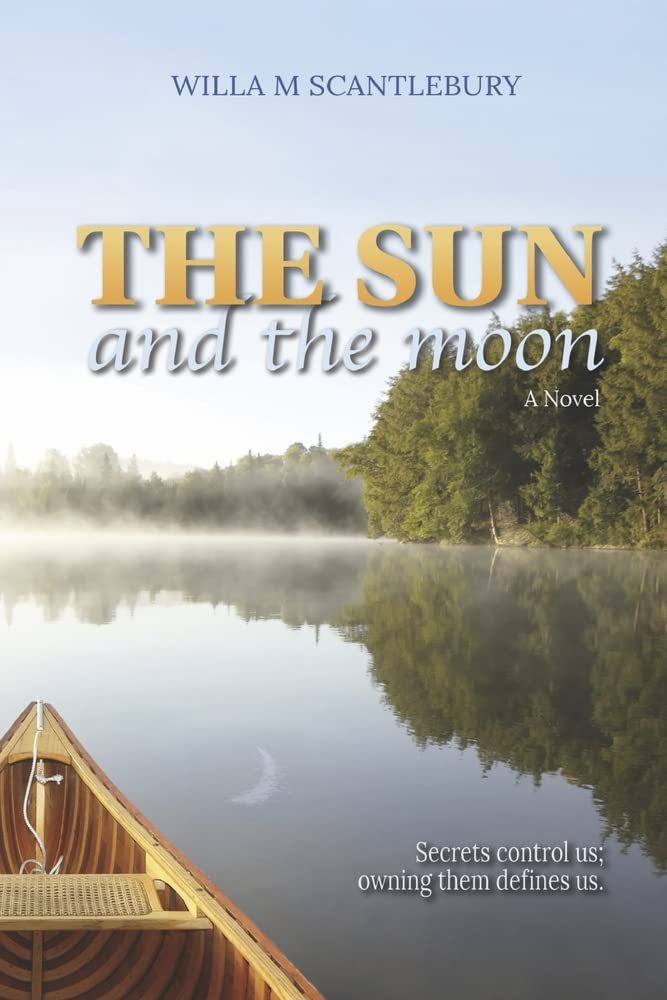
The Sun and the Moon
Robin and Tommy remain each other’s closest confidants as love, sexuality, careers and danger test a lifelong bond.
Books worth discovering. Authors worth knowing.
Two friends move in different directions without losing their pull toward one another. Their shared history becomes both a refuge and a challenge.
A contemporary-fiction feature on friendship, coming out, romantic expectations, complicated loyalty and the cost of being needed.
The Sun and the Moon builds its premise around a friendship that neither time nor geography can simply dissolve. Robin has long wanted her connection with Tommy to become romantic, while Tommy is confronting his sexuality and the difficult process of coming out. As adulthood carries them toward different careers and places, they continue to regard one another as the person to call. Willa M. Scantlebury’s publicly described story is therefore not merely a tale of love delayed. It asks how a deeply familiar relationship can change when the people inside it want different things and become different versions of themselves.
The setting provides a useful measure of that change. Robin’s path leads toward the Adirondack Mountains; Tommy pursues a life in Manhattan and appears in an Off-Broadway production. Their choices take shape in separate social worlds, each with different possibilities for romance and self-definition. Yet the relationship between them remains emotionally central, creating a tension between the lives they are building and the life they once imagined sharing. That tension can be more affecting than the simple question of whether two childhood friends eventually become a couple.
Affection without matching expectations
Robin’s desire for romance and Tommy’s struggle to understand and disclose his sexuality create a fundamental mismatch in expectations. Fiction can handle such a dynamic poorly by casting one person’s identity as an obstacle another must overcome. The more compelling reading is to recognize both people’s vulnerability. Robin’s feelings are real, and so is Tommy’s right to define himself without becoming the fulfillment of another person’s imagined future. Their friendship must find a shape that respects those truths, even if both experience disappointment along the way.
The book’s public summary names growth and growing pains across formative years. That phrase suggests a relationship evolving through mistakes rather than an instantaneous revelation that solves every problem. When people have shared a long history, they often rely on assumptions about one another that no longer fit. Friendship can require renegotiation as much as romance does. Readers who have watched old bonds change under new circumstances may find this a recognizable source of emotional tension in the premise.
City lights and different kinds of success
Tommy’s involvement in an Off-Broadway production gives his adult life a public stage. Performance is a particularly apt setting for a story concerned with self-presentation and private truth. A performer may know how to inhabit a role under lights while still struggling to articulate personal needs outside the theater. The retailer description suggests that the production mirrors aspects of Tommy’s life, although the precise parallels are for the novel to disclose. That relationship between art and identity adds another layer to the book’s exploration of belonging.
Robin’s connection to the Adirondacks offers a different landscape: one defined less by crowded stages and more by distance from the city. The contrast can represent differing rhythms, ambitions and forms of stability. It would be unwarranted to invent the exact work she does or how each location changes her. Still, the documented division gives the friendship a practical test. A person can remain emotionally essential while no longer participating in the same daily routines. The book asks what intimacy means when physical closeness and shared expectation begin to fall away.
Relationships that do not erase history
Both characters pursue other love interests, according to the published account. That broadens the narrative beyond a two-person emotional contest. New partners enter lives already shaped by a close, complex friendship. The central question becomes how to honor the past without letting it determine every new relationship. Loyalty can be generous; it can also become a source of confusion when it is used to avoid difficult conversations with someone else. A mature relationship story has room to acknowledge both possibilities.
The description mentions mistrust and conflict gathering around Robin and Tommy. Readers should not assume the cause or assign blame from that brief summary. What can be said is that closeness does not guarantee transparency. A long friendship may create strong expectations of access to another person’s life, and those expectations can become difficult to reconcile with new boundaries. The emotional charge of Scantlebury’s premise arises from the possibility that people may know each other for years while still misunderstanding something essential.
Crisis, rescue and the limit of responsibility
Later in the public description, Tommy is distraught and disappears from view, while Robin forms a plan to bring him back. A dangerous storm accompanies further revelations and disrupted plans. Those details give the novel an outward escalation that parallels the quieter strain on the friendship. The rescue impulse is emotionally comprehensible: when someone you love appears to be in trouble, you want to act. Yet the desire to save another person can carry its own misunderstandings, especially if both believe the other is the one in need.
The synopsis explicitly suggests that Robin and Tommy disagree about who requires saving. That is a provocative inversion because it challenges the simple role division between helper and helped. A person’s care can be genuine while their perception of the problem is incomplete. This feature does not invent a disappearance timeline, a storm sequence or the novel’s final resolution. The verified stakes are enough: miscommunication has become consequential, and affection alone may not be an adequate guide to action.
A modern friendship novel with romantic stakes
The Sun and the Moon may attract readers of contemporary, relationship-centered fiction who enjoy long histories between characters, LGBTQ+ themes and adult lives that unfold outside one romance. Readers expecting a straightforward friends-to-lovers story should note that the public account gives sexual identity, other partnerships and personal autonomy significant weight. It is better approached as an exploration of friendship’s changing demands than as a promise of any particular romantic outcome.
Its most lasting question is how to remain present for someone without claiming authority over who they become. Robin and Tommy are described as each other’s person, but even profound attachment cannot freeze identity or shield anyone from change. The novel’s contrasting landscapes and intersecting crises give that question room to develop. For readers interested in the tender difficulty of loving people whose paths have diverged, Scantlebury’s premise offers a thoughtful reason to discover the book.
About the book.
Robin wants more than friendship with Tommy, who faces questions about coming out. Their adult lives diverge toward the Adirondacks and Manhattan, with new partners and crises challenging their enduring bond.
Sponsored feature based on public publisher, bookseller, and author information. Sponsorship identifies placement, not a claim of firsthand reading or a paid endorsement of the book’s quality. No scenes or quotations have been invented. The book link uses the owner-provided destination.
Found a book worth opening?
Books worth discovering. Authors worth knowing.
Return to the Journal →