
The Ugly Bunny
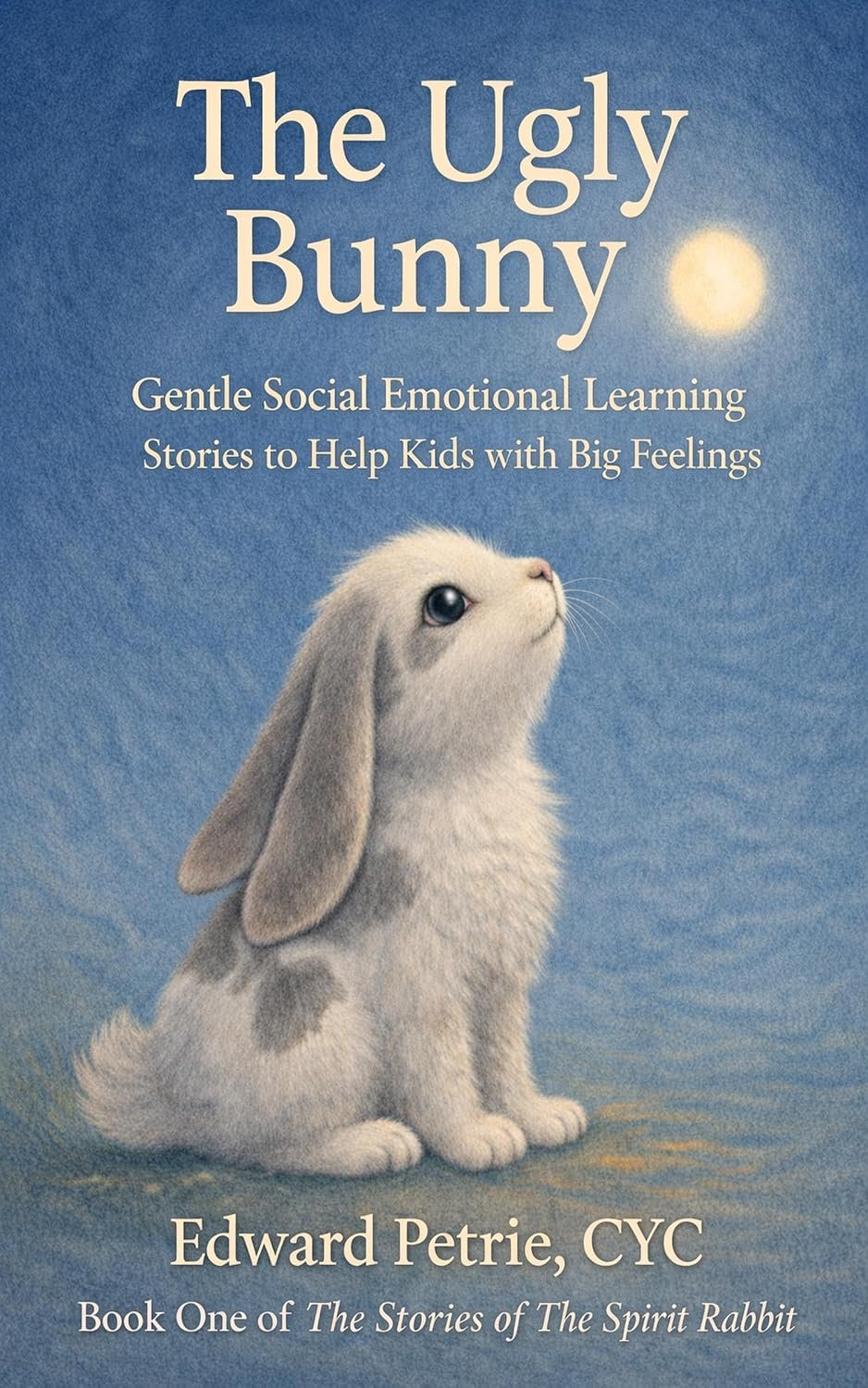
Hartley is a quiet bunny with long ears who is called ugly. Instead of winning an argument on the spot, he goes searching for a place where difference does not have to be corrected. In Moonlit Meadow he…
Books worth discovering. Authors worth knowing.
Hartley is a quiet bunny with long ears who is called ugly. Instead of winning an argument on the spot, he goes searching for a place where difference does not have to be corrected. In Moonlit Meadow he encounters the Spirit Rabbit, a guide who helps him face loneliness, self-doubt and overwhelming feelings. Publisher descriptions identify the book as a…
Carefully sourced literary criticism and book-specific interpretation.
Hartley is a quiet bunny with long ears who is called ugly. Instead of winning an argument on the spot, he goes searching for a place where difference does not have to be corrected. In Moonlit Meadow he encounters the Spirit Rabbit, a guide who helps him face loneliness, self-doubt and overwhelming feelings. Publisher descriptions identify the book as a reinterpretation of the ugly-duckling tradition.
A sensitive protagonist
The change from duckling to bunny is not just cosmetic. Long ears, sensitivity and quietness can become qualities a child recognises as part of their everyday personhood. By declining to make retaliation the obvious answer to ridicule, the premise suggests a story more interested in the dignity of feeling than in defeating an antagonist. But non-retaliation should never be confused with a duty to endure mistreatment silently; the exact narrative guidance matters.
The listener as a guide
The Spirit Rabbit’s role may give the story a contemplative register. A supportive figure who listens rather than commands can offer a model for what an adult might provide when a child’s emotions feel unmanageable. The publisher describes thirteen connected chapters and supplementary material for grown-ups, indicating an intention to work beyond a one-sitting moral lesson.
Beyond an instructional moral
Social-emotional books often become overly explicit about what readers are supposed to learn. The art of such writing lies in allowing children to care about Hartley before inviting them to name his feelings. The listed structure offers time for that attachment to develop; whether the individual episodes truly build narrative momentum remains a question for direct reading. Any cultural inspiration behind the Spirit Rabbit also deserves accurate attribution and respectful presentation.
The intended readership
Families, educators and counsellors interested in gentle fiction about difference may see value here, especially if they allow children to interpret Hartley in their own words. It is an invitation to discussion, not a therapeutic treatment or a guarantee of improved mental health.
Beyond the ugly-duckling reversal
The familiar ugly-duckling pattern can imply that an excluded young creature will finally be accepted once its hidden magnificence becomes obvious. That is satisfying in one way and troubling in another: it risks suggesting that difference is vindicated only when transformed into beauty or status. Hartley’s story, as publicly described, proposes a more humane alternative. A sensitive rabbit goes looking for a place where being different does not need to be corrected. The goal is not a triumphant makeover but the recognition that the original self has value.
For a child who feels exposed by appearance, temperament or emotional intensity, that distinction can matter enormously. Praise for being exceptional may be less comforting than the quieter reassurance that one need not earn ordinary kindness. The book’s promise of self-acceptance should therefore be assessed by whether Hartley’s transformation is internal, relational or both. A critic cannot know this from the publisher’s summary alone; the point is that the premise offers room to move beyond an inherited moral.
What it means to make feelings legible
Children’s emotional vocabulary develops through recognition and repetition, but fiction can accomplish more than assigning a label to each mood. An effective story creates situations in which confusion, loneliness or overwhelm has weight without becoming the entirety of a character. The description of Hartley’s connected episodes suggests the possibility of gradual learning rather than a sudden cure. That is valuable if the narrative gives him time to encounter difficult feelings repeatedly and discover small changes in how he responds.
The Spirit Rabbit’s quiet guidance may be especially suited to this approach. A comforting figure need not have all the answers or remove every difficulty. Instead, the guide can model patience, language and the willingness to remain present. The critical question is whether Hartley retains the freedom to interpret his own experience. Books about emotional learning can become unintentionally authoritarian when the intended lesson overwhelms a child’s subjective reality.
The adult reader’s responsibility
The advertised notes for grown-ups and social-emotional learning guidance point beyond an ordinary storytime purchase. Such supplementary material can be helpful, but it must not encourage adults to treat a child’s response as a quiz with one correct answer. A reader who identifies with Hartley may want to talk, remain silent, laugh or ask an apparently unrelated question. All can be legitimate ways of engaging a story. The best companion resources make room for that range and emphasize listening rather than correction.
There is also a question of cultural care when a text draws on the idea of a rabbit in the moon. That image has many histories across cultures, and a modern story should be precise about the tradition it invokes rather than turning a living source of meaning into vague ornament. The current sources do not supply enough detail to assess that dimension fully. For families and educators, the book is most promising as a gentle narrative about dignified difference; its therapeutic language should be understood as an intention, not a guaranteed outcome.
What is most appealing about Hartley’s predicament is its refusal to make outward transformation the price of acceptance. A child who has been called ugly may not need to discover hidden splendour; the child may need a world that stops using worth as a contest. The book’s spiritual guide and extended chapter form give it the opportunity to let that recognition arrive gradually rather than as a single triumphant speech. That is the measure a parent or teacher should apply to the finished text. Its stated purpose is constructive, but the story’s lasting value will come from whether Hartley is allowed to remain a fully particular little rabbit while learning to inhabit his feelings.
The review’s scope
This assessment is based on the identified bibliographic records and available author, publisher and bookseller descriptions. The interpretive claims above are editorial judgments about the documented premise and genre choices, not testimony to having read every chapter or inspected every illustration. The published text may answer, complicate or contradict the critical questions raised here. A finished review would assess the language, structure and ending directly.
About the book.
The title, author/contributor record, source URL and matching cover file ID come from the current MarketAnyBook Journal Queue and its Drive asset folder. The review considers children’s social-emotional chapter fiction through verified available descriptions rather than firsthand full-book reading.
Unsponsored editorial book review based on publicly available bibliographic and descriptive evidence, with critical interpretation distinguished from verified book details.
Found a book worth opening?
Books worth discovering. Authors worth knowing.
Return to the Journal →