
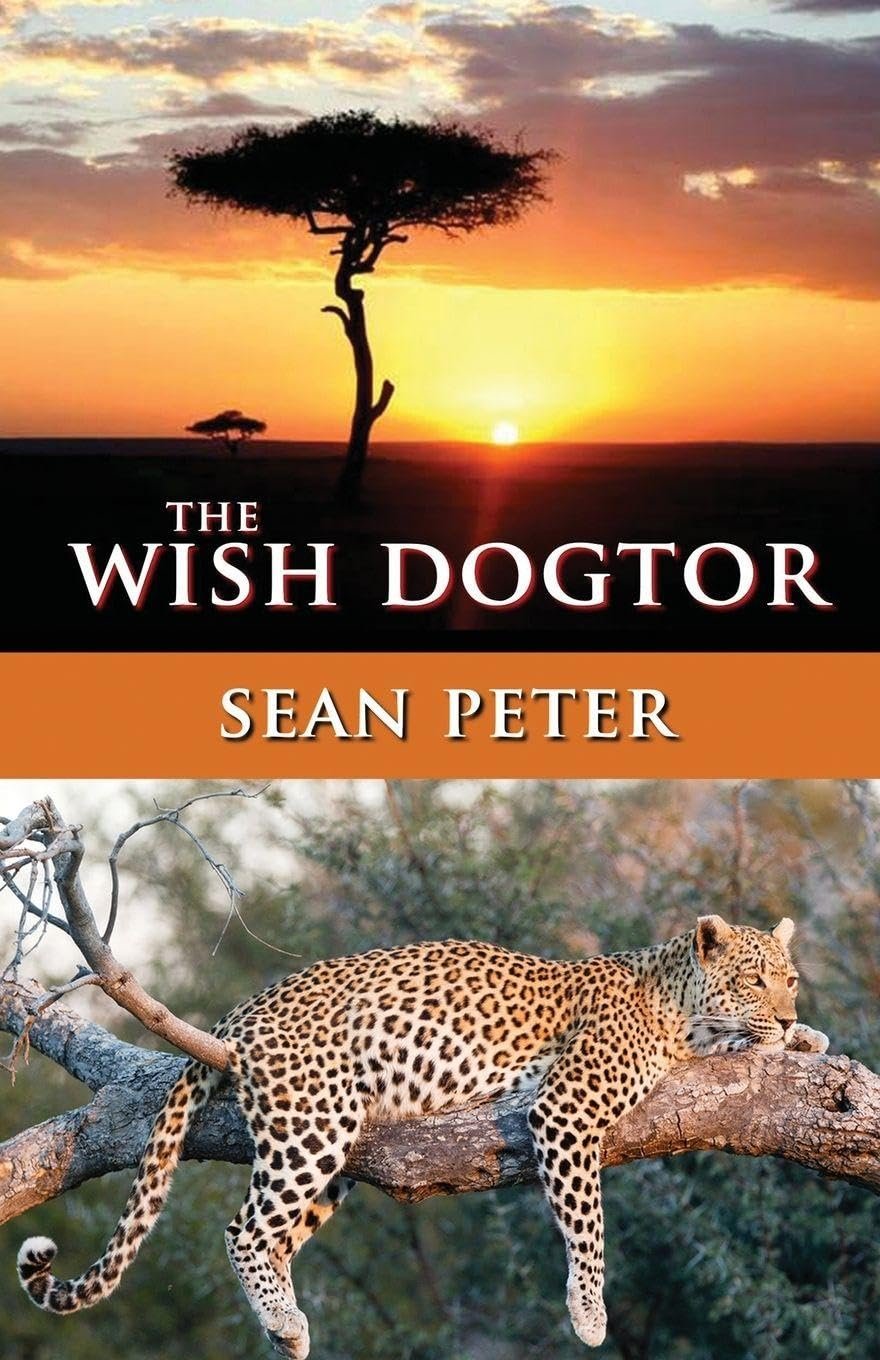
The Wish Dogtor
A fictionalized coming-of-age story follows a young Irish boy from Swaziland through apartheid-era South Africa and veterinary training.
Books worth discovering. Authors worth knowing.
A boy’s love of freedom and animals collides with the brutal politics of the country where he grows up.
S.
A Childhood Between Freedom and Control
The Wish Dogtor is described in book catalogues as a fictionalized account beginning with a young Irish boy in 1960s Swaziland. The child experiences the country through energetic play, open countryside and friendships that make his early world feel expansive. That sense of freedom changes when he is sent to an authoritarian boarding school in South Africa. The contrast is the novel’s first major organizing tension: a child used to exploring a landscape encounters an institution designed around discipline, hierarchy and restriction.
The story then moves into the broader political reality of apartheid-era South Africa. The protagonist is not introduced as a historical lecturer with a fully formed position, but as someone whose understanding develops through experiences that become harder to ignore. That perspective gives a coming-of-age narrative a second dimension. Learning who he wants to become also requires learning what the society around him permits, punishes and normalizes. The published synopsis describes the school as draconian and foregrounds the young character’s confrontation with apartheid’s contradictions.
Accuracy about genre matters here. The public description calls the book fictionalized rather than a straightforward autobiography, even though its premise draws on a life story. Readers should not assume that every incident happened literally to the author or that invented dialogue constitutes historical testimony. Fiction can still explore recognizable political conditions and moral conflicts. The book’s promise lies in translating large structures of inequality into the day-to-day decisions of a person trying to imagine an ordinary adult life.
From Boarding School to a Veterinary Calling
The character’s route toward adulthood includes time at a comparatively liberal university and later training in a very conservative veterinary school. That educational path gives the novel contrasting ideas of what learning means. An institution may encourage inquiry and plural perspectives, while another may demand conformity to social rules that limit whose experience counts. The protagonist must navigate these differences while pursuing a practical calling: he wants to care for animals, and veterinary training appears to offer a way to make that ambition possible.
Animal care becomes a distinctive strand of the story because it is concrete and intimate. A veterinary practitioner encounters fear, injury, responsibility and the need to act carefully in moments when another creature cannot explain its discomfort in human language. The synopsis highlights the protagonist’s satisfaction with his patients and work in the townships. These details make his professional aspiration more than a convenient backdrop for political awakening. They show a young person trying to find worth in skilled service while witnessing injustice he cannot easily separate from daily life.
The title’s playful spelling, Dogtor, invites curiosity about a life organized around animals, yet the public description indicates that this is not merely a cheerful pet story. The veterinary world becomes entangled with social hierarchy and state power. Someone drawn to the book by the name alone should know that its advertised subjects include serious political oppression and difficult moral choices. The contrast between affectionate humor and harsh history can be productive, but it requires a reader prepared for both tones.
Apartheid as More Than Background
The published summary places the narrative against South Africa’s system of racial segregation and political repression. Rather than treating apartheid as a decorative historical label, the protagonist reportedly becomes disturbed by what government officials do and by the treatment he sees in townships. The tension is therefore not simply between personal ambition and inconvenient bureaucracy. It concerns what a person should do when professional success depends on accommodating a society whose practices violate his developing moral judgment.
Historical fiction can make such questions accessible, but it must also be read with context. Apartheid was a real state system with enduring harms that affected millions of people; it should not be reduced to an exotic setting for one individual’s growth. The available synopsis centers a particular young character’s choices. A responsible reader can follow his development while remaining curious about the experiences of the communities around him, especially those subjected directly to systematic discrimination and violence.
The book’s fictionalized status makes further care necessary. Specific conversations, motives and dramatic incidents may have been shaped for narrative effect. They should not be cited as independent documentary evidence about particular historical actors without additional verification. Their literary purpose can nonetheless be clear: they allow the protagonist’s uncertainty to become a sequence of choices. A reader can ask how the political system influences the meaning of ordinary work, friendship and education while checking broader historical claims against reliable history elsewhere.
A Choice Between Safety and Conscience
According to the book’s public description, the protagonist becomes torn between helping animals and doing what he comes to see as morally right. That conflict is especially striking because the two aims are not naturally opposed. Care for vulnerable creatures can cultivate habits of attention and responsibility that make suffering elsewhere harder to dismiss. The novel seems to explore what happens when these habits clash with the expectations of powerful people who would prefer the young veterinarian to remain politically compliant.
The synopsis also says that life-changing decisions culminate in a conviction related to terrorism, using unusual language to describe how the character is labeled. The exact events behind that outcome are not fully established by the available listing, so they should not be reconstructed or sensationalized in a feature. What can be said is that the premise takes the protagonist beyond private doubts into direct consequences from authority. The movement from childhood play toward state accusation creates a serious narrative arc about freedom, power and conscience.
The Meaning of an Ordinary Life
The catalogue description makes a provocative claim about the book’s central character: he tries to live normally but fails dramatically, sometimes because of his own poor decisions. That is a more complicated premise than a flawless hero discovering courage. The protagonist’s wish for ordinary work, relationships and a place in the world is understandable. Yet the story apparently allows him to make mistakes that cannot be blamed entirely on politics. Such self-implication can give a fictionalized life story emotional credibility.
A veterinary career might have offered a stable narrative of talent and progress. Instead, the surrounding society repeatedly redefines the costs of professional participation. The young man must decide whether silence protects his vocation or compromises its ethical foundations. The conflict also exposes a common fantasy about adulthood: that choosing a useful profession insulates a person from public questions. The Wish Dogtor suggests that skills do not exempt anyone from considering where those skills are practiced and whom the system serves.
Coming-of-age fiction often ends its period of innocence through a single revelation. This synopsis points instead toward accumulated disillusionment, education, political encounters and consequential choices. The emotional weight lies in discovering that personal freedom is shaped by institutions long before a person consciously enters political debate. The boy who once ran freely through the countryside becomes an adult negotiating rules that determine where people can live, study, work and exercise rights. His development is inseparable from that change in scale.
An Author Credit Worth Checking
The queue from which this feature is prepared lists the author only as ‘English edition.’ Independent retailer catalogues, however, identify Sean Peter, sometimes in inverted index form as Peter, Sean. The specific ISBN and title match that identification. This discrepancy is an editorial metadata issue, not a reason to discard the book or silently rewrite the original queue field. The source wording is preserved in the accompanying data, with the independently verified name recorded separately for final human confirmation.
The work is also described explicitly as fictionalized. Its author may have drawn on personal experience, but the book should be presented as a crafted narrative rather than documentary evidence that each scene occurred as written. That distinction protects both the author and the reader from an inflated claim of factual authority. It leaves ample room to discuss the novel’s documented subjects: childhood in Swaziland, authoritarian schooling, veterinary education and an uneasy moral awakening under apartheid.
The Wish Dogtor may suit readers interested in historical fiction grounded in southern African politics, careers devoted to animal welfare and coming-of-age stories that grow progressively more morally demanding. It is less appropriate for someone seeking a light veterinary memoir solely about pets. Its most memorable public premise is the collision between a young person’s attempt to build an ordinary professional life and an unjust order that makes neutrality difficult. The book asks how a vocation can survive when doing one’s job well is no longer enough to satisfy one’s conscience.
About the book.
A fictionalized account follows an Irish child in 1960s Swaziland through boarding school, university, veterinary work and confrontation with apartheid-era authority.
Editorial book feature, not paid sponsorship. Research-based original commentary from public author, publisher, retailer and bibliographic sources; not a first-hand complete-book review. A cover placeholder will be resolved by the owner’s publishing automation.
Found a book worth opening?
Books worth discovering. Authors worth knowing.
Return to the Journal →