
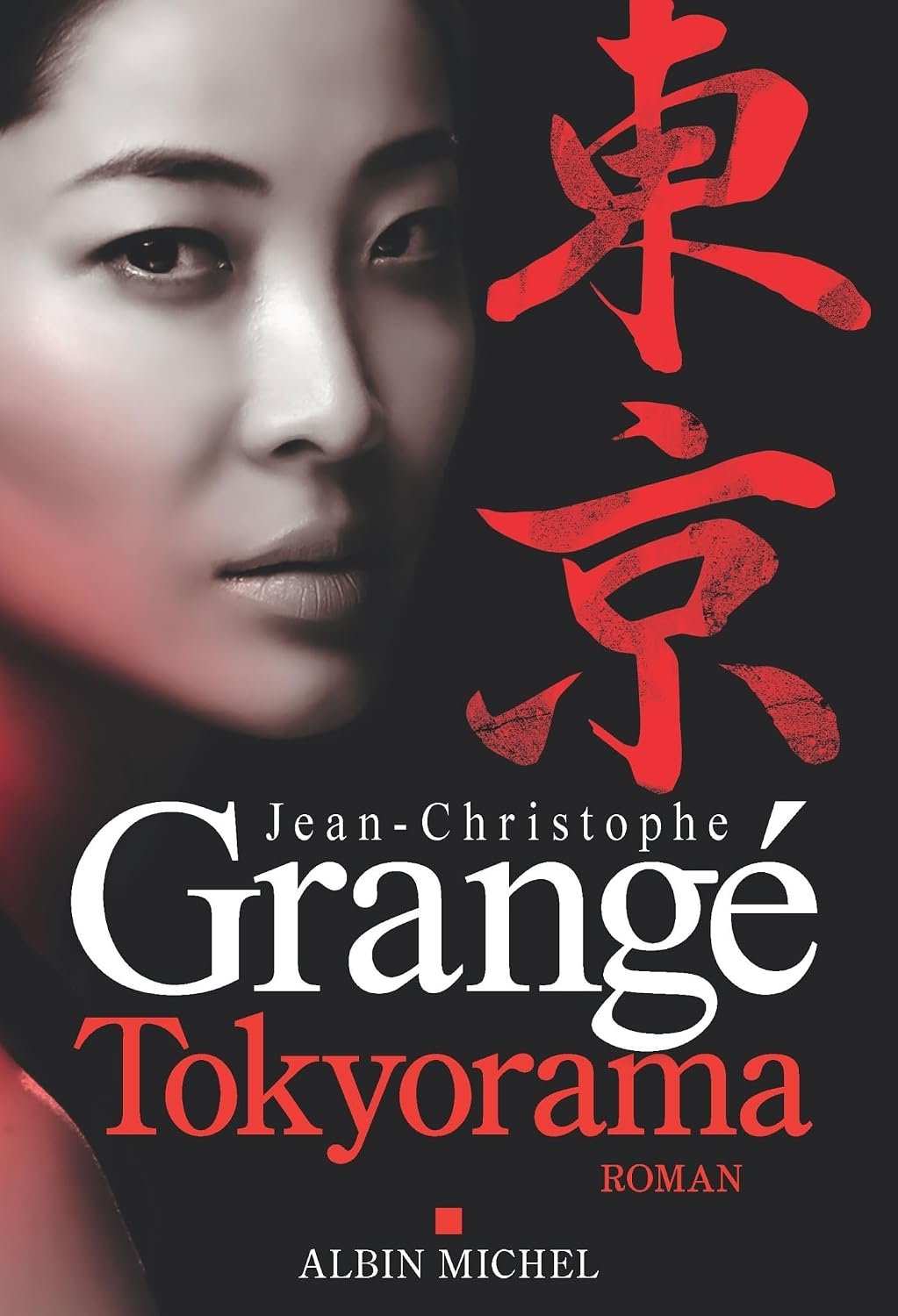
Tokyorama
A French private detective in Tokyo follows an adultery case into a hostess club — and into a string of murders.
Nighttime Tokyo, a whisky glass, and a case that will not stay small.
In Tokyorama, Jean-Christophe Grangé follows Stéphane Madryka, a French private detective long settled in Tokyo, as an ordinary adultery assignment leads him into a hostess club on the night an industrialist is found stabbed to death.
An editorial introduction to the book, its premise and the story surrounding it.
Madryka is fifty-seven, silver-haired, often with a glass in reach, and specialized in catching spouses who are not where they claimed to be. The work suits a man who has already left another life behind in France.
He has lived in Japan for years. The city knows him as a foreigner with clear eyes and a profession that sits in the grey zone between police work and paid suspicion. When a contract takes him to Queendom, a hostess club where conversation is sold as carefully as drinks, he expects another night of watching. Instead he is present when a concrete industrialist is discovered murdered, cut with knife wounds.
From that point the case stops resembling routine surveillance. A client disappears. Hostesses from the same club are found dead, their heads held in blocks of concrete. Madryka is pulled from the margins of other people’s secrets into a pattern that points deeper into Tokyo’s night economy.
A detective built for the night
Madryka is not a clean hero. He drinks hard, knows the city’s women, and carries the damage of a failed marriage that helped drive his expatriation. Grangé uses that profile deliberately: a man already half outside respectable hours is the right guide for a story that moves through hostess bars, private rooms, and the social codes that keep those spaces running.
The adultery specialty is not a joke detail. It is how the novel first legitimizes his access. He is paid to see what others hide. When the hiding involves murder rather than affairs, the same skills — patience, intrusion, reading a room — become the tools of a larger descent.
Tokyo in this book is not a postcard of temples and trains. It is a nighttime city of excess, performance, and zones where the rules change from street to street. Madryka’s long residence gives the narrative a claim to local texture rather than tourist panic.
From one body to a pattern
The industrialist’s death at Queendom is the first rupture. The later killings of hostesses, marked by concrete, turn a single crime scene into a sequence. Concrete is not a subtle symbol in a city of constant building; it is a material of weight, silence, and disposal. The novel uses that imagery to bind the victims to a method and to a world of money that prefers problems to disappear.
Madryka’s guide through the worsening case is not only professional curiosity. Published descriptions of the book emphasize love as the force that keeps him moving when blood alone might have been reason enough to walk away. The combination — desire, loyalty, and horror — is familiar in Grangé’s work, and here it is attached to a foreigner who has already chosen Tokyo as home.
Readers should expect a long thriller, not a short procedural. The page count signals a novel that wants room for the city’s layers as much as for the next corpse.
Who this book is for
Tokyorama is for readers of French thriller fiction who want Grangé’s intensity relocated to Japan, and for readers drawn to crime stories set in nightlife industries rather than in police stations alone. It assumes an appetite for darkness, sexual undercurrents, and a protagonist who is compromised before the first murder is even reported.
Those who know Grangé from Les Rivières pourpres and later novels will recognize the appetite for vertigo and moral contamination. Those new to him can enter through Madryka’s specific job and the Queendom crime without needing the earlier books. The setting does the introductory work: a French detective, a Tokyo hostess club, a body, and a city that keeps opening further circles of night.
The novel is published by Albin Michel for the French market. Its premise is clear enough to state without the ending: once Madryka steps into Queendom on the wrong night, the adultery trade is no longer the real assignment.
Grangé has set previous novels in many geographies. Tokyo here is not a postcard backdrop. It is a working night city in which a foreign detective’s long residence is the difference between panic and navigation. Madryka’s whisky, his eye for women, and his professional cynicism are the instruments the plot uses to open doors that a cleaner hero would never be invited through.
The adultery specialty keeps the early chapters grounded in paid observation. Once the Queendom murder connects to the concrete killings, that same observational habit becomes the reader’s way into a system of nightlife, money, and disposal that the novel refuses to keep offstage.
A short note
I keep returning to the concrete around the hostesses’ heads. It is a cruel, industrial image in a city famous for refinement and neon. The method says the killings are not only personal; they are meant to seal something, to make bodies part of the built environment. That is the kind of detail that turns a barroom murder into a system.
About the book.
Tokyorama was published by Albin Michel in late September 2026. The novel runs over five hundred pages in the French edition and places Grangé’s thriller machinery inside contemporary Tokyo nightlife.
This article is a sponsored MarketAnyBook Book Feature based on verified public information. It is not presented as a full-book review.
Found a book worth opening?
Books worth discovering. Authors worth knowing.
Return to the Journal →