
Transcendence Calling
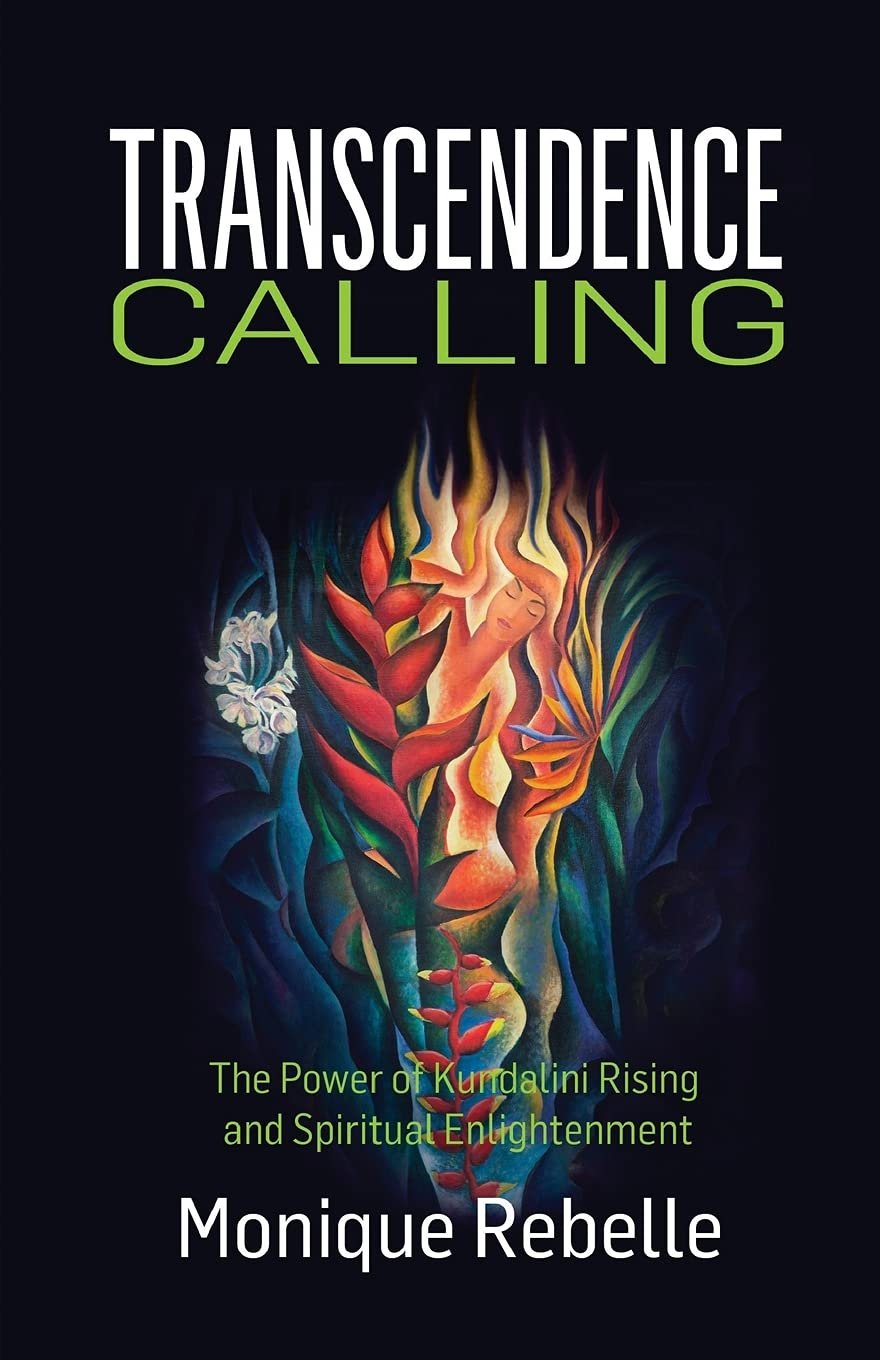
Artist Monique Rebelle recounts a life-changing spiritual experience and her interpretation of consciousness and kundalini.
Books worth discovering. Authors worth knowing.
Artist Monique Rebelle recounts a life-changing spiritual experience and her interpretation of consciousness and kundalini.
Transcendence Calling is rooted in Monique Rebelle’s account of a dramatic spiritual experience after a prolonged period of distress.
A Book That Begins With a Personal Crisis
Transcendence Calling is rooted in Monique Rebelle’s account of a dramatic spiritual experience after a prolonged period of distress. On her official website she describes years of struggle, a moment near suicide, and a kundalini rising experience that changed the direction of her life. Her book presents that event as the beginning of a wider exploration of consciousness and spiritual practice. It is important to distinguish the author’s personal testimony from scientific verification of the spiritual interpretation she places on it. A reader can take the life story seriously as autobiography without assuming that everyone will experience the same event or reach the same conclusions. This distinction is especially important because the book touches on severe psychological suffering. Personal meaning and healing deserve respect, but they are not substitutes for mental-health care, and no spiritual practice should be presented as a guaranteed treatment for crisis.
From Poland Across Several Cities
The author outlines a childhood in Poland followed by periods in London, Amsterdam, Paris, and Los Angeles. Those geographic changes are part of the narrative she presents in the book’s first section, which covers life before the experience she dates to March 10, 1992. The movement between places creates a biographical background for questions of belonging, vocation, and searching. Rebelle also identifies herself as an artist, a fact that makes her eventual turn toward abstract and geometric imagery interesting within her larger intellectual journey. Readers need not treat each artistic or geographic change as a sign pointing inevitably toward transcendence. The memoir element may instead be read as a record of how someone retrospectively organizes disparate experiences into a story that makes sense to them. That can be valuable even for readers who do not share her spiritual vocabulary.
What Kundalini Means in This Account
Kundalini is a concept with histories in several South Asian yogic traditions, though interpretations and practices differ substantially. Rebelle describes her own spontaneous rising experience and connects it to chakras, the subtle body, and expanded awareness. Her book’s promotional materials promise an accessible explanation of the stages she believes she underwent. Readers approaching the subject from outside those traditions may find it useful to keep three layers separate: longstanding religious and philosophical ideas, the author’s direct subjective experience, and her later system for interpreting that experience. These layers can speak to one another without becoming interchangeable. A claim that a person felt a profound transformation is different from an experimentally established explanation for how that transformation occurred. Reading with that distinction allows curiosity and critical thought to coexist rather than forcing a choice between total belief and dismissiveness.
A Three-Part Structure
The official synopsis describes three parts. The first concerns the author’s life leading up to the pivotal event. The second narrates the experience and the changes she associates with it. The third, called Seven Worlds—One Truth, sets out an account of human beings as multidimensional and capable of developing further consciousness. That structure explains why the work is more than either a conventional memoir or a simple manual of exercises. It moves from a personal history to a transformative episode and then to a proposed model of reality. For readers, the key question is what kind of evidence each section offers. The autobiographical portion offers a record from the author; the explanatory portion offers her theory; the suggested practices offer an invitation to experiment with attention and self-observation. None of those layers should be misrepresented as a medically established pathway to enlightenment.
Art, Attention, and Interpretation
Rebelle’s background as a painter adds another perspective on the book’s themes. Artists routinely attend closely to shape, color, perception, and the gap between what is seen and how it is described. While no public synopsis proves that a particular painting caused or predicted her spiritual development, the connection invites reflection on the discipline of observation. When people become more attentive to inner experience, they may also become more aware of how language shapes it. Words such as energy, dimension, and awakening can function as vivid metaphors, technical claims, or both, depending on the speaker. A careful reader can ask how Rebelle uses each word rather than importing definitions from a different spiritual tradition or from laboratory science. That close attention to terms helps preserve the specificity of her voice while making space for disagreement about her conclusions.
Practices and Their Limits
The book’s promotional material says it includes approaches intended to help readers develop awareness and engage with their perceived potential. Such invitations can appeal to people seeking stillness, reflection, or a stronger sense of purpose. However, spiritual practices can affect individuals differently, particularly when they involve intense meditation, breathwork, or attempts to provoke unusual states of consciousness. The public description is not evidence that a specific method is safe or effective for every reader. It is reasonable to approach the practical material gradually, within personal limits, and with professional advice when significant health concerns are involved. No one is required to achieve a dramatic experience for their life to be meaningful. In a grounded reading, the book provides access to one author’s worldview and suggested exercises; it does not establish a universal obligation to follow them.
A Conversation With Tradition
Rebelle has also written publicly about kundalini and consciousness in a spiritual-studies context. Her own descriptions connect personal insights with selected traditional views and contemporary discussions. That wider writing reinforces the fact that she has spent years reflecting on her interpretation rather than treating the original event as an isolated anecdote. Readers interested in spirituality can compare her approach with multiple traditions instead of assuming there is a single authoritative meaning of kundalini. They may wish to ask what she means by self-realization, how she describes change in everyday life, and where her account overlaps with or departs from other teachers. A productive comparison includes respect for the cultural histories of the concepts in use. It also avoids presenting subjective testimony as a substitute for independent medical or scientific evidence.
Readers may also notice how often the language of rebirth appears in accounts of crisis and recovery. In this book, the transformation is described through a particular spiritual event, but the broader human question concerns what makes a life feel newly possible after deep despair. Someone without Rebelle’s experiences might understand the change through art, relationships, a shift in work, or a renewed connection to a community. Those alternatives do not validate or invalidate her interpretation; they simply remind readers that different people find meaning through different pathways. The narrative becomes more accessible when the author is allowed to speak in her own spiritual terms while readers remain free to translate, question, or set aside those terms. That open approach is more respectful than a false claim that every reader must agree.
Reading With Curiosity and Boundaries
Transcendence Calling is most appropriately introduced as an autobiographical and spiritual work in which an artist and teacher interprets a life-changing experience. Its appeal is likely to be strongest for readers who enjoy personal testimony combined with speculative frameworks of consciousness. The book invites reflection on how people construct meaning after distress, what they understand by transformation, and how habits of attention change their relationship with ordinary life. At the same time, not every reader will share Rebelle’s beliefs, and that is compatible with thoughtful engagement. An honest feature can describe the book’s stated structure and concerns without promising enlightenment, miraculous regeneration, or clinical benefit. Reading critically is not the opposite of reading generously. Both approaches help clarify what one person’s profound experience may offer another person who is choosing which ideas to explore and which to leave open.
About the book.
Spiritual autobiography; kundalini theory and contemplative practices. Artist Monique Rebelle recounts a life-changing spiritual experience and her interpretation of consciousness and kundalini.
Editorial book feature, not paid sponsorship. Independent research-based commentary based on publicly available book details; not a claim of first-hand full-text review. The designated cover placeholder will be resolved by the owner’s publishing automation. Descriptions of spiritual experiences reflect the author’s account and are not medical guidance.
Found a book worth opening?
Books worth discovering. Authors worth knowing.
Return to the Journal →