
Transparency
Christian hip-hop artist Jerrell Golden Sr. connects his life story, creative inspiration and faith in this personal testimony.
Books worth discovering. Authors worth knowing.
Christian hip-hop artist Jerrell Golden Sr. connects his life story, creative inspiration and faith in this personal testimony.
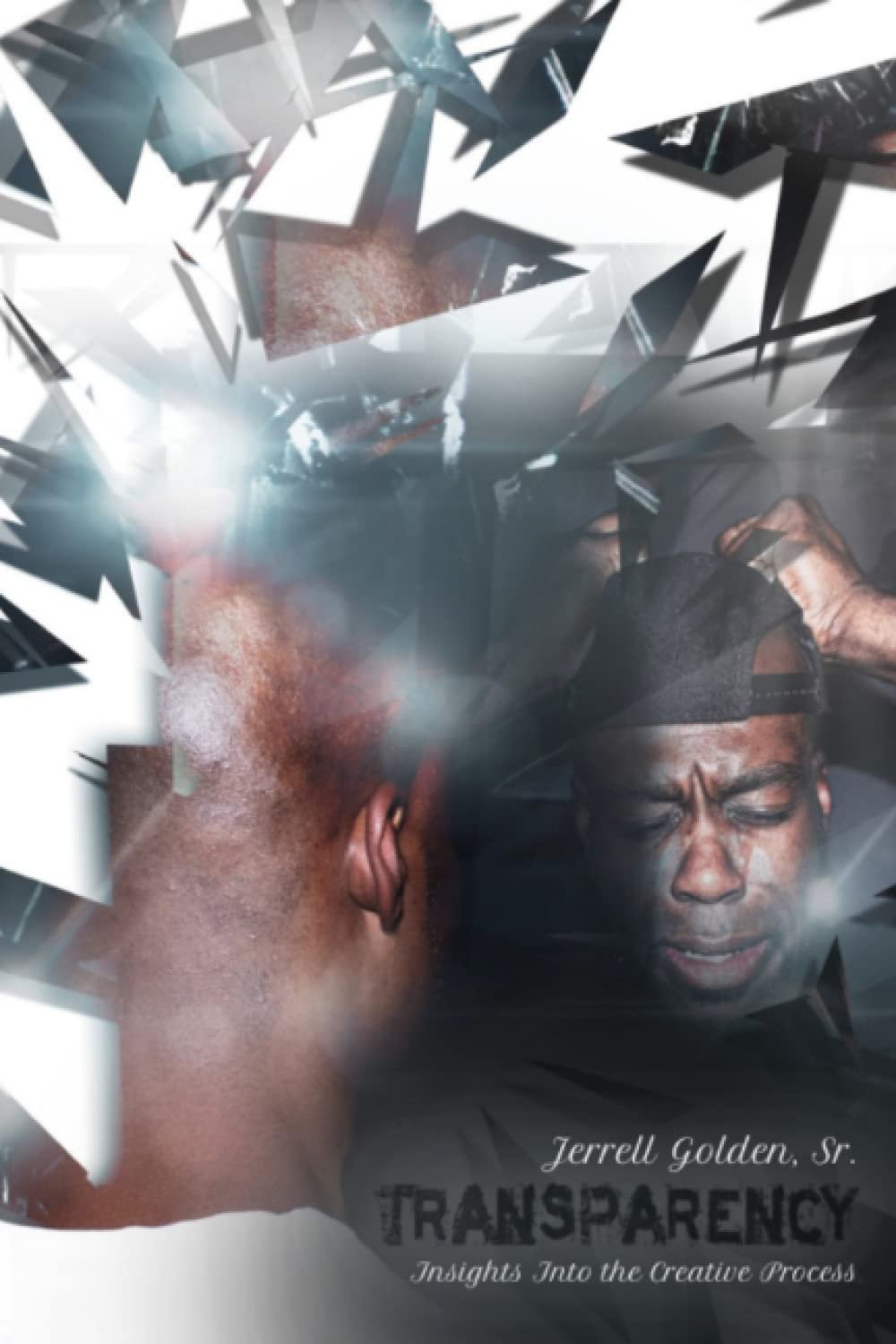
Transparency: Insights Into the Creative Process by Jerrell Golden Sr.
When the Creative Life Becomes the Story
Transparency: Insights Into the Creative Process by Jerrell Golden Sr. is described in the author’s promotional material as a personal testimony connecting Christian faith, lived difficulty and the practice of making music. Golden is a Christian hip-hop recording artist, and the book takes readers toward the experiences that have shaped what he creates. This is an important distinction from a conventional technical manual about songwriting. The published description does not promise a sequence of production tutorials or professional shortcuts; it promises an encounter with the person behind the work. By foregrounding transparency, Golden invites an unusual form of attention. Instead of asking only whether a song sounds confident, readers are encouraged to wonder what doubts, setbacks and decisions informed its making. The creative process becomes visible not simply through instruments and recording techniques but through the beliefs and relationships the artist considers important. That makes the book a potential discovery for readers of personal testimony as much as for music enthusiasts.
A Christian Hip-Hop Perspective
A public book announcement identifies Golden as a Christian hip-hop performer and explains that his writing is intertwined with his music. Hip-hop has long provided writers with a means of turning individual memories into narratives addressed to a wider community. In a faith-centered context, the musical voice can also function as testimony: a description of personal struggle interpreted through spiritual commitment. Golden’s public account presents moments when he perceived God’s presence more deeply and began to understand his experiences differently. Readers need not share every theological conviction to recognize the formal relationship between songwriting and prose. Both require selection, pacing, a point of view and a willingness to shape private experience into language that others can hear. The feature should avoid claiming which lyrics appear in the book or inventing a detailed conversion story, since those particulars are not established by the accessible description. The verified premise is already specific enough to be meaningful.
What Transparency Can Require
The title’s first word is deceptively simple. Transparency sounds like telling the truth, but autobiographical writing forces difficult choices about what to reveal, which details matter and how other people appear within a remembered event. An artist may wish to be candid while also maintaining boundaries around family or private relationships. The published descriptions portray Golden as using his own life as a canvas, inviting readers into challenges and the ways he understands their resolution. It is possible to appreciate that project without assuming an autobiography can disclose everything. Memory is shaped by perspective; testimony is a form of interpretation. Those qualities do not make it worthless. They allow readers to encounter an individual speaking about the meaning of events rather than a detached record of every circumstance. The most productive question may be what honesty in creative practice looks like when an artist knows that listeners and readers bring their own histories, expectations and beliefs to the encounter.
Faith as an Interpretive Framework
Golden’s publicity explicitly describes his understanding of God’s love and guidance as central to the book. That means faith is not a generic inspirational decoration but the language through which he explains difficulty and change. A fair book feature can describe this framework accurately without presenting a personal spiritual testimony as independently verified evidence of supernatural events. Some readers may find the religious focus immediately familiar; others may be interested in how belief shapes resilience, artistic purpose and self-description. The author appears interested in the relationship between vulnerability and conviction: acknowledging weakness or uncertainty need not invalidate a person’s sense of direction. Such a viewpoint has a long tradition in devotional writing, but Golden approaches it through the culture and communication style of contemporary Christian hip-hop. The crossover between testimony and artistic reflection gives the book a particular audience rather than offering a universal recipe for solving life’s problems.
Inspiration Is Not Always Comfortable
The subtitle, Insights Into the Creative Process, suggests curiosity about where original work begins. Public summaries relate Golden’s creative inspiration to challenges he has faced and to a period of deepening faith. This is a more grounded account of creativity than the fantasy of an artist producing finished ideas effortlessly. Songs and stories may draw from frustration, gratitude, disappointment or changed relationships; the task is finding a form that respects the lived experience while remaining communicable. Golden’s published approach indicates that music and prose are connected parts of his expression. Yet no responsible overview should describe specific studio routines, track lists or composition methods absent from available sources. Instead, the book’s premise invites reflection on how identity travels across media. A person who makes records may approach the page with a sense of rhythm and address, while longer prose offers room to explore circumstances a song can only touch briefly. Readers interested in that movement between forms may find the project worth investigating.
Encouragement Without Easy Promises
The book’s promotional material says it aims to encourage people confronting difficulties. That is a legitimate declared intention, but it should not be transformed into a promise that reading it will fix grief, financial stress, mental-health concerns or complex relationships. Inspirational writing works differently for different readers. A personal account may offer a vocabulary for hardship or simply the relief of recognizing that another person has struggled, but it cannot substitute for professional help or practical support when those are required. Golden’s emphasis on faith may resonate especially with readers seeking reflection within a Christian tradition. For others, the value may lie in observing how a musician turns experience into an account of purpose. The central editorial distinction is between what the author hopes the book will accomplish and what can be objectively guaranteed. A careful feature honors his expressed aim without making unsupported therapeutic claims.
A Recording Artist in Print
Golden’s author biography identifies him as a husband, father and award-winning Christian hip-hop performer from Tappahannock, Virginia. A 2024 announcement reported that the book was to be displayed at the Los Angeles Times Festival of Books by a marketing exhibitor and gave an original publication date in 2022 through Golden Touch Creations. Open Library also recognizes the work under his name and associates it with poetry and self-help subject categories. Those classifications are not identical, which is another reason to describe the actual published premise rather than assign an unnecessarily narrow genre. This feature does not imply that a trade-show appearance equals critical endorsement or that publicity proves a specific quality of writing. The biographical and bibliographic facts simply establish that Transparency belongs to a creative project in which Golden’s recorded music, personal experience and written testimony inform one another.
Reading for the Person Behind the Art
Transparency: Insights Into the Creative Process is likely most relevant to readers who value Christian testimony, reflective artist memoirs and accounts of how private experiences influence creative work. It may also interest people who listen to Christian hip-hop and want to encounter a performer’s perspective in a different form. The public overview makes its themes clear while leaving the precise structure, particular memories and artistic techniques largely undocumented. That gap should not be filled with invented scenes. Instead, prospective readers can approach the book with a useful question: how does an artist decide what part of his life to place in public view, and why? Golden’s declared answer is grounded in faith, resilience and the intention to encourage others. The work’s individuality lies in that combination of music and spiritual self-examination. This article describes the verifiable book project and its implications, not an independently verified full-text critique or a guarantee that every reader will have the same personal response.
About the book.
Christian testimony, creative nonfiction and music-inspired memoir. Christian hip-hop artist Jerrell Golden Sr. connects his life story, creative inspiration and faith in this personal testimony.
Editorial book feature, not paid sponsorship. Independent research-based commentary based on publicly available book details; not a claim of first-hand full-text review. The designated cover placeholder will be resolved by the owner’s publishing automation.
Found a book worth opening?
Books worth discovering. Authors worth knowing.
Return to the Journal →