
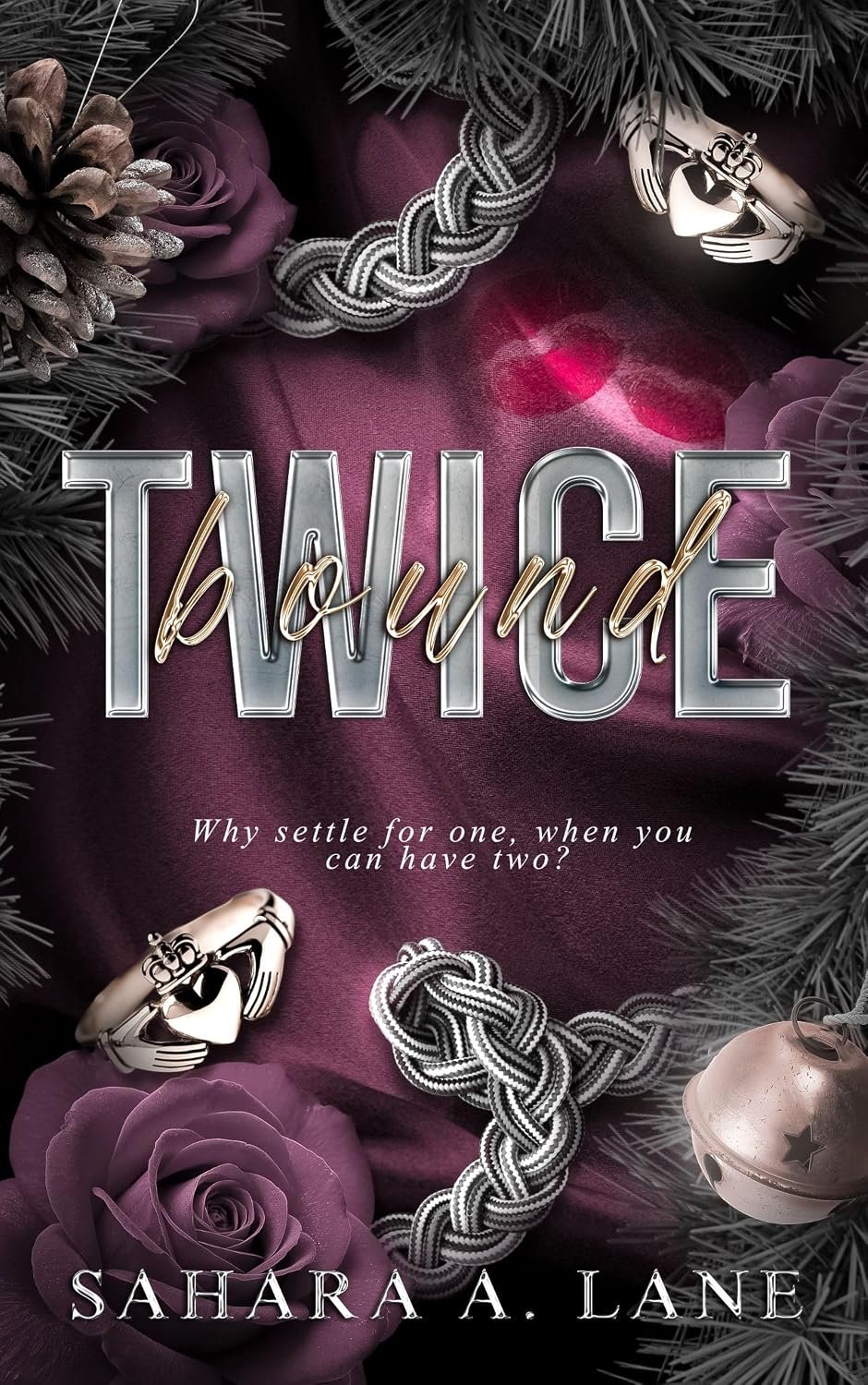
Twice Bound
At a Christmas party, Lex’s attempt to avoid her ex becomes an unexpected sapphic romance with new emotional possibilities.
Books worth discovering. Authors worth knowing.
One stressful Christmas party opens the door to an unexpectedly complicated new romance.
Lex, Clíodhna, Róisín and the pressure of an awkward holiday gathering.
A holiday invitation no one can easily decline Twice Bound centers on Lex, who is facing a Christmas gathering complicated by the presence of her former partner. The ex is also her best friend’s sister, turning an ordinary holiday social obligation into a test of emotional balance. A bookstore synopsis presents Lex as someone still measuring the distance between a painful breakup and the possibility of beginning again. She would rather not go alone, and a chance meeting offers what seems like a practical solution: bring a date to the party and get through the evening. The romance turns on how quickly a defensive plan may become something more emotionally consequential than Lex expects.
Meeting Clíodhna changes the terms The encounter with Clíodhna introduces calm confidence at exactly the moment Lex needs a companion. The public description frames their attraction as immediate, with a playful combination of curiosity, uncertainty, and anticipation. It would be misleading to invent private dialogue or details of their first conversation, but the setup communicates an emotional problem clearly enough. Lex begins by seeking social protection. That motive may leave little room for imagining a genuine connection, yet the possibility opens as she starts to take the new acquaintance seriously. In romance fiction, such changes can create tension between what a character says they want and what they gradually discover they are willing to risk.
The ex is a real complication, not a decoration A past relationship becomes especially difficult to leave behind when family friendships keep former partners close. Lex’s ex is not merely an anonymous person from another chapter of life; the social network ensures the two might occupy the same room. The party therefore functions as a pressure test for Lex’s confidence after the breakup. Readers may recognize the particular exhaustion of preparing for a gathering that others regard as harmless fun. A contemporary romance can make room for awkwardness, affection, loyalty, and embarrassment without treating any of them as trivial. The verified synopsis does not reveal how the ex behaves at the party, and an accurate feature should preserve that uncertainty.
The surprise of a relationship with room for more The published description explains that Clíodhna has an important relationship with their best friend Róisín and prefers a form of connection that invites sharing. This makes Twice Bound more complex than a simple fake-date narrative. The romance touches on expectations about exclusivity, the pace of commitment, and whether new partners understand one another’s desires. It is described as a why-choose sapphic romance. That classification signals a relationship structure different from conventional two-person romance, without telling us every emotional negotiation that appears in the finished novel. Readers interested in the category may find the setup appealing precisely because it requires attention to choice, honesty, and communication.
Intimacy and consent as meaningful reading context Retail descriptions classify Twice Bound as an adult contemporary romance containing explicit sexual themes and BDSM elements. Those details are part of honest reader guidance, but they do not require a graphic summary. The editorial interest is in the distinction between attraction and understanding. If several people are considering deeper involvement, communication about limits, expectations, and consent is important outside fiction as well as within it. Nothing about the public premise guarantees that the characters handle every problem perfectly; a feature should not invent evidence of exemplary behavior. Instead it can acknowledge that the story’s adult-romance framework is designed for readers comfortable with intimate themes and less conventional relationships.
The warmth and pressure of the Christmas setting Holiday romance often leans on festive imagery: decorations, crowded parties, and promises of renewal. Yet the season can intensify tension, particularly for people navigating recent breakups or complicated friendships. Lex’s required attendance makes the Christmas gathering a social challenge before it becomes a romantic possibility. The setting invites a contrast between public cheer and private uncertainty. A party may provide an opportunity to introduce someone new, but it also exposes a character to memories and other people’s expectations. This is a credible basis for romantic comedy and emotional friction. The known synopsis supports the atmosphere and the party, not additional invented holiday mishaps or family confrontations.
What Lex may be seeking beneath the practical plan At first, Lex appears concerned with getting through one event. That limited aim can be understandable after an emotionally draining separation. A temporary arrangement may feel safer than considering a new attachment with its own vulnerabilities. The premise of Twice Bound then complicates the original bargain: a stranger’s presence becomes a challenge to the story Lex tells herself about what she is ready for. The book promises attraction, but an editorial introduction can also ask what recovery means when a person starts dating again. Is being ‘over’ a former partner a fixed state or a set of choices made imperfectly over time? Those are interpretive questions, not answers attributed to the novel.
Author attribution and the edition in the queue The MarketAnyBook queue credits Sahara Lane and lists Vallie O’Hara as editor. Bookseller descriptions use the fuller author name Sahara Athena Lane for a work titled Twice Bound: A Spicy Sapphic Romance. This feature follows the queued book link while noting that variation in the metadata. Small differences in author display names and subtitles can matter when readers compare editions, particularly in independent publishing. The synopsis and category information support identifying this as an adult sapphic contemporary romance. They do not license claims about changes between editions or unpublished material. Readers can use the linked listing to confirm format, content notices, and the exact edition offered.
Which romance readers may want to investigate Readers drawn to queer contemporary romance, holiday settings, emotional recovery after breakups, and relationship configurations beyond a conventional couple have clear reasons to consider Twice Bound. Those seeking closed-door romance should note its explicit-content classification before choosing it. Readers more interested in social tension than elaborate worldbuilding may appreciate a premise built around one party and the relationships it unexpectedly exposes. It is also worth remembering that romance marketing shorthand can create broad expectations without defining the whole narrative. A book feature can describe the premise and audience but should not claim to know whether individual readers will find the characters sympathetic or the ending satisfying.
A small social plan with larger implications The strongest hook in Twice Bound is the escalation from one evening’s survival strategy to an attraction that changes Lex’s expectations. An unwelcome holiday gathering becomes the catalyst for considering new forms of intimacy, partnership, and emotional risk. Clíodhna and Róisín complicate the familiar romance question of whether a date will become a relationship, while Lex’s history supplies a reason to hesitate. Based on the available publisher-style descriptions, this is a novel for adult readers comfortable with explicit themes and interested in how desire intersects with choice. Its most honest introduction leaves the actual consequences of those decisions for the story itself to reveal.
A closer reading question
A useful distinction for romance readers is between a description of tropes and an assessment of execution. The holiday party, ex-partner complication, chance encounter, and why-choose relationship are identifiable story ingredients. Whether their combination creates believable dialogue, satisfying pacing, or sensitive emotional negotiation can only be judged by engaging with the book itself. The available synopsis makes the novel easy to place within adult queer romance without awarding it a rating it has not earned through a firsthand evaluation. That clarity serves both the author and readers deciding whether the premise fits their tastes.
About the book.
An adult sapphic contemporary romance centered on a Christmas party, a former partner and an unexpected new connection.
Independent MarketAnyBook editorial book feature. Based on published descriptions and contextual analysis; not a firsthand full-book review, star rating or guarantee. The Python publisher resolves the WordPress cover and featured media ID.
Found a book worth opening?
Books worth discovering. Authors worth knowing.
Return to the Journal →