
Without A World
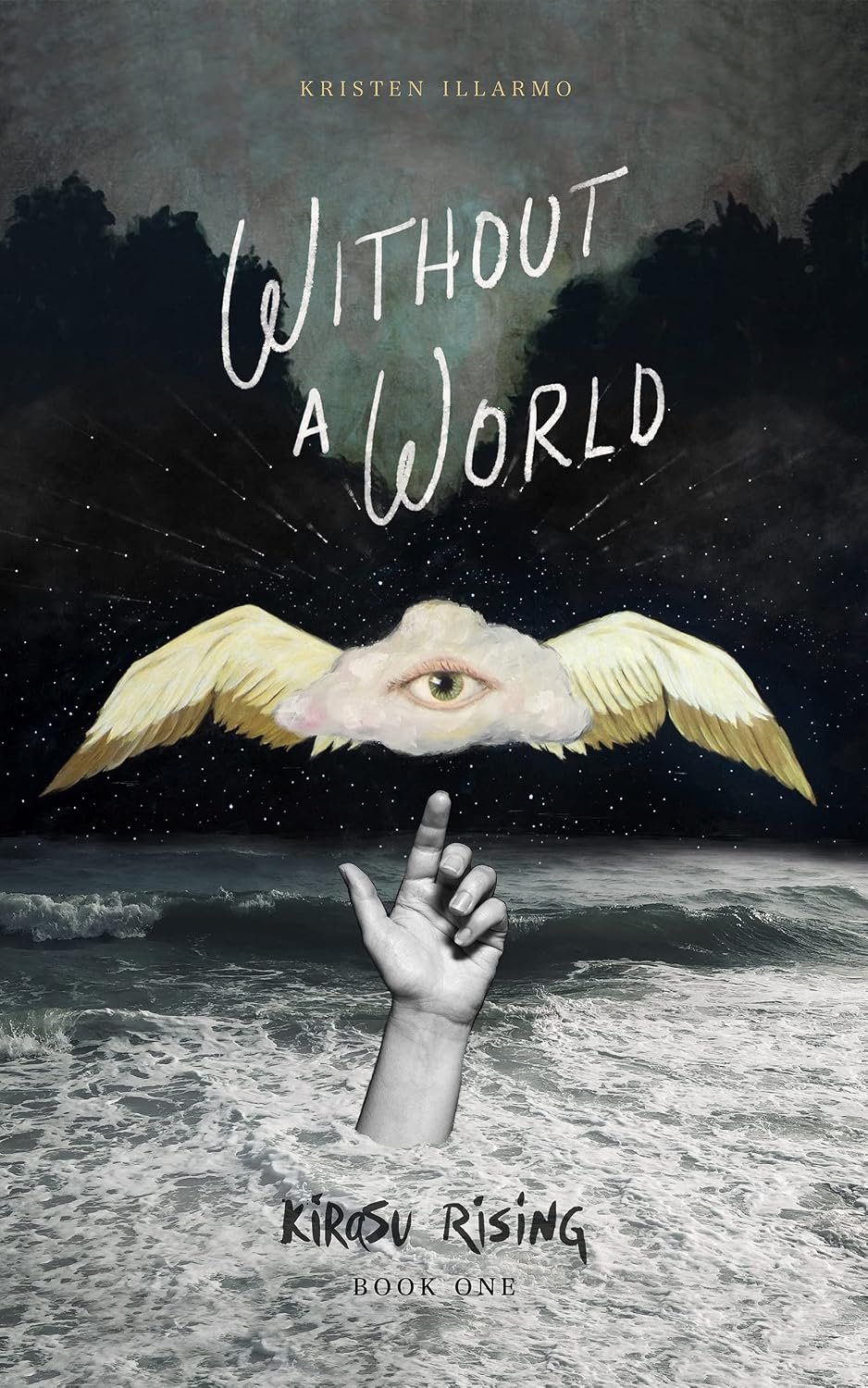
Miranda leaves the ash-covered Trash Lands as a black hole threatens Earth and a journey between worlds redefines her choices.
Books worth discovering. Authors worth knowing.
Miranda leaves the ash-covered Trash Lands as a black hole threatens Earth and a journey between worlds redefines her choices.
The first Kirasu Rising YA science-fantasy novel follows Miranda across divided societies and worlds as Earth approaches catastrophe.
Miranda’s world is already falling apart Kristen Illarmo’s Without A World opens its Kirasu Rising story with a young woman who has learned how to survive in the shadow of someone else’s prosperity. Miranda lives in the ash-covered Trash Lands, while the protected residents of Bubble City enjoy clean air and comfort. She works across that divide, and the world around her has trained her to expect little from promises of change. Yet the author’s synopsis promises something more spectacular than political unrest: a black hole threatens Earth itself. Miranda’s daily struggle and a looming planetary catastrophe are two scales of the same story, and neither cancels the other out.
The author describes Kirasu Rising as young-adult science fantasy, a useful designation for a book that moves among ecological dystopia, apparently impossible places, and celestial questions. It is not simply a technological survival novel, nor does its premise depend solely on magic. The material available from Illarmo’s own website places a great deal of weight on what Miranda believes, what she rejects, and what she might come to understand when her mother’s stories stop sounding implausible. The large-scale danger matters because it destabilizes a worldview the heroine has worked hard to keep narrow enough to manage.
A divided Earth and the costs of comfort A central contrast is built into the setting. Trash Lands residents live with the consequences of a society that insulates more privileged people from pollution and scarcity. In the author-published opening chapter, Miranda walks through ash and waits to enter the city where she works. She sees the mechanics of separation in train journeys, gates, surveillance and water. These details give texture to the novel’s dystopia. The difference between living with environmental damage and remaining protected from it is not treated as an abstract philosophy; it has practical consequences for the character’s body, time and choices.
That division also changes how hope sounds. Miranda’s mother, Beda, believes in a different story about what Earth once was and what might become possible. Miranda hears her mother’s optimism through years of scarcity, and she does not automatically welcome it. Their disagreement promises a story about family as much as a story about worlds. The mother is neither just an exposition device nor a convenient person to deliver a prophecy in the publicly available excerpt. She represents a way of facing hardship that Miranda cannot yet accept, especially when hope has never delivered clean water or reliable safety.
The other world and the problem of escape Illarmo’s book description says Miranda is carried to a planet of remarkable beauty and peace. That development shifts the familiar dystopian question. Rather than asking only how to endure a damaged society, the story asks what it means to encounter the apparent opposite and still carry the pain of home. A new landscape cannot automatically settle an old relationship or abolish the memory of deprivation. Even a beautiful destination may become a test of whether the character will turn away from injustice or recognize a larger responsibility.
The promotional description mentions separated twins, parallel worlds and mother-daughter bonds as important elements of Kirasu Rising. These details suggest multiple forms of separation: between communities, between worlds, and within families. It would be a mistake to invent the precise identity or history of each separated person before reading the text. What can be said is that separation functions as more than geographical distance. A person can be divided from knowledge about herself, from those who understand her, or from the future she might have imagined before the truth arrived.
A heroine reluctant to become a symbol Miranda’s reluctance is essential to the book’s appeal. The author describes a protagonist who tries to disappear, not a chosen savior eager for attention. In the published opening, her irritation and practical intelligence coexist with moments of wonder. That combination makes her easier to consider as a person instead of a heroic slogan. She may be asked to speak, organize or resist, but her initial instinct is shaped by survival. The novel’s premise positions her response to injustice as a difficult choice rather than a personality trait granted at birth.
Romantic feeling adds another pressure. The synopsis refers to a boy Miranda loves slipping farther from reach while the stakes grow. That is enough to establish a personal cost without guessing whether the relationship survives or how it unfolds. Romance here operates within a wider network of obligations: a young woman can want closeness, safety and happiness while facing demands that threaten those desires. The emotional test is not whether love is important, but whether personal attachment can coexist with action on behalf of other people.
Science fantasy that takes inequality seriously The book’s science-fantasy blend opens space for symbolic questions without turning its physical setting into mere metaphor. A black hole remains an extraordinary threat within the fictional world, while the Trash Lands reflect recognizable patterns of unequal exposure to harm. Readers can enjoy the speculative imagination while also considering who pays for another community’s convenience. This social reading is an interpretation of the confirmed setup, not a claim about the exact message of every later chapter. The distinction matters because the plot’s discoveries belong to the novel and should not be replaced by a critic’s guesswork.
The two-world structure also invites a question about utopia. If Miranda reaches an idyllic society, what makes it peaceful, and what has been excluded from its visible order? The public description does not provide a full account of how the second planet works. Its significance lies in the contrast that the author deliberately supplies. Miranda must look beyond the belief that a change of scenery can deliver a complete moral or emotional reset. Her past travels with her, and the approaching catastrophe may not permit passive admiration of a more beautiful place.
For readers of character-led speculative fiction Without A World is especially suited to readers who want young-adult science fiction with a strong emotional center, environmental stakes, questions of belonging and a protagonist whose resistance to heroism feels believable. It may also appeal to readers interested in mother-daughter conflict and parallel-world storytelling. Those seeking hard-science explanation of black-hole mechanics should note the author’s science-fantasy label. Readers wanting a self-contained narrative should check the series structure: this is book one of Kirasu Rising, and the larger arc is presented as a duology.
Another good reason to approach the book is the availability of a substantial opening chapter on Illarmo’s own site. That excerpt lets readers see Miranda’s voice and the setting’s practical details before making assumptions from an attractive synopsis. It introduces the uneasy meeting of skepticism and wonder, while giving concrete reasons why hope may feel dangerous to someone raised with continual shortages. It also helps distinguish author-confirmed details from promotional shorthand. A thoughtful feature need not resolve the mysteries of this imagined universe to explain the kind of reading experience being offered.
About the author and the first step Kristen Illarmo writes Kirasu Rising as a genre-blending young-adult story and presents Without A World as its first installment. Her own book page names Miranda, the Trash Lands, Bubble City and the threatened Earth, and describes the emotional significance of family and solidarity. Those primary-source details provide a firm basis for this introduction; they do not imply access to the entire novel or knowledge of its conclusion. The pleasure of beginning this series lies in watching a guarded survivor confront evidence that reality is larger, stranger and more demanding than she expected.
About the book.
The first Kirasu Rising YA science-fantasy novel follows Miranda across divided societies and worlds as Earth approaches catastrophe.
Sponsored book feature according to the MarketAnyBook Journal Queue. Prepared from verified publicly available descriptions and editorial analysis, not a firsthand review, rating, or guarantee. WordPress cover media are resolved by the publisher.
Found a book worth opening?
Books worth discovering. Authors worth knowing.
Return to the Journal →